Maharani Prafulla Kumari of Bastar
| Date :23-Jan-2024 |
By Dr Abhinav Mishra
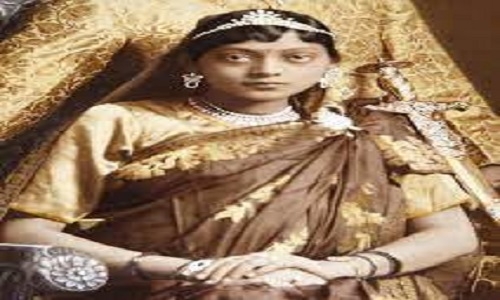
Maharani Prafulla Kumari of Bastar stands out as a symbol of resilience and progressive governance. Her story is a blend of traditional royalty and modern leadership, marking her as a unique and significant figure in Indian history.
Born to Maharaja Rudra Pratap Deo and Kusum Lata Devi, she inherited a legacy of honour and responsibility. Prafulla Kumari ascended the throne as a minor after her father’s untimely demise, backed by the overwhelming support of the local populace and the reluctant approval of the British government. She reigned as the Rani regnant of Bastar from 1922 to 1936, a title that denoted not just ceremonial significance, but actual sovereign power. Affectionately called ‘Babi Dhani’ by the people of Bastar, she held a special place in the hearts of her subjects. Her reign marked a historic milestone for the Bastar dynasty, which before her had never bestowed the titles of ‘Maharaja’ or ‘Maharani’ in a hereditary manner. She married Prince Prafulla Chandra Bhanjdeo of Mayurbhanj (Orissa), with whom she had children, including Princess Kamla Devi and Pravir Chandra Bhanj Deo.
Maharani Prafulla Kumari was not only a ruler but also a visionary who embarked on numerous visits to major Indian cities, notably meeting the Viceroy of India in 1935 – a first for a ruler of Bastar. Fluent in English and embodying the essence of an educated Indian woman, Maharani Prafulla Kumari balanced her rich cultural heritage with a modern outlook. Her governance was characterised by a commitment to education, particularly for women and children, and saw the construction of roads, libraries, hospitals, and the restoration of temples. Her dedication to infrastructural development is commemorated by the Maharani hospital at Jagdalpur, constructed in 1937, an airstrip established in 1941, and a bridge built over the river Indravati. Beyond politics, Maharani Prafulla Kumari was a patron of the arts and a cultural icon, preserving Bastar’s unique heritage and promoting its rich traditions. Her passion for cultural preservation helped sustain traditional arts like Dhokra metal casting and the famous Bastar Dussehra festival. Her life, however, was marked by challenges. She fell victim to British conspiracies and tragically passed away during a medical operation in London in 1936.
After her death, her husband stood firm against British pressures to merge Bastar with Hyderabad, emphasizing his role as a son-in-law to Bastar, not its ruler. Prafulla Kumari’s legacy continued through her son, Pravir Chandra Bhanj Deo, who was formally crowned in London and later in Jagdalpur. Her reign coincided with India’s struggle for independence, and she navigated this period with empathy for the Indian independence movement and astute political engagement with the British. Maharani Prafulla Kumari was a remarkable ruler whose life and legacy continue to inspire. Her story is a testament to progressive leadership and the indomitable spirit of a woman who rose to the challenges of her time, leaving an indelible mark on the history of Bastar. Her contributions to her state, her astute political sense, and her role as a custodian of cultural heritage make her a figure of immense historical importance, a beacon of enlightened leadership whose impact on the socio-political fabric of Bastar remains profound and inspiring.