Aditya-L1 reaches orbit near Sun
| Date :07-Jan-2024 |
CHENNAI :
PRIME Minister Narendra Modi on Saturday announced that India’s first solar observatory Aditya-L1 has reached its destination successfully.
“India creates yet another landmark. India’s first solar observatory Aditya-L1 reaches it destination. It is a testament to the relentless dedication of our scientists in realising among the most complex and intricate space missions. I join the nation in applauding this extraordinary feat. We will continue to pursue
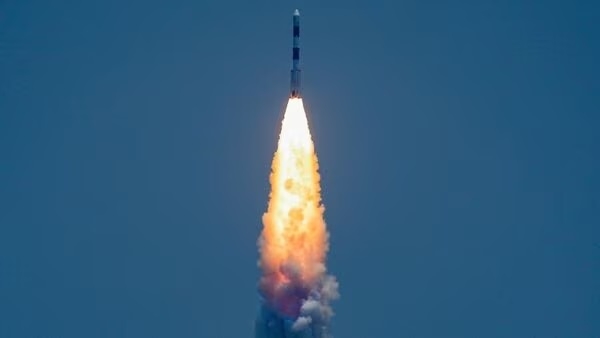
new frontiers of science for the benefit of humanity,” PM Modi said on ‘X’. The Aditya-L1 was orbited in low Earth orbit (LEO) on September 2, 2023 by Indian rocket Polar Satellite Launch Vehicle - XL (PSLV-XL) variant on Saturday evening reached its Halo orbit Sun-Earth Lagrange Point 1 (L1).
It is the point where the gravitational pull of two large bodies -- Sun and Earth -- will be equal and hence the spacecraft will not gravitate towards any one of them. The Aditya-L1 spacecraft carries seven payloads to observe the photosphere, chromosphere, and the outermost layers of the Sun (the corona) using electromagnetic and particle and magnetic field detectors.
“Using the special vantage point L1, four payloads directly view the Sun and the remaining three payloads carry out in-situ studies of particles and fields at the Lagrange point L1, thus providing important scientific studies of the propagatory effect of solar dynamics in the interplanetary medium,” ISRO had said.
Aditya-L1’s seven payloads are expected to provide the most crucial information to understand the problem of coronal heating, coronal mass ejection, pre-flare and flare activities and their characteristics, dynamics of space weather, propagation of particle and fields and others, the Indian space agency said.
The ISRO said the major science objectives of Aditya-L1 mission are: Study of solar upper atmospheric (chromosphere and corona) dynamics, study of chromospheric and coronal heating, physics of the partially ionised plasma, and initiation of the coronal mass ejections, and flares. It will also observe the in-situ particle and plasma environment providing data for the study of particle dynamics from the Sun.
Another grand feat by ISRO, says President Murmu: PRESIDENT Droupadi Murmu congratulated ISRO for successfully placing India’s first solar observatory Adiyta-L1 into its destination orbit, and said the mission will benefit the entire humanity. “Another grand feat accomplished by ISRO! As part of India’s maiden solar mission, Aditya L1, the observatory has been placed in the final orbit and reached its destination at Lagrange Point 1,” Murmu said in a post on ‘X’.