SC orders SBI to disclose donors, amount, recipients
| Date :16-Feb-2024 |
NEW DELHI
SCRAPPED Electoral bonds unconstitutional
IN A landmark verdict delivered
within hand-shaking distance
of the Lok Sabha polls, the
Supreme Court on Thursday
scrapped the Modi
Government’s electoral bonds
scheme of anonymous political funding, terming it“unconstitutional” and ordering disclosure of the names of the purchasers, value of the bonds and
their recipients.
Holding that the 2018
scheme was “violative” of the
constitutional right to freedom
of speech and expression and
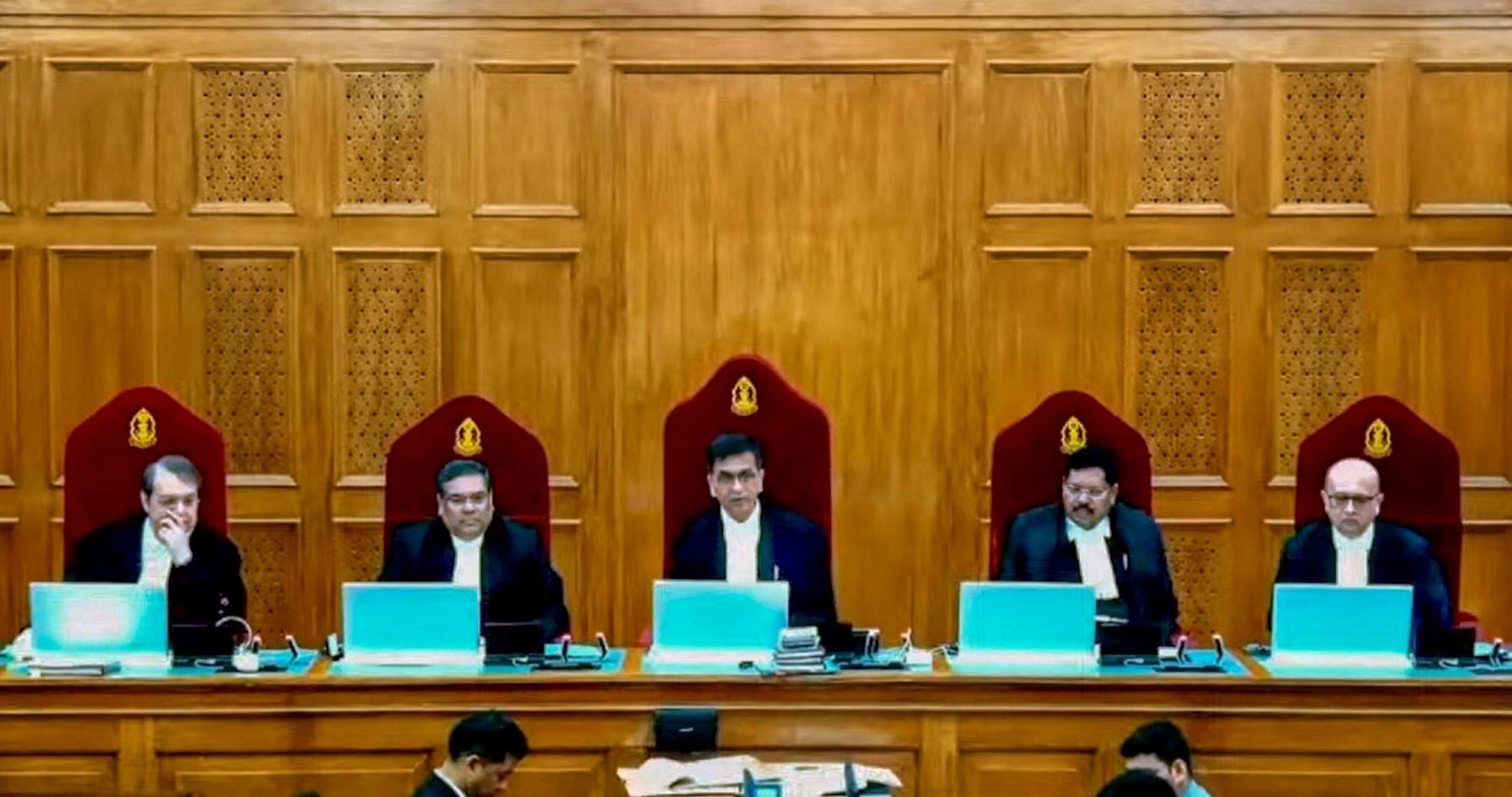
right to information, a fivejudge constitution bench headed by Chief Justice D Y
Chandrachud did not agree
with the Centre’s contention
that it was meant to bring about
transparency and curb black
money in political funding.
Ordering closure of the
scheme forthwith, the top court
also directed the State Bank of
India, the authorised financial
institution under the scheme,
to submit by March 6 the details
of electoral bonds purchased
since April 12, 2019 till date to
the Election Commission,
which will publish the information on its official website
by March 13.
Under the electoral bonds
scheme, ruling parties can
coerce people and entities to
contribute, the apex court said
and rejected as“erroneous” the
Centre’s argument that it protects confidentiality of the contributor which is akin to the system of secret ballot.
“The electoral bond scheme
and the impugned provisions
to the extent that they infringe
upon the right to information
of the voter by anonymizing
contributions through electoral
bonds are violative of Article
19(1)(a) (freedom of speech
and expression) of the
Constitution,” said the bench,
also comprising Justices Sanjiv
Khanna, B R Gavai, J B Pardiwala and Manoj Misra,
in its verdict delivered
months ahead of the Lok
Sabha polls. The Lok Sabha
polls are likely in April-May
this year.
In its two separate but
unanimous verdicts cumulatively spanning 232 pages,
the top court also directed
the SBI to share details,
including the “date of purchaseofeachelectoralbond,
the name of the purchaser
ofthe bond and the denominationoftheelectoralbond
purchased”.
“SBI shall submit the
details of political parties
which have received contributions through electoral
bondssincetheinterimorder
of this court dated April 12,
2019 till date to the ECI. SBI
mustdisclosedetailsofeach
electoral bond encashed by
political parties which shall
include the date of encashmentandthedenomination
of the electoral bond,” the
benchsaid.OnApril12,2019,
theapex court hadissuedan
interim order directing that
theinformationaboutdonationsreceivedanddonations
which will be received must
besubmittedbypoliticalparties totheECina sealedcover. The court ordered that
uncashed electoral bonds,
which are within the validity period of 15 days, shall be
returnedbythepoliticalparty or the purchaser to the
issuing bank which in turn
shall refund the amount to
the purchaser’s account.
Thejudgementreferredto
the annual audit reports of
political parties from 2017-
18 to 2022-23 which showed
party-wise donations
received through such
bonds.
The BJP received Rs
6,566.11 crore during this
period, while the Congress
gotRs1,123.3crore.TheTMC
received in its kitty Rs
1,092.98 crore during the
same period.
The CJI, who authored a
152-pagejudgementforhimself and onbehalf ofJustices
Gavai, Pardiwala and Misra,
said, “The electoral bond
scheme, the proviso to section 29C(1) of the
RepresentationofthePeople
Act1951(asamendedbysection137ofFinanceAct2017),
section 182(3) of the
Companies Act (as amended by section 154 of the
Finance Act 2017), and section 13A(b) (as amended by
section 11 of Finance Act
2017) are violative of Article
19(1)(a) and unconstitutional.” It said the deletion
of a provision in the
Companies Act permitting
unlimited corporate contributions to political parties
was“arbitrary andviolative”
of Article 14 (right to equality) of the Constitution.