Rs 11.11 lakhcrore Post-hike Capital expenditure
| Date :02-Feb-2024 |
NEW DELHI :
- Nirmala’s 6th Budget at glance No change in direct, indirect tax rates
- Withdraws income tax demands up to Rs 25,000 till 2009-10; Demands up to Rs 10,000 from 2010-11 to 2014-15 also withdrawn
- Move to benefit about a crore taxpayers. A scheme to help middle class living in rented houses to buy or build their own houses
- Tax benefits to startups and investments made by sovereign wealth or pension funds extended by 1 year till March 31, 2025
- Fiscal deficit for 2024-25 projected at 5.1 pc, lower than 5.8 pc this fiscal
- Govt to borrow Rs 14.13 lakh crore in next fiscal, lower than Rs 15.43 lakh crore in 2023-24
- Nominal GDP for next fiscal (2024-25) projected at 10.5 pc Mop-up from Central Public Sector Enterprises (CPSEs) disinvestment pegged at Rs 50,000 crore for next fiscal, up from Rs 30,000 crore in 2023-24
- Gross tax revenue target for 2024-25 hiked 11.46 pc to Rs 38.31 lakh crore, from Rs 34.37 lakh crore this fiscal
- Direct tax collection target set at Rs 21.99 lakh crore; indirect tax at Rs 16.22 lakh crore
- Next five years of unprecedented development to help realise goal of developed India by 2047
- Govt to come out with a white paper on mismanagement of economy prior to 2014 Govt to take up next generation reforms in consultation with states, stakeholders
- Govt to form high-powered panel to address population growth challenges and demographic changes A
- Rs 1 lakh crore corpus to be established with 50 years interest free loan for youth
- Scheme of 50 years interest free loan to states for capital expenditure to be continued next year with an outlay of Rs 1.3 lakh crore.
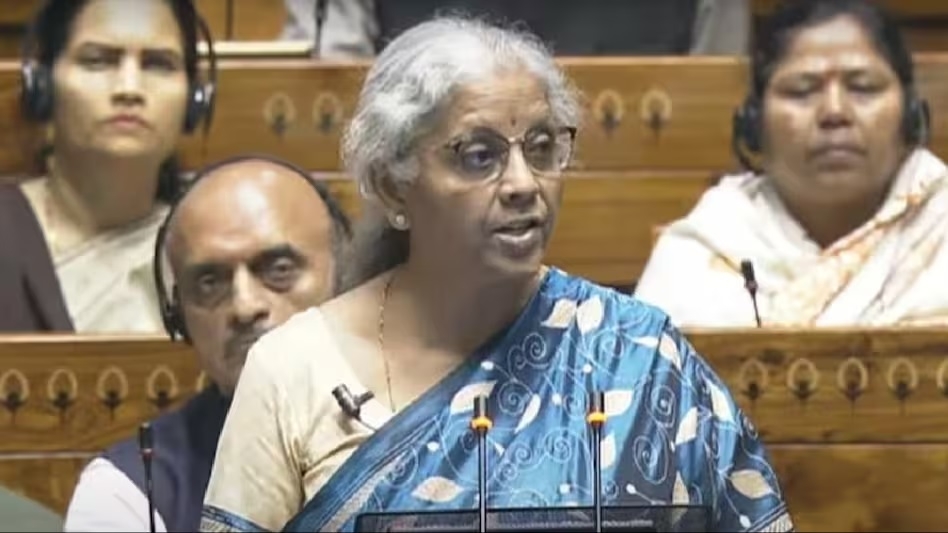
FINANCE Minister Nirmala Sitharaman on Thursday announced a Rs 11.11 lakh crore spending on infrastructure and vowed to continue reforms as she resisted resorting to populist measures in Modi Government’s last Budget before general elections, instead choosing to stay on the path of cutting deficit while bolstering measures for focus groups.
Presenting a vote on account or an interim Budget for 2024-25, Sitharaman proposed no changes in income tax rates for individuals and corporates, as well as import duty but offered amnesty for disputed income tax demands of the period prior to 2014-15 as a relief to small taxpayers.
In her close to an hour-long Budget speech in the Lok Sabha, she listed her Government’s achievements across sectors in the last 10 years and announced measures to boost tourism, housing and renewable energy. Giving a sneak preview of what will be the Modi Government’s priority in the third term, if re-elected, she said economic policies that foster and sustain growth, facilitate inclusive development and contribute to generation of resources to power investments will be adopted towards making India a developed country by 2047.
“The next five years will be years of unprecedented development and golden moments to realise the dream of developed India by 2047,” she said.
“Guided by the principle ‘reform, perform, and transform’, the Government will take up next generation reforms, and build consensus with the States and stakeholders for effective implementation,” she said. The interim Budget seeks Parliament’s authorisation for spending for four months and the full Budget for the fiscal year starting April will be presented in July by the government elected in April-May general elections.
Sitharaman’s Budget proposes to cut food, fertiliser and fuel subsidies by 8 per cent in 2024-25 over last year while keeping the allocation for rural employment scheme MGNREGA unchanged.
Spending on infrastructure such as roads, ports and airports has been raised by 11 per cent to Rs 11.1 lakh crore in a bid to sustain the current world-record beating economic
growth and create more jobs.
The Union Government will also provide Rs 1.3 lakh crore long term loans to States to spend on infrastructure.
The Government will build 2 crore affordable houses in the next 5 years and will launch a scheme for housing for the middle class.
It will develop tourist centres and market them at global scale as also provide viability gap funding for harnessing wind energy potential for an initial capacity of 1 gigawatt.
Also, private and public investments will be promoted in post-harvest activities, including modern storage and supply chains, in addition to boosting self reliance on oilseeds.
A comprehensive programme for the development of dairy farmers is being planned as also an increase in spending on fisheries to boost productivity of the sector. All this while sticking to the fiscal consolidation path which will see the fiscal deficit being reduced to 5.1 per cent of GDP in 2024-25 as compared to the revised deficit estimate of 5.8 per cent for the current financial year ending March 31. The deficit for the current fiscal is lower than the 5.9 per cent that was projected when Sitharaman presented her last Budget in February 2023.
On tax measures, the Finance Minister announced that investments by sovereign wealth funds and pension funds will be tax-free for one more year.
Total revenue receipts for 2024-25 were estimated at Rs 30 lakh crore as compared to revised estimate of Rs 26.99 lakh crore in the previous year.
Tax-GDP ratio is seen at 11.7 per cent as opposed to 11.6 per cent of GDP in 2023-24. Stating that every challenge of the pre-2014 era was overcome through economic management and governance, she said the government, in its July Budget, will present a detailed roadmap to make India a developed country. “We continue on the path of fiscal consolidation, as announced in my Budget speech for 2021-22, to reduce the fiscal deficit below 4.5 per cent by 2025-26,” Sitharaman said.
Among the headline announcements in the Budget are rooftop solar installations at one crore households to deliver up to 300 free units of electricity per month, a corpus of Rs 1 lakh crore for innovation and technology by providing financing at low or nil interest rates, and a new scheme to strengthen deep tech in the defence sector. While there were no tax proposals, she extended the sunset dates on tax holidays for startups, tax benefits to sovereign wealth funds and aircraft leasing businesses in IFSC. Other announcements include viability gap funding for offshore wind energy projects, announcements related to clean energy, including setting up of coal gasification and liquefaction capacity of 100 tonnes by 2030, and phased mandatory blending of Compressed BioGas (CBG) in Compressed Natural Gas (CNG) for transport and Piped Natural Gas (PNG).
Sitharaman termed her government’s track record on economy management as GDP - Governance, Development and Performance (GDP). “Besides delivering on high growth in terms of Gross Domestic Product (GDP), the Government is equally focused on a more comprehensive ‘GDP’, i.e., ‘Governance, Development and Performance’,” she said.
The FDI inflow during 2014-23 was USD 596 billion, twice the inflow during 2005-14.
“For encouraging sustained foreign investment, we are negotiating bilateral investment treaties with our foreign partners, in the spirit of ‘first develop India’,” she said.
Commenting on the Budget, S&P Global Market Intelligence said the interim Budget reflected the Bharatiya Janata Party’s (BJP) mood for the 2024 Lok Sabha elections. “Different from the run-up to the 2019 Lok Sabha elections, today’s interim budget announcement indicated high political confidence in the BJP’s tone, with multiple references underscoring policy continuity and expansion for the post-election Budget announcement in July 2024.”
The Budget speech was framed as a report card on government performance, with particular emphasis on social welfare expansion and infrastructure development. But the 11 per cent increase in actual capital expenditure outlay is well below the capital spending growth target of 33 per cent in the FY2023–24 Budget. This would nonetheless keep the government’s infrastructure investment agenda rolling and, if realised, bring the capital investment share in GDP to a record 3.4 per cent.
A key area to watch would be how the new government in July 2024 leverages geopolitical tailwinds that are favouring India to realise domestic physical and digital infrastructure expansion, S&P said.