Manipur HC revokesinclusion order for Meiteicommunity in ST List
23 Feb 2024 07:54:19
IMPHAL :
THE Manipur High Court has
ordered deletion of a paragraph from a March 2023 order
that urged the State to consider
including the Meitei community in the Scheduled Tribe list
saying the paragraph was in
conflict with the Supreme
Court’s constitution bench
stance. The March 27, 2023
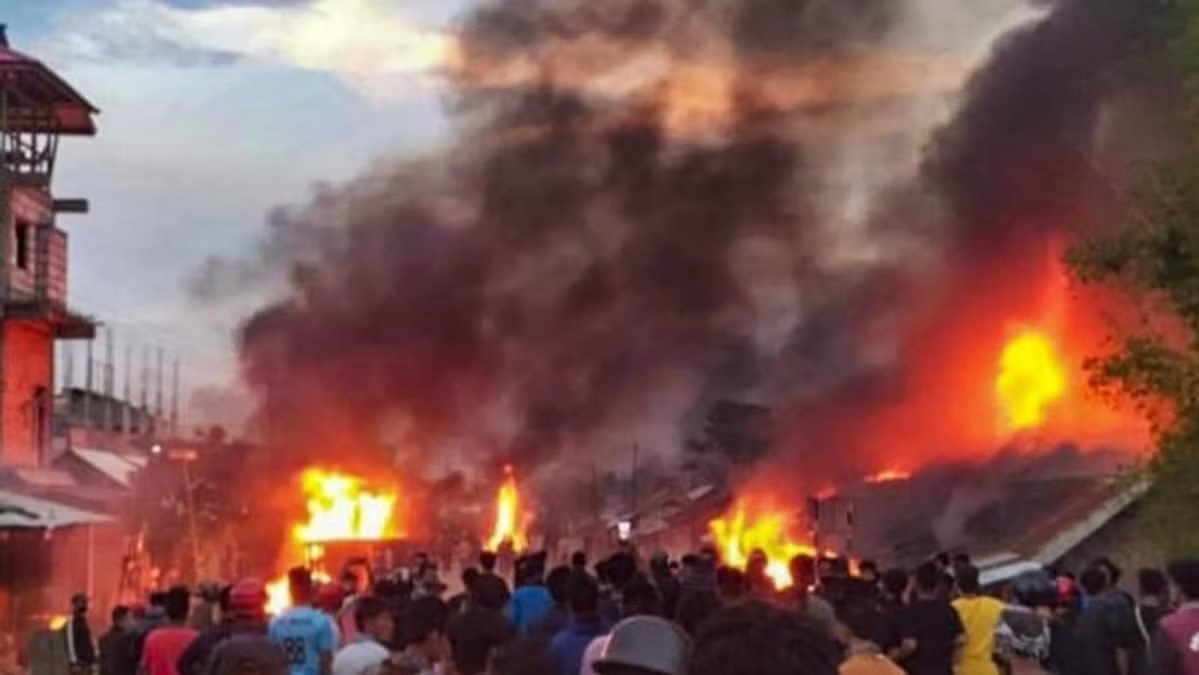
directive, believed to be a catalyst for ethnic unrest that
claimed over 200 lives, was
rescinded by a single judge
bench of Justice Golmei
Gaiphulshillu during a review
petition hearing on
Wednesday.
The contentious paragraph
from last year’s verdict,
instructing the State to expedite consideration of Meitei
community inclusion, was
deemed for deletion.
The paragraph of the last
year verdict stated the State
Government “shall consider
the case of the petitioners for
inclusion of Meetei/Meitei
community in the Scheduled
Tribes list, expeditiously,
preferably within a period of
four weeks” from the date of
receipt of the order.
Justice Gaiphulshillu’s
ruling on February 21
emphasised the necessity of
removing the directive, pointing to the Government of
India’s stipulated procedure
for Scheduled Tribe list
amendments. Justice
Gaiphulshillu said,
“Accordingly, the direction given at para no. 17(iii) needs to
be deleted and is ordered
accordingly for deletion of the
para no. 17(iii) of the judgment and order dated March
27, 2023...”.
The High Court’s detailed
19-page verdict underlined the
legislative limitations on judicial interference concerning
Scheduled Tribe classifications, as outlined by a constitution bench ruling in
November 2000.
“Courts cannot and should not expand
jurisdiction to deal with the
question as to whether a particular caste, sub-caste; a
group or part of tribe or subtribe is included in any one of
the Entries mentioned in the Presidential Orders issued
under Article 341 and 342
particularly so when in
Clause (2) ofthe said Article,
itisexpresslystatedthat said
orders cannot be amended
orvariedexceptbylaw made
byParliament” the verdictof
Supreme Court's
Constitution bench in
November 2000 said.
The constitution bench
had elucidated that courts
should not overstep their
jurisdiction in determining
such categorisations.
Following the eruption of
violence post the March 27
order,aseries of petitions,
including challenges to the
high court directive, were
presented to the Supreme
Court. The apex court, on
May 17 of the same year,
denounced the high court's
directive as“obnoxious” and
considered stayingtheorder
due to its perceived inaccuracies. A bench headed by
Chief Justice D Y
Chandrachudhadsaid,“Iwill
tell you (lawyers) one thing
thatthehighcourt orderwas
incorrect... I think we have
to stay the order of the high
court.”