Nagpur among six cities globally to get Zero Carbon Building Action Plan
| Date :05-Mar-2024 |
By Kaushik Bhattacharya
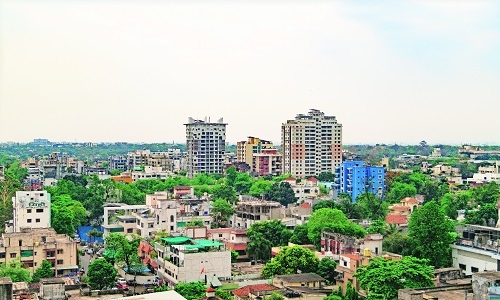
India’s first city-specific Zero Carbon Building Action Plan (ZCBAP) has been launched in Nagpur. With this, Nagpur becomes one of the six cities globally to get a Zero Carbon Building Accelerator (ZCBA) project. The Action Plan, released by the International Council for Local Environmental Initiatives (ICLEI-South Asia), on Monday, states the goal to make new buildings within Nagpur city Net Zero by 2030, and also convert all existing buildings into Net Zero by 2050. The Action Plan for Nagpur has been developed jointly by Nagpur Municipal Corporation (NMC) and Nagpur Smart and Sustainable City Development Corporation Ltd (NSSCDCL). It was launched by the World Resources Institute (WRI) in 2021, and was supported by Global Environment Facility (GEF), UN Environment Programme (UNEP), World Green Building Council (WGBC) and other global partners. Nagpur turns out to be one of the six cities across the world, including the cities in Turkey and Colombia, where ZCBA project is being implemented. ICLEI South Asia is the implementing partner for the ZCBA project in Nagpur.
The ZCBAP is first of its kind roadmap prepared for an Indian city taking the whole building lifecycle into consideration with an aim to reduce embodied and operations emissions produced in different phases of building. The strategies developed for this action plan are a result of elaborate stakeholder consultations backed by secondary research which includes recommendations on building phases, from designing to end of life, covering both policy and technology aspects with indicative short, medium and long-term targets that are aligned with national emissions reduction targets. To achieve Net Zero target, the Action Plan has suggested to reduce Green House Gases (GHG) emissions intensity of its GDP by 45% by 2030. It also advised to achieve 50% cumulative electric power installed capacity from non-fossil fuel based resources by 2030. According to the plan, adopting the multi-sectoral mitigation strategies has the potential to reduce Nagpur’s GHG emissions by 20% that is 6,14,376 tCO2e (Carbon Dioxide Equivalent) by 2025-26 considering the 2017-18 emissions baseline. “Being an authority, we have made Request For Proposal (RFP) mandatory for all new projects in city and on the basis of it only the tendering will takes place.” Dr Parinita Umredkar, Environment Officer, NSSCDCL told The Hitavada.
While asked her about reducing of GHG emission by 45% in city, Dr Umredkar said, “Initially we are emphasising to implement green building concept in all new government buildings in Nagpur. RFP in all such projects is also mandatory.” ZCBAP includes a holistic roadmap covering public buildings, government-led affordable housing, commercial buildings as well as homes, and an implementation strategy to achieve net-zero buildings across Nagpur by 2050. It stated that the roadmap also includes actions to help reduce greenhouse gas (GHG) emissions in the context of choice of building materials, and how buildings are designed, built, managed and deconstructed. The Action Plan has also recommended to adopt fly ash bricks as green construction material in the place of red bricks. Adoption of fly ash bricks as construction material will be a good idea to improve the GHG of the city as Nagpur is a huge generator of fly ash from its thermal power plants. “As implementing authority we will adopt all recommendation made in the Action Plan to achieve the short term goal till 2030.
Adoption of fly ash bricks as primary construction material is a part of research and development and we are working on it,” said Dr Umredkar. Nagpur’s land area is primarily used for residential purposes/spaces (45%), followed by the land under public use (41%), as of 2011. Commercial and industrial developments occupy 6% of the city’s land while 8% of the land use is towards parks and gardens. For Nagpur, the total area being considered under the revised City Development Plan is 235 sq. km. Land use has been proposed for 2031 to conform to the required norms as per Urban and Regional Development Plans Formulation and Implementation (URDPFI) guidelines. Therefore, as per the required norms, the revised land area for residential purpose is 32%. Whereas, 22% for agriculture lands, 11% for public purpose, 8% for roads, 6% for gardens, 5% each for Airport and Others, 4% each for Railways and Industrial, 3% for Commercial use, and 1% for Public Utility. The action plan’s success requires collaborative approach amongst authorities, builders, academia, NGOs, CSOs as well as the citizens of Nagpur.