Rains damage crops, lift dal, wheat and rice prices
05 Mar 2024 08:19:28
Business Reporter
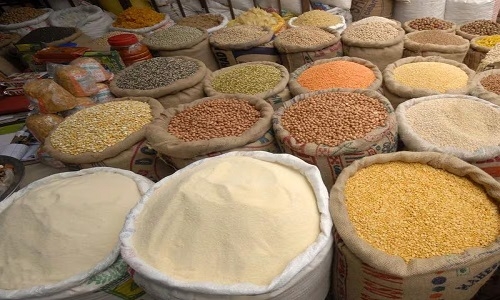
The prices of some of the essential food items in any household like dal, wheat and rice have gone up by 5 per cent because of the unseasonable rains in Vidarbha and adjoining areas in the past 10 days. The price rise has disturbed the monthly budgets of housewives who are already under the burden of inflation.
“Although the new crop of tur dal, rice and wheat have arrived in the markets, recent rains have significantly damaged the commodities resulting in prices shooting-up,” said Ramesh Umate, one of leading wholesale grain merchants at the Kalamna market yard, while speaking to The Hitavada.
Umathe further said that the recent rains have affected the quality of wheat coming from Madhya Pradesh. The wheat has been discoloured due to raintouch.
For the majority of the people the price rise has come as a major blow as already the tur dal prices are up by 50 per cent and rice has witnessed a hike of 25 per cent, as compared to previous year.
In the wholesale market, the prices of some of the popular varieties of tur dal like tur dal fod is being quoted at Rs 135 to Rs 140 per kg, tur dal fatka sortex at Rs 145 to 150 per kg and unpolished tur dal at Rs 148 to Rs 155 per kg.
Similarly, chana dal medium quality is being quoted at Rs 70 to Rs 72 per kg and chana dal best quality at Rs 75 to Rs 80 per kg. Also, wheat varieties like new wheat from Madhya Pradesh is being quoted at Rs 29 to Rs 32 per kg and Lokwan variety at Rs 32.50 to Rs 36 per kg.
Apart from this, some of the most consumed rice varieties like HMT is being quoted at Rs 50 to Rs 53 per kg, BPT at Rs 40 to Rs 45 per kg, Suwarni at Rs 35 to Rs 38 per kg, Chinoor Kali Mooch at Rs 64 to Rs 67 per kg, Shreeram at Rs 55 to 58 per kg, Wada Kolam at Rs 58 to 60 per kg, Surti Kolam at Rs 61 to Rs 63 per kg, Jaiprakash (new) at Rs 75 to 78 per kg, Tulsi Amrut at Rs 57 to 65 per kg and Basmati rice varieties are being sold in a range of Rs 80 to 140 per kg, in wholesale market.
Another grain merchant, on a condition of anonymity, said that the prices could drop if there are no rain and supplies improve in the coming days.