Hoax threats: a new dimension of terrorism
| Date :05-Jun-2024 |
By Lt General M K Das, PVSM, SM**,VSM (Retd)
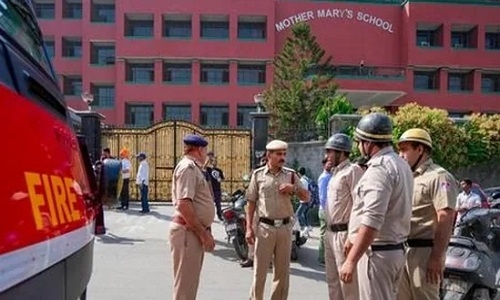
ON MAY 1, 24, nearly 100 schools located in Delhi and the NCR received bomb threats through an e-mail. There was massive panic among the parents, students and the school administration that day. A huge police machinery carried out thorough checks and nothing was found. But valuable time, effort and resources of the police and investigation agencies was consumed. After this incident, bomb threats in schools located in Lucknow, Bengaluru, Jaipur and Kanpur were received which again turned out to be hoax after police investigation.
Four hospitals located in Delhi, Tihar Jail and Delhi airport also received similar hoax threats in the month of May 24. The latest threat was on May 28, 24 when one bomb threat was reported in a Delhi- Varanasi flight. All these threats through e-mails may be part of a pattern and add a new dimension of cyber terrorism. Cyber Terrorism is defined as the act of using the Internet and other forms of communication technology to threaten or cause bodily harm or intimidate for political or ideological power. It is a new form of terrorism but difficult to pinpoint as the cyberspace does not recognize country borders and more often is faceless.
A quick analysis of the hoax threats in the month of May 24 reveals that it was aimed at some sort of disruption, particularly during the elections. The objective was to cause panic and tie down police and intelligence agencies, in which it succeeded too. The security agencies were stretched and pushed towards exhaustion. A repeated pattern of threats is likely to cause fatigue and security agencies may err. Therefore, we have to find a foolproof approach to deal with such threats in the future.
Having dealt with various shades of terrorism in my military career, some suggestions and recommendations to manage such threats to institutions and important venues are being offered. First and foremost is to build a robust intelligence network in the country. Traditionally, we have lacked strategic culture as a nation and lack of credible intelligence has resulted in the enemy intruding across our borders from 1947 in Kashmir to 2020 in Eastern Ladakh. That we have repulsed the adversary with our brave military action is another matter but suffice to say that both external and internal intelligence remains a weak spot.
As far as cyber space and IT is concerned, Indian companies provide best solutions to the world but inhouse expertise to deal with cyber threats has not been exemplary. Key Government and private sites have been hacked in the past.
The systems further hardening and our ability to track and identify those who exploit dark web has to be strengthened expeditiously. Chinese and Russians have emerged as key destinations for hackers and there may be other nations too who patronise this form of terrorism.
Next important issue is to deal with surveillance and keeping close watch over a particular village, town or district. Multiple intelligence agencies have mushroomed in the Central and State Government domain but all these agencies have little coordination and synergy. At times they work at cross purposes because of the political pressures. There is a tendency to generalise the threat and specific intelligence is rarely given. A lot of accountability needs to be fixed with the intelligence agencies to do their core charter in a professional manner.
Next important reform is needed in our police and para military organisation. The state police are already stretched in the local issues and is not even able to find manpower for the traffic duties. Far too much manpower is consumed in VIP and other event management responsibilities. The ability to dominate their respective beat with physical presence and mobile patrolling is suspect.
At best they have the ability to respond to a situation. Various para military forces under the district administration prefer to do specific duties and this extra
manpower does not necessarily improve the security apparatus.
We as a society also have to build security consciousness amongst the citizens. With massive urbanisation, the population has migrated and settled through out the country as per job requirement. New habitats have come up and demographic representation has also changed, particularly in the border states. In the big cities and metros, we do not even know our neighbour. The citizens have to be sensitised of the threats beyond local law and order through a concerted campaign.
With employment of correct and reliable technology, our eyes and ears can be strengthened. CCTV coverage of key installations, busy streets, malls, shopping centres, airports, railway stations etc. under an effective control centre is almost a necessity. The technology is fairly cheap now and each district administration must increase the CCTV coverage with adequate redundancy. If a school receives a bomb threat, then we should have the full CCTV footage of the last one month.
This CCTV footage would largely indicate our approach to a bomb threat and valuable time and resources may be saved.
Media is a key player for dissemination of such threats. A cyber terrorist achieves the aim when media, be it print, electronic or social carries the news in the headlines. Media has to act responsibly and publish the news on need-to-know basis. Any glorification only serves the purpose of the cyber terrorist.
Proof of the pudding would be taking strict action against the perpetrators of such crime. Here we need effective international protocol and bodies like Interpol for swift coordination amongst the nations. We do not have many examples of strict action taken against Wikileaks founder
Mr. Julian Assange which restrain others.
Cyber terrorism of any dimension can weaken a strong nation like India with its persistence, scope, reach and dominance. India can ill afford to take this potent threat lightly and dissipate precious manpower and resources in reacting to every hoax threat. Security is a collective responsibility of a nation and its citizens for the overall well-being and prosperity of the society.