Compassion, clinical diagnosis, faculty development
08 Jun 2024 08:06:54
Staff Reporter
Attitude of the new generation doctors is playing a major role in disturbing the doctor-patient relationship. The frequency of fights between doctors and patients’ relatives has increased in Government as well as in private hospitals. There are other components also that matter in bringing down the quality of medical education. Considering it, the National Task Force has recommended several things which don’t exist in medical education. For example, it introduced ‘compassion’ in the curriculum of medical education. One should not be surprised if one would be received by a doctor in a casualty of a Government hospital in a soft tone, ‘Welcome to this hospital! What can I do for you?’ The National Task Force on Medical Education, under the Chairmanship of Dr Vedprakash Mishra, Pro-Chancellor, Datta Meghe Institute of Higher Education, with 15 expert members submitted the report of recommendations to National Academy of Medical Sciences, Government of India. A few years ago, the curriculum of medical education across India witnessed total revamp. It included communication, the most important factor that was missing in the curriculum. But the Task Force has suggested the proper way of putting it in an effective manner. There are several other things missing in this curriculum. For example, the constant improvement in teaching quality. In traditional universities, Academic Staff College or Human Resource Development departments exist. They conducts refresher courses for their teachers where the faculties get new insight of teaching.
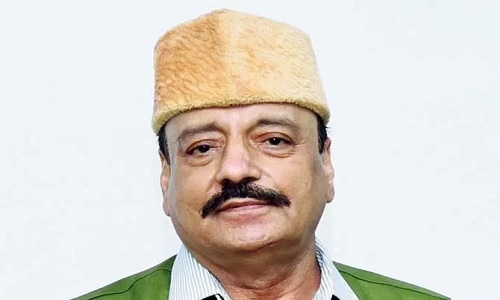
There is no Faculty Development programme or refresher courses available for the medical teachers in medical education curriculum. These are some factors to which nobody has given a thought to. But now, the National Task Force prepared a comprehensive report wherein several new things have been incorporated. While talking to ‘The Hitavada’, Dr Mishra, who has the experience of working as Chairman of Academic Committee of Medical Council of India (now National Medical Commission) for several years revealed, “The aim of this particular initiative is to enhance the quality of medical education. Over a period of years globally, several changes have been made in medical education. India needs to cope with it. Considering this aspect, our committee has recommended certain measures.” “With increasing medical colleges in the country, the curriculum too was needed to be given a relook. We also had to take National Education Policy 2020 into account. Compassion or concern is a very important aspect of medical education. We have chalked out a detailed programme in our report. The students, during their course, are supposed to behave in a proper manner.
They should be welcoming, say sorry to the patients or their relatives wherever necessary. It was generally expected but the Task Force has recommended to make such behaviour a part of students’ training and they will get marks for it. Effective implementation of this particular part would surely help in reducing doctor-patient conflicts,” Dr Mishra made it clear. The aspect of Faculty Development was missing. In traditional universities, Academic Staff College takes care of upgrading the faculties. The Task Force has recommended to introduce the upgradation of faculty. Task Force has recommended to set up Nodal Regional Centres where the idea of training of faculty should be implemented. The quest for invocation of transformative model of medical education in India was undertaken by the Academic Council of Medical Council of India in 2015, then headed by Dr Vedprakash Mishra himself whereby competency based medical education with the required syllabus, teaching-training modes, assessment methods, blended with Attitude Ethics and Communication (AETCOM Module) was formulated.
The colleges under traditional universities do get various grants from University Grants Commission (UGC). Such arrangement is not there for medical colleges across India. They mostly have to depend on respective State Governments because of which it takes a lot of time for them to grow physically and academically. Traditional colleges get those grants under Section 12 (B) of the UGC. The Task Force has suggested that as the National Medical Commission Act, 2019 has resulted in creation of an autonomous accreditation board, the required regulation on accreditation of medical colleges in India should be put into operation so that the quality-centric certification is put into operation at its earliest. It has also emphasised that the provision for availability of developmental grants as provided to institutions in higher education under section 12(B) of the University Grants Commission Act, a parallel amendment akin to Section 12(B) needs to be incorporated in the National Medical Commission Act, 2019, so as to bring the required parity between the two in the interest of required growth and development of medical education.
As the said recognition by the World Federation of Medical Education (WFME) to the Indian regulator is for a period of 10 years, it is all the more imperative that the model of medical education is put into operation in India for which the Task Force has recommended required update of the curricular design by incorporation of relevant thematic titles. They include Artificial Intelligence, incorporation of research skills, and interdisciplinary training by prescribing ‘Team-medicine’, credit based mode of assessment and prescription of required modality of accreditation and rating and ranking of the medical schools in India. The Task Force has suggested inter-disciplinary approach in medical education. Students will have the liberty to choose an elective course like humanities, traditional medicine, biotechnology and entrepreneurship. Intership period also has one week elective in Indian System of Medicine.