CG Govt bans painting of tree trunks
Date :03-Aug-2024
Staff Reporter
RAIPUR
The Chhattisgarh Government’s Housing and Environment Department has issued a strict directive to all state departments and district collectors, prohibiting the painting of tree trunks for beautification purposes.
The order mandates that any instances of tree trunk painting should be investigated, and appropriate action must be taken against those responsible. This measure aims to prevent potential harm to trees, as painting their trunks can introduce harmful chemicals through the bark, leading to damage or even the death of the trees.
The directive comes in response to a complaint by Raipur resident Nitin Singhvi, who had raised concerns about this issue with the Chief Secretary in 2019 and 2021. Singhvi highlighted that various urban bodies were painting tree trunks, potentially causing harm to the trees, and requested that instructions be issued to relevant departments to halt this practice. Initially, only the Urban Administration and Development Department had issued orders to municipal officials. However, due to the absence of directives to other departments, the practice continued under the guise of beautification.
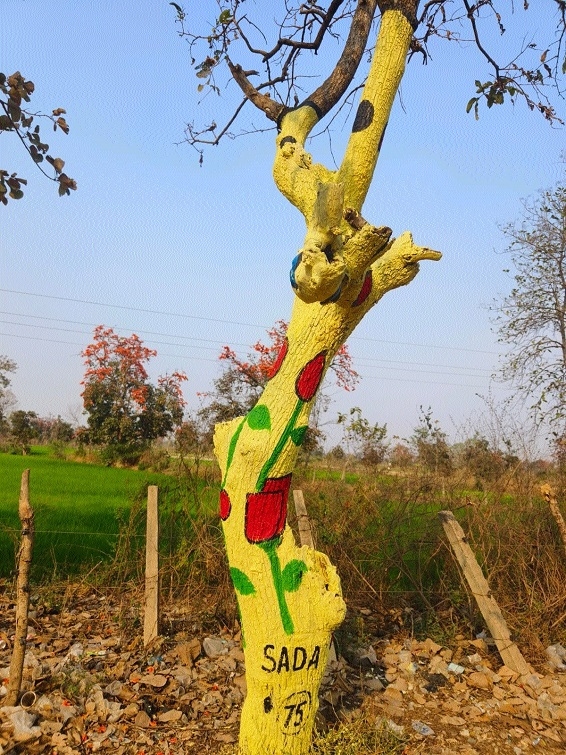
Singhvi filed another complaint about the Special Area Development Authority (SADA) painting over 75 trees during the Sirpur Mahotsav 2024.
This prompted further action, resulting in the Housing and Environment Department extending the directive to all departments. In expressing his gratitude, Singhvi emphasized the scientific reasons against
painting trees, noting that trees rely on their bark for essential processes like gas exchange. Paint can block these processes by obstructing pores, thus affecting the trees’ health. Furthermore, the chemicals in some paints can be toxic, damaging the internal systems of the trees and compromising their growth. The Chhattisgarh government acknowledges the ecological importance of trees and aims to ensure their protection across the state. The directive reflects a commitment to environmental conservation and addresses a critical concern regarding urban beautification practices that may inadvertently harm natural resources.