The evolution of AI
03 Aug 2024 12:32:02
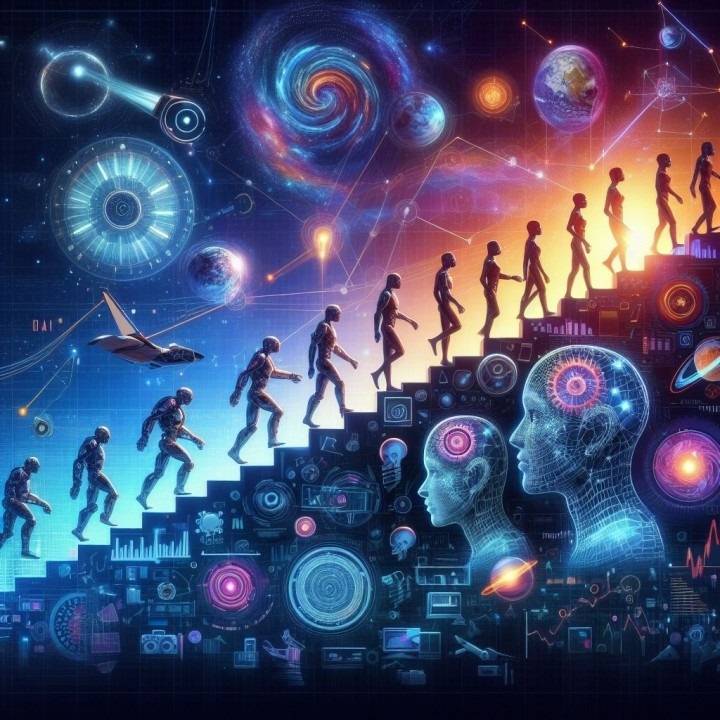
ARTIFICIAL
Intelligence (AI) has
undergone rapid
evolution since its
inception, transitioning from simple rule-based
systems to complex neural networks capable of self-learning
and decision-making. As we
step into the era of GenXAI—
Next-Generation Artificial
Intelligence—this technology
is poised to revolutionize
industries and reshape the
future of work in profound
ways.
AI’s journey began in the
mid-20th century with basic
algorithms designed to perform specific tasks like playing
chess or solving mathematical
problems. These early AI systems were limited in scope and
functionality, heavily reliant on
pre-programmed rules. The
next significant leap came with
machine learning, where systems could analyze vast
datasets and learn patterns
without explicit programming.
This gave rise to AI applications like recommendation
engines, speech recognition,
and image processing.
Deep learning, a subset of
machine learning, further
accelerated AI’s capabilities.
With the advent of neural networks, AI systems could mimic the human brain’s functioning, allowing for more sophisticated tasks such as natural
language processing and
autonomous driving. This
phase marked the beginning of
AI’s integration into everyday
life, with smart assistants, predictive analytics, and automated customer service
becoming commonplace.
G e n X A I
represents
the next
wave of AI
d e v e l o p -
m e n t ,
characterized by more
advanced and intuitive systems
that can understand context,
exhibit reasoning, and make
decisions with minimal human
intervention. These systems
are designed to not only perform tasks but also to continuously improve their performance and adapt to changing environments.
One of the most significant
features of GenXAI is its ability to handle unstructured data,
such as text, images, and video,
with greater accuracy. This
capability opens up new possibilities for industries to harness AI in ways that were previously unimaginable. For
instance, in healthcare, GenXAI
can analyze medical images to
detect diseases at early stages,
potentially saving lives through
quicker and more accurate
diagnosis.
The transformative impact of
GenXAI is being felt across various sectors.
In finance, AI is
enhancing fraud detection,
automating trading, and personalizing
c u s t o m e r
e x p e r i -
ences. By
analyzing
t r a n s a c -
tion data and identifying patterns, GenXAI can predict
fraudulent activities and alert
authorities in real time, thereby reducing financial losses
and improving security.
In manufacturing, GenXAIpowered robots are revolutionizing production lines by
working alongside humans to
improve efficiency and precision. These robots can adapt to
new tasks, learn from their environment, and even self-diagnose issues, reducing downtime and maintenance costs.
The retail industry is also
being reshaped by GenXAI,
with AI-driven personalization
improving customer engagement and satisfaction. Retailers
can now analyze consumer
behavior in real time, offering
personalized recommendations and promotions that align
with individual preferences,
thereby driving sales and customer loyalty.
As GenXAI continues to
evolve, it is set to redefine the
future of work.
While there are
concerns about job displacement due to automation, the
rise of GenXAI is also creating
new opportunities for innovation and growth. Roles that
require repetitive tasks are
being automated, allowing
human workers to focus on
more creative and strategic
aspects of their jobs.
In conclusion the evolution
of AI into GenXAI marks a pivotal moment in technological
advancement, with far-reaching implications for industries
and the workforce. As AI continues to mature, it will unlock
new potentials, drive innovation, and reshape the way we
work and live. Embracing this
change and preparing for its
impact will be essential for
businesses and individuals
alike to thrive in the future.