UNDERPASSES.UNDERDEEP TROUBLE
| Date :07-Aug-2024 |
By Dheeraj Fartode :
■Persistent WATER-LOGGING in underpasses raises questions about unscientific design
■Tekdi Road tunnel project being seen as a classic example of bad urban design inviting water-logging
EXTREME rainfall events followed by flash-floods and
massive water-logging have
blatantly exposed the faulty
designing of road infrastructure in the city.
Emerging as potential deathtraps are the underpasses in
various parts of the city
which are filled with water
even during moderate rains
posing danger to commuters. Against this scary
backdrop, questions are
being raised by citizens on
the utility of the proposed
870-meter-long tunnel from
Manas Square to the
Institute of Science Square.
The project is coming at
a hefty price of Rs 80 crore.
However, there are growing
concerns about the project
becoming another zone for
water-logging rather than a
solution to ease traffic.
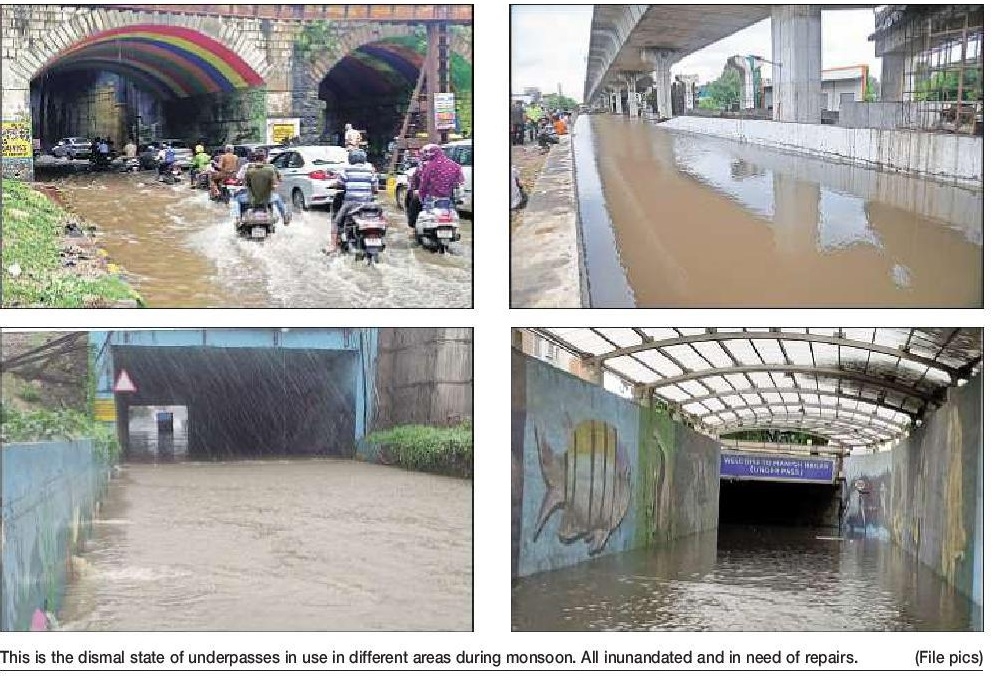
Historically, the city’s
underpasses have struggled
with severe water-logging
during the rainy season. The
Manish Nagar underpass,
constructed a few years ago,
has been a notable example
as it often fills with rainwater to alarming levels of four
to five feet. Last year, a school
bus was stranded and the
underpass was closed for
traffic movement.
Similarly, the Narendra
Nagar Railway under Bridge
suffers from persistent
water-logging which leads
to major traffic disruptions.
Despite numerous complaints over the years, the
authorities have yet to
address the issue effectively. Similar projects in other
parts of the city, too, are
prone to water-logging.
Keeping the concerns in
perspective, architect Sujit
Rodge has voiced strong
objections to the new tunnel project in Sitabuldi.
Speaking to ‘The Hitavada’,
Rodge argued that the project was being pursued without sufficient analytical
study. He claimed that
Manas Square currently did
not face major traffic congestion due to effective road
construction and traffic management. He has suggested improving existing traffic
management as a viable solution than constructing a new
tunnel.
“If the tunnel becomes
another site for water-logging,
then it could severely impact
traffic at crucial intersections
such as RBI Square, Zero Mile,
Morris College T-point, and
Tekdi Road, thereby disrupting connectivity to the railway
station during rainy season,”
Rodge has warned.
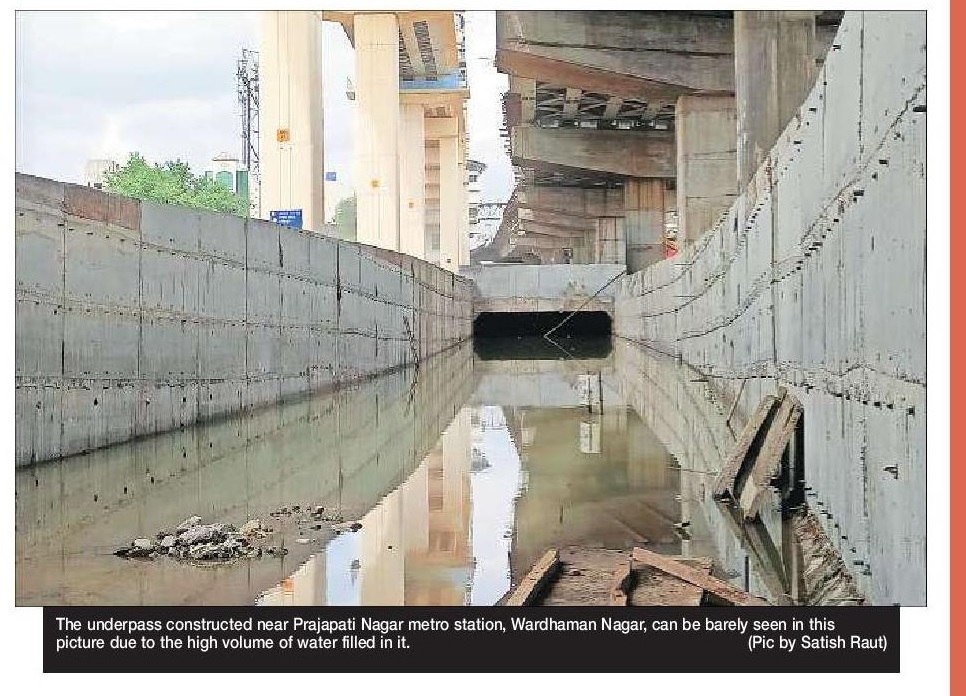
Another project that has
already raised fears of an
impending danger is the underpass atWardhaman Nagar, near
Prajapati Nagar metro station.
The underpass is designed to
help people go towards
Chandra Nagar. However, the
flooding it has witnessed in the
recent rains (see accompanied
picture) again puts a questionmark over the safety of the project, especially during rainy season.
Criticising Nagpur’s
approach to infrastructure
projects and poorly planned
construction that contributes
to water-logging issues, Rodge
advocated for a thorough feasibility study conducted by traffic engineering experts rather
than relying on political decisions.
“Such a study should evaluate traffic volume and patterns
to determine the actual necessity of the tunnel or any other
upcoming over-bridges,” the
architect said. Architect Sunil
Degwekar echoed the same
concerns and argued that the
project should not rely solely
on administrative approval.
Degwekar underlined the
need for a comprehensive
three-phase study, which
would include technical, practical, and public consent
aspects before proceeding.
He
noted that Nagpur’s architectural, engineering, and business
communities should be consulted to assess the project’s feasibility comprehensively.
“Without a prior analysis of
water flow and traffic patterns,
the project could result in wasted public funds and aggravate
existing traffic and water-logging problems,” he warned.
Architect Paramjeetsingh
Ahuja, although not yet familiar with the detailed project
report, underlined the importance of conducting a waterflow study to prevent potential
water-logging issues.
Ahuja suggested that the
project report, including design
drawings, should be made publicly available for review and
feedback. He proposed involving high-profile citizens and
field experts to scrutinise the
project to ensure its success
and avoid further complications. The architects stressed
the need for a meticulous
examination of both water
management and traffic patterns before moving ahead with
the such projects.
Nagpur’s infrastructure projects may be prone to inadequate planning which may
potentially lead to further disruptions rather than resolving
existing issues, the underlined.