Having received 125 stitches on her neck, she appeals for COMMUNITY kite-flying
| Date :14-Jan-2025 |
By Vikas Vaidya :
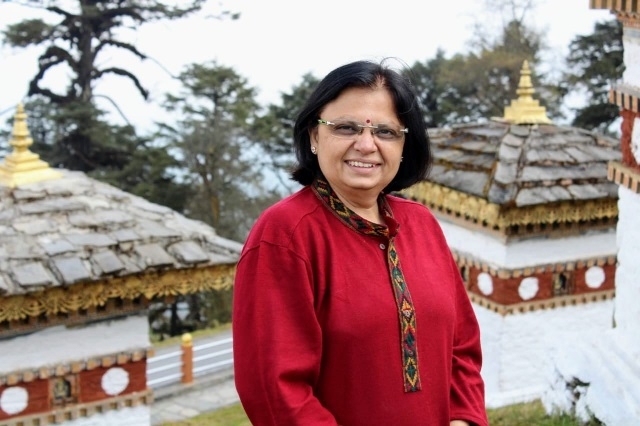
It was 18 years ago that she met with that ghastly incident. It still haunts her. Had Mohammed Ishaque, a shopkeeper. not extended her the timely help she could not have reached the hospital of Dr Syed Illias. Dr Illias sutured her neck and then she walked out of his hospital with not one, two, ten, but 125 stitches!
Manisha Mahatme, the then lecturer of Chemistry with St Joseph School & Jr College, and now a Counselor with Jhulelal Institute of Technology, shivers at the memory of that incident. She had sustained serious neck injuries due to manja (thread used for kite-flying) as she was heading home through Chhaoni Road, along with her nine-year-old son, Harsh, who also was instrumental in saving her when she met with the bizarre accident.
It was the second case after Niranjan Pathak, Programme Executive of
Nagpur Doordarshan, sustained neck injuries in a similar incident.
“It was so sudden that at first I did not feel it. My son told me that blood was oozing from my neck.
Later, I came to know that my wind pipe was saved by a whisker, 1/100 mm to be precise. It took 125 stitches for me to survive the ordeal. My voice was retained, my life was saved. But when it comes to manja, the issue has several angles,” Manisha Deshmukh raised an important issue while talking to ‘The Hitavada’.
Despite going through the sufferings, Deshmukh feels there is no point in banning kite-flying or use of manja.
“Celebration can’t be and should not be stopped. But we can bring some changes in the way of celebration.
For example, we can promote community kite-flying,” suggested Deshmukh.
“Four-five families can come together at any terrace where they can enjoy kite-flying. It can be a community-building activity that brings people together and strengthens social relationships. In our country, kite-flying is a tradition that is deeply rooted in culture. In the state like Gujarat, the Government has made kite-festival a popular event to mark Makar Sankranti. It has become a major tourist attraction nowadays,” added Deshmukh.
According to Deshmukh, some Non Government Organisations can be involved to ensure safe kite-flying.
“People connected to such organisations can go to schools, colleges, spread messages of awareness there. Every year a lot of people become victims of manja menace.
Preparation of manja involves many things including glass, dye etc. Even those flying kites also sustain injuries. To avoid this, people should celebrate the festival in community,” opined Manisha Deshmukh.
“Flying kites at parks or open spaces can be a fun way to enjoy the activity with others,” felt Deshmukh.
Whether to ban manja or kite-flying always comes up in discussion during Sankranti or January 26 when people celebrate kite festival?
To this question, Deshmukh replied, “Just one or two or 10 examples should not be the reason for discontinuing the traditional festivals. They have their own beauty. But learning lessons we can introduce some changes to prevent the accidents. The issue should not be discussed only during the festival.”