VNIT, astrologer Acharya Gadge revive ancient Indian timekeeping
| Date :20-Jan-2025 |
Staff Reporter :
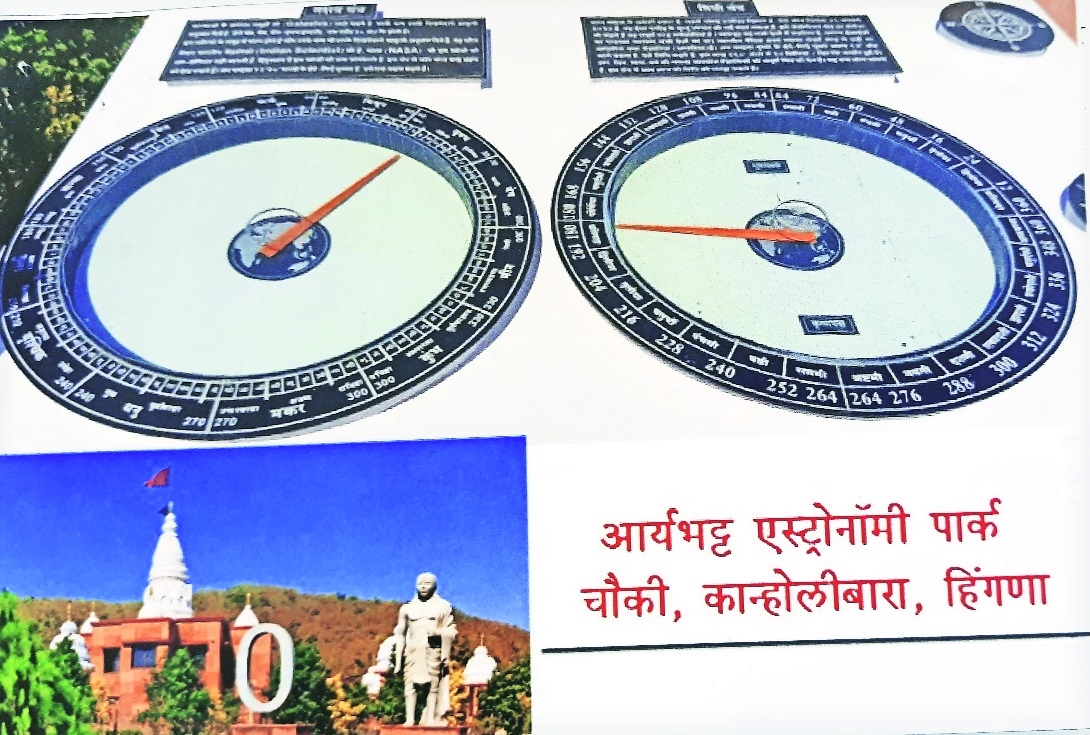
In an extraordinary feat of innovation, astrologer and researcher Acharya Bhupesh Gadge successfully brought ancient Indian timekeeping to life through a clock that maps time according to Tithi (Indian calendar date), Vaar (weekday), and Nakshatra (lunar constellation).
Thw invention, supported by the Visvesvaraya National Institute of Technology (VNIT) Nagpur, offers both tradition and technology that could redefine the way time is measured globally. The device is now installed at the Aryabhatta Astronomy Park in Chauki Village, Kanholibara, in Hingna Tehsil, and is now operational.
“For years, I believed that the Indian system of time mapping is not just traditional but highly scientific. I wanted to prove it through a machine,” said an elated Gadge.
He added that he wanted to create a device that not only simplified the process but also showed the world the scientific brilliance of ancestors.
The project gained momentum when Gadge approached VNIT for technical collaboration, with the support of Dr Pramod Padole, the then Director of VNIT, and faculty members.
Explaining the clock’s mechanism, Sheetal Raut, VNIT Professor, shared, “An algorithm is developed based on the Panchang. It was fascinating to see how accurately our calculations matched the centuries-old Panchang records.”
The clock’s features include a microcontroller that generates pulses and a specially designed stepper motor to indicate Tithi and Nakshatra accurately. Remarkably, the system is energy-efficient, shutting down for 30 minutes daily, and can resume accurate readings even after a day-long power outage.
The unveiling also served as a precursor to the National Convention on Indian Knowledge Systems, scheduled to be held at VNIT on February 28 and March 1.