A Century of National Awakening Through the Sadhana of the Sangh
01 Oct 2025 14:09:48
By Hitanand Sharma :
Special Article on RSS Centenary Year
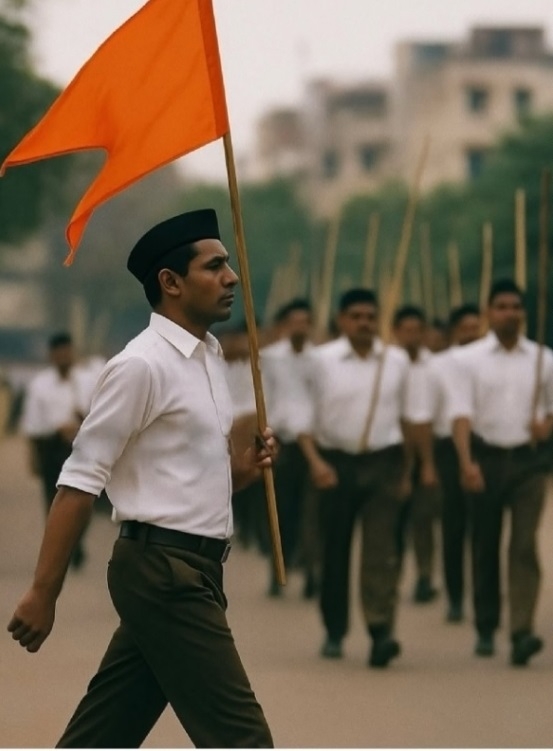
The 100 year journey of Rashtriya Swayamsevak Sangh (RSS) is, in essence, a purposeful march towards national awakening. The tiny seed of national devotion sown on Vijayadashami in 1925 at Mohite Bada in Nagpur has today grown into a vast banyan tree. Through continuous and tireless efforts rooted in the spirit of ‘Nation First’, the Sangh has emerged as the largest organisation in the world. Volunteers who dedicate everything for the welfare of the nation, culture, religion and society, continue to engage relentlessly in the pursuit of India’s renaissance. The Sangh’s centenary year marks a significant step forward in this ideological journey, guided by the mantra of Charaiveti Charaiveti (keep moving forward).
Founded by revered Dr Keshav Baliram Hedgewar, the first Sarsanghchalak, the core objective of RSS was not just to secure India’s independence but to build a united society awakened by self-realisation. This 100-year journey towards placing Mother India on the pinnacle of glory has not been easy. The Sangh has continued its work of nation-building through character-building, overcoming numerous difficulties, opposition, and obstacles along the way.
During the freedom struggle and after independence, the Sangh worked to reconnect society with India’s cultural roots. Even post-independence, when the colonial mindset continued through Macaulay’s education system—designed to produce a subservient generation—the Sangh inspired the founding of Vidya Bharati in 1952. Today, it stands as the world’s largest non-governmental educational organization imparting both education and values. To engage youth in nationalistic thinking, organizations such as Akhil Bharatiya Vidyarthi Parishad, Bharatiya Mazdoor Sangh for laborers, Bharatiya Kisan Sangh for farmers, Seva Bharati for social service, and Sanskar Bharati for cultural revival were all founded by volunteers inspired by the Sangh.
Working alongside the Rashtra Sevika Samiti, established in 1936, the Sangh has always given equal importance to the role of women. Today, the strong presence of women in leadership across all Sangh-inspired organizations is a testament to this vision.
When post-independence Indian politics began to deviate from its roots and threatened the nation’s sovereignty, Pt Deendayal Upadhyaya and Dr Syama Prasad Mookerjee founded the Bharatiya Jana Sangh, which later evolved into the Bharatiya Janata Party (BJP).
Today, the BJP is the world’s largest political party and is widely respected for fulfilling nearly all of its foundational commitments—abrogating Article 370 in Jammu & Kashmir, building the grand Ram Temple in Ayodhya, and elevating India’s global stature are landmark achievements of this ideological lineage.
The Sangh’s century-long journey has been full of formidable challenges. From the very beginning, it faced internal opposition, attacks, ridicule, and slander.
Despite false allegations following Mahatma Gandhi’s assassination, bans imposed twice, the unbearable hardships of the Emergency, and relentless criticism, the Sangh has remained steadfast in its resolve. Countless volunteers have sacrificed themselves on the altar of this spiritual mission. It is the dedication of these volunteers and the commitment of the pracharaks (full-time workers) that has brought the organization to a point where people across the world now seek to understand and associate with the Sangh.
The deep roots of the RSS stretch into the glorious history, culture, and intellectual traditions of India. Its shakhas (daily gatherings) are the most powerful medium of the organisation. There is a well-known saying in society: “To understand the Sangh, one must attend a shakha.” These shakhas are nurseries of character-building. Through physical activities, discipline, songs, and intellectual sessions, they inspire leadership, brotherhood, and dedication to duty.
Through its shakhas, the Sangh has built an organised society that responds first in times of natural disasters, humanitarian crises, and even foreign aggression. Whether it was the earthquake in Bhuj, the recent devastating floods, or the COVID-19 pandemic—where volunteers provided food, transport, medicines, and even performed the last rites of the deceased—the selfless service of Sangh workers was unmatched. The Sangh also played a significant role in historical events like the freedom movement, Goa Liberation, the integration of Kashmir with India, and the Chinese invasion.
The centenary year is an opportunity to further accelerate the Sangh’s mission. Through its ‘Panch Parivartan’ (Five Transformations) initiative, it is actively promoting causes like swadeshi, environmental protection, civic responsibilities, social harmony, and family awareness.
Instead of celebrating the centenary with grand events, the Sangh is reaching out to every citizen of India, awakening them to their duties toward family, society, and the nation. Becoming a Sangh karyakarta (RSS worker) is a life-long commitment to national service. The sanskar (values) imbibed through the shakha awaken such profound love for the motherland that a swayamsevak rises above personal interests to dedicate himself to the nation. For him, “Bharat Mata ki Jai” becomes the ultimate goal.
When the centenary year concludes in 2026, the goal will remain unchanged: every Indian must play a vital role in this great national yajna, so that India can once again emerge as a Vishwaguru—a global guide. As seekers on this sacred path, we too must offer our own duties as oblations in this national sacrifice.
Purna Vijay Sankalp Hamara,Anathak Avirat Sadhana.Nishidin Pratipal Chalti Aayi,Rashtradharma Aaradhana.
Today, as India stands tall on the global stage with newfound confidence and self-respect, this centenary journey of the Sangh is not merely the story of an organization—it is the glorious saga of an idea that reconnected the nation with self-awareness, organization, and cultural strength. On this occasion, every swayamsevak and citizen must resolve to contribute to placing Mother India on the pinnacle of glory. Heartfelt greetings to all swayamsevaks and fellow citizens on the occasion of RSS’s centenary year.
(Author is the GeneralSecretary (Organisation),Bharatiya Janata Party,Madhya Pradesh)