Tadoba’s Fallen King: The Saga of Chhota Matka
| Date :01-Oct-2025 |
By Shashwat Bhuskute :
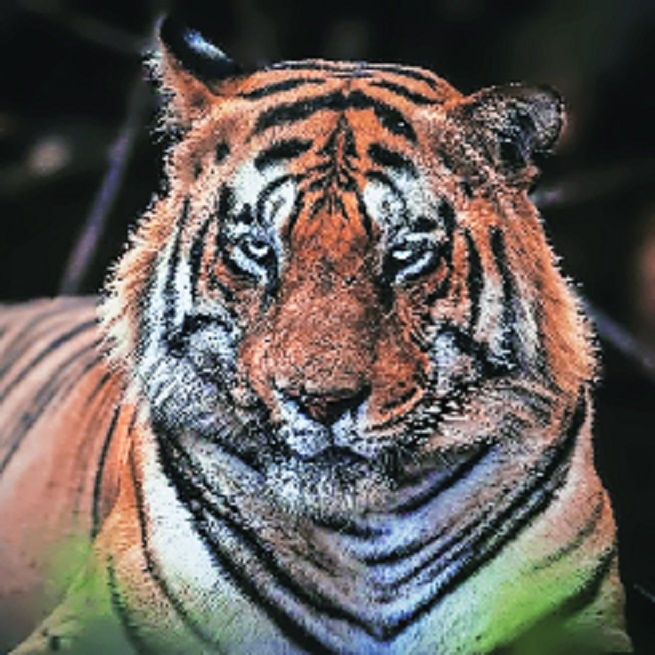
When ‘Chhota Matka’ strode across the dusty tracks of Tadoba, safari jeeps hushed and cameras fell into silence. The forest guides spoke his name softly, as if they whispered about a king. A descendant of the mighty ‘Matkasur’ and the celebrated tigress ‘Chhoti Tara’, he carried both pedigree and presence. His striped frame, broad-shouldered and unhurried, became a familiar spectacle to visitors who returned year after year hoping to catch a glimpse of the king. To many, he was not just another tiger but the embodiment of Tadoba’s wild heart.
In late August, that regal figure faltered.
Reports trickled in of fresh wounds on his flanks, signs of violent territorial battles. Rival males had encroached upon his range, and the once-dominant king was now locked in desperate, bloody contests for survival. Videos circulated on social media:‘Chhota Matka’ limping, his coat streaked with gashes. The forest seemed suddenly quieter, as if even the langurs and drongos sensed the end of an era.
For days he lingered near the Khadsangi range, wounded yet wary, haunting the edge of villages and preying on cattle to sustain himself. His presence triggered a wave of anxiety. To the locals, the injured tiger was a looming threat; to conservationists, he was a symbol of a dilemma that has plagued wildlife management for decades. Should nature be allowed to take its course, however brutal, or should humans intervene when a celebrated animal roams on the edge?
The answer came with a dart. Acting under the direction of the High Court and in line with National Tiger Conservation Authority (NTCA) protocols, forest officials tranquilised ‘Chhota Matka’ and shifted him to treatment facilities. For some, it was a necessary step to protect both people and the predator. For others, it was an intrusion into the natural order, a disruption of the timeless struggle in which only the strongest survive.
When ‘The Hitavada’ spoke with Nandkishore Raut, Zoo Director of Gorewada, he confirmed that ‘Chhota Matka’ remains under medical care and that the procedure is still in its primary stage, a reminder that his battle is far from over.
His removal has left behind not merely an absence, but a vacuum of power.
Already, other males, ‘Bali’ and ‘Virbhadra’, are being sighted more frequently in the liberated zone, their roars echoing in the bamboo thickets. The forest, ever indifferent, wastes no time in crowning a successor.
Yet for those who knew him – guides who tracked his movements, photographers who framed his amber stare, and villagers who feared his approach–‘Chhota Matka’ remains more than just a statistic in a conservation ledger. He is a story of lineage and legacy, of battles fought and scars borne, of a king whose reign ended not in a blaze of dominance but in the quiet hum of a forest department vehicle.
Whether he recovers to walk the wild paths again or lives out his days away from the thrum of Tadoba, one truth is certain – the forest will remember him, and so will those who once whispered his name as the jungle paused to watch.