Tracking Diwali celebration -- Telugu people Ariselu frying in ghee, Puranpoli stacked neatly on banana leaves
| Date :18-Oct-2025 |
By Simran Shrivastava :
Telugu homes in Nagpur celebrate Diwali beginning with Dhanteras, the festival’s first day, with making Muggulu, which are designs in rice flour and coloured powders. They take shape on thresholds, while strings of mango leaves sway gently above doorways. Tiny diyas flicker along the edges of the rangoli. Small purchases of silver and utensils promise wealth, and new clothes lie ready.
Aroma of oil and sandalwood
By dawn on the second day, Naraka Chaturdashi, homes are filled with the earthy aroma of oil and sandalwood. Families rise before sunrise to perform Abhyanga Snana, a ritual oil bath believed to cleanse body and spirit. “According to Telugu tradition, Narakasura terrorised the world until Krishna, with his consort Satyabhama, destroyed him at dawn and liberated people from fear,” narrated N Nageswara Rao, executive committee member, Andhra Association and a resident of Nagpur.
The stories of Lord Rama returning to Ayodhya also pulse through these homes. “Lord Rama’s return, when every home was lit to welcome him. Both Ram and Krishna stories remind us that darkness never wins,” explained Rajyalakshmi Rambhatla, a resident of Nagpur.
Laying fruits, coins sweets, and flowers
The third day, Amavasya night, is the peak of celebration: Diwali. Every window and doorway bursts into light. Lamps line courtyards in precise rows. Families perform Lakshmi Puja, laying fruits, sweets, flowers, and coins before the goddess, while soft chants fill the home. In business households, Chopda Pujan is done: old ledgers are closed, new ones opened, and a symbolic fresh start is made for the year ahead. “We
prepare these sweets and offer them to the gods before sharing with family,” shared Rajyalakshmi Rambhatla.
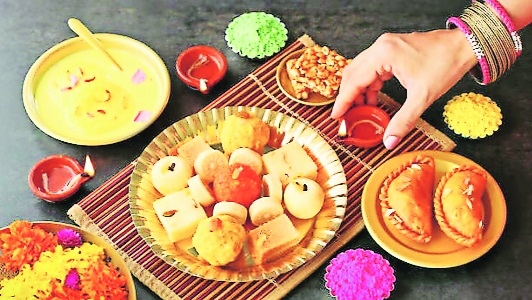
In kitchens, the festival begins to smell like a small
universe of smells and sounds: ariselu frying in ghee,
puranpoli stacked neatly on banana leaves, and vada, laddoo, and chakli cooling on brass plates.
Women kneel before representations of snakes
On the fourth day, Nagula Chavithi, women kneel before representations of snakes, offering milk, rice flour, and turmeric, as they seek blessings for the family’s safety.
The final day, Bhai Dooj, is a celebration of bonds. “Sisters perform a tilak ceremony
for their brothers and pray
for their long life, while
brothers offer gifts and
blessings in return," expressed N Nageswara Rao.