Brain is wired not to accept defeat
26 Oct 2025 07:33:49
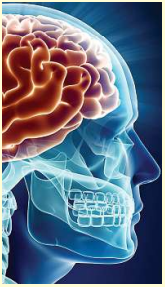
Life is a journey of struggle
and challenges. These struggles and challenges are
intermingled with defeats and
victories. Pain and pleasure are
the two sides of life.
Defeats are
crippling and victories lead us to
the pedestal of joy and glory. We
are the witness to the continuing
and indefatigable journey of
human life from the time immemorial. Both ancient wisdom and
modern science believe that the
brain is wired not to accept
defeats.
The scientific theory of neuroplasticity suggests that the brain
continuously adapts and forms
new neural networks to face
challenges and solve the newly
emerging problems. Yoga considers the mind not onlyabiological
entity, but a mass of vibratory
energy. Stability and equilibrium
are its inherent nature.
Through
Yogic practices, this mental stability is regained and the mind is
ready to go ahead in the inner
journey of consciousness.
Philosophy teaches us to maintain
resilience in face of suffering.
The
inner core of the mind is full of
resilience. So this resilience can
be invoked to face the challenges
of life. Our true nature is not to
surrender, but to persist and
struggle. Neuroscientific research
has found that the reward and
motivation segments of the brain
keeps it going and do not allow
the brain to shut down.
It has
been found that the prefrontal
cortex always pushes us towards
goals and achievements.
Neuroscience propounds that in
face of challenges the brain
rewires itself to face the new crisis. Post traumatic studies have
found that even after setbacks ,
the brain reshapes itself and creates new neuropaths to adapt.
The brain bounces back with
the exceptional capacity of regeneration. Evolutionary science also
tells the same stories of struggles
and survival. Species survived
because they did not accept the
defeats and were always ready to
face adversity.
The brain has been
found to learn from failures and
recover to discover new strategies. According to Yoga, the mind
itself is not the cause of suffering,
but its uncontrolled fluctuations
lead to misery. When these mental modifications are calmed
down by the practices of Asanas,
Pranayamas and meditation, the
mind is restored to its stability
and purity. Meditational practice
helps to regulate the activities of
the prefrontal cortex, reduce
stress, improve resilience, and
harmonise both the hemispheres
of the brain.
In the Geeta Lord Krishna
teaches Arjuna that true self is
ever shining. It becomes a source
of suffering because it is clouded
by ignorance and illusions.
Humans are made to face adversity with equanimity. Momentary
defeats turn into an opportunity
for inner awakening. Philosophy
treats defeats just as a pause on
the path of growth and development. Defeats exist on the surface
not at the core of pure self. Thus
the body, mind, and the brain are
made to adapt to new circumstances.
Neuroscience has found
that the brain is structured to
keep on fighting. Thus the trinity
of neuroscience, Yoga ,and philosophy inspires a life vision which
believes that the brain is adaptive, courageous and purposeful.
(The writer is Former DG
Police & CG, Homeguards,
Maharashtra) ■
