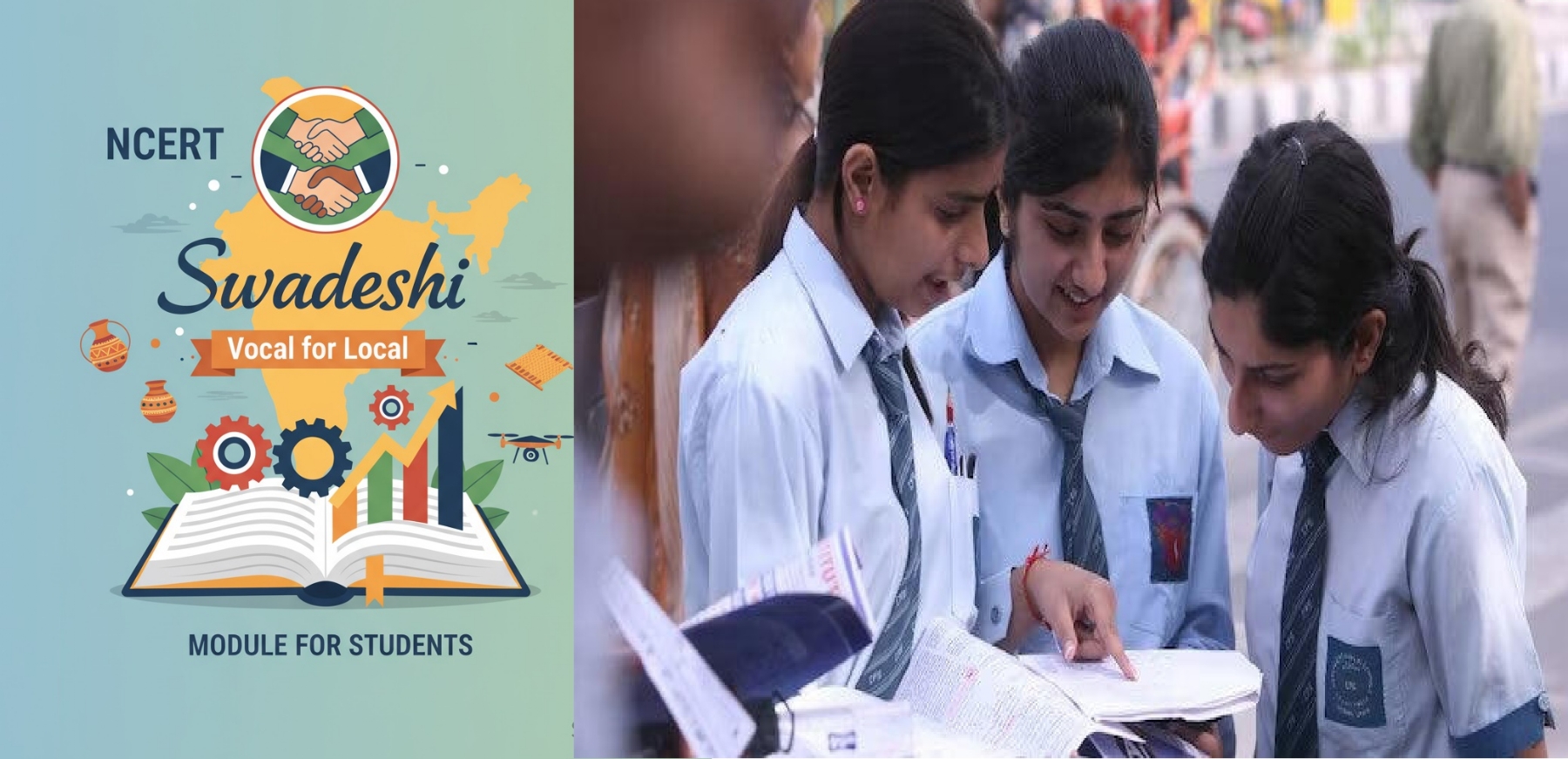
NCERT launches ‘Swadeshi: Vocal for Local’ modules for school students
04 Oct 2025 10:45:53
By Vishu Adhana :
NEW DELHI
THE National Council of Educational Research and Training (NCERT) has introduced two new educational modules titled ‘Swadeshi: Vocal for Local,’ which connect Prime Minister Narendra Modi’s vision of Atmanirbhar Bharat with the historic Swadeshi Movement.
The modules begin with excerpts from the Prime Minister’s 79th Independence Day speech, where he emphasised self-reliance as “the bedrock of national strength and dignity” and encouraged citizens and shopkeepers to “champion India-made goods” not out of compulsion but as an act of pride.
The modules recall how the Swadeshi Movement was declared in 1905 at Calcutta Town Hall, with leaders such as Bal Gangadhar Tilak, Lala Lajpat Rai and Bipin Chandra Pal mobilising people to boycott British goods and adopt Indian-made products.
Mahatma Gandhi later described Swadeshi as the “soul of swaraj,” transforming it into a deeper movement for social and spiritual
self-reliance.
The texts also draw connections with present-day initiatives. Students are introduced to the India Semiconductor Mission, which aims to reduce import dependence and build domestic capability in a sector that powers everything from smartphones to automobiles and defence systems.
The modules explain how semiconductors are not only vital for economic growth but also for national security, and how India’s investment in chip fabrication and design facilities is positioning the country as a global innovation hub.
Alongside such technological advances, the modules feature stories of grassroots entrepreneurship that embody the spirit of Vocal for Local.
In Kerala, a woman entrepreneur established Bodhi Sathwa Coir Works, employing local women to produce handmade mats that are now sold across the world.
In Rajasthan’s Jodhpur district, a young villager transformed a gaushala into an employment generation centre by producing compost, eco-friendly diyas and herbal products from cow dung, creating livelihoods for many in his community.
The Government’s flagship One District One Product initiative also finds special mention, with the modules noting that over 1,200 unique products have been identified from more than 750 districts, ranging from handicrafts to food processing items.
These products, now available on platforms like GeM and ONDC, are being promoted internationally with dedicated “ODOP Walls” in cities such as Singapore, Milan, New York and Tokyo.
The text stresses that ODOP revives the core philosophy of the Swadeshi movement by providing sustainable markets for artisans while preserving India’s cultural heritage.