Rashtriya Swayamsevak Sangh: A journey towards New Horizon for Nation-Building
| Date :04-Oct-2025 |
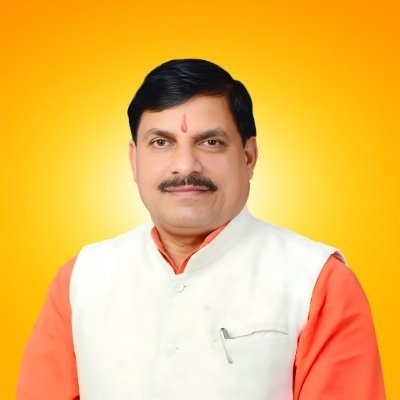
By Dr Mohan Yadav :
Chief Minister of Madhya Pradesh
The Rashtriya Swayamsevak Sangh (RSS), founded with a noble resolve of building the individual, society, and the nation, has now completed 100 years since its establishment. The journey of this unique and vast organisation of the world has been a symbol of sacrifice, discipline, dedication, and selfless service. Despite many challenges and difficult circumstances, the Sangh moved forward on the path of service with determination. It is the vision of the revered founder, Dr Keshav Baliram Hedgewar, and the dedication of each swayamsevak that today the Sangh’s flag is flowing high across the world.
The Sangh was established in extraordinary conditions of the country. Alongside the oppressive rule of the British, forces more destructive to India’s identity and culture were at work, attempting to completely transform the nation. We see this in the violence of Malabar, Chittagong, Karachi, and Dhaka. Large-scale massacres of Hindus and the abduction of women were witnessed with silence. While society and culture faced suppression, the Indian community was also entangled in contradictions - fragmentation and untouchability weakened it, and self respect was fading. A sense of slavery was gaining promminece.
Dr Hedgewar, gifted with brilliance and commitment to the nation and cultural heritage since childhood, was greatly disturbed by these developments. An eminent freedom fighter, he had even been imprisoned during the Non-Cooperation Movement. Alongside the struggle for independence, he resolved to initiate a cultural and national awakening in India. He realised that India could not regain its glory unless every Indian felt pride and consciousness in their own identity. After consulting other prominent personalities, he chose the occasion of Vijayadashami in 1925 to establish the Sangh.
The selection of this date itself had deep significance: Vijayadashami embodies the ethos of selfless struggle, the triumph of truth, the defense of righteousness, and the revival of human values. This message has guided the Sangh throughout its century-long journey.
Two aspects stand out in this centenary journey. First, the Sangh’s unwavering dedication to its mission makes it unique among global organisations. Second, is the continuous attacks it faced - ideological, political, and even violent assaults on its volunteers. The Sangh endured hardships, including three bans after independence. It was falsely implicated in Gandhi Ji’s assassination, persecuted during the Emergency, and again banned after the Ayodhya movement of 1992. Even today, attacks on volunteers occur in Kashmir, Kerala, and West Bengal. Yet, the Sangh never stopped, never tired, and its volunteers never wavered.
Madhya Pradesh’s historic city of Ujjain has played a key role in the Sangh’s expansion. From Nagpur, the Sangh’s functioning spread toward Mahakaushal and Malwa, where Ujjain became one of the earliest centers during the 1930s and 40s. Ujjain volunteers participated in the Hyderabad Movement, in the liberation struggles of Junagadh, Dadra-Nagar Haveli, and Goa, even making sacrifices for the nation. Sangh volunteers also contributed tirelessly during the freedom struggle,
partition turmoil, refugee rehabilitation, internal unrest, and wars of national defense.
At times, I feel immense pride that I, too, have been a part of this journey through the Sangh, which moves forward with the goal of attaining India’s utmost glory.
A defining aspect of the Sangh has been innumerable pracharaks who never worried about their names, identities, or personal existence, merging completely into the foundation of nation-building. The Sangh’s outreach has expanded from its daily shakhas to homes, villages, and fields, thus touching all dimensions of social and national life. The Sangh’s expansion is not merely organisational - it is a sadhana (spiritual discipline) of personal development, social transformation, and nation-building.
That is why the Sangh is not celebrating its centenary convention as a festival but as a day of resolve for nation’s progress and India’s cultural re-establishment on the world stage.
To bring positive change in society, the Sangh chief Dr Mohan Bhagwat has appealed for ‘Panch Parivartan’ (Five Transformations): Awareness of the Self (Swadeshi), Duty-conscious citizenship, Environmental protection, Social harmony and Family enlightenment.
These values encourage Indians to fulfill civic responsibilities,
follow law, preserve nature, ensure equality and harmony, and nurture virtuous family life. Implementing them requires collective effort from all citizens. Prime Minister Narendra Modi, too, reflected this spirit in his message on the Sangh’s centenary and released special postal stamps and commemorative coins.
The
100-rupee coin depicts the national emblem on one side and Bharat Mata with folded hands of Swayamsevaks seeking blessings and saluting Bharat Mata.
For 100 years, the Sangh has served the nation tirelessly and selflessly. As we step into the era of Amritkaal, guided by the principles laid down by Sar Sanghchalak Dr. Mohan Bhagwat the possibilities for societal transformation grow stronger. Internalising these ideals, we can contribute to establishing Madhya Pradesh and India on the global stage with renewed pride.
On this auspicious Vijayadashami, I appeal to the 8.5 crore citizens of Madhya Pradesh to join in this mission of nation-building inspired by the Sangh’s national consciousness.
n