Century-old British-era bridge still serving commuters
| Date :11-Nov-2025 |
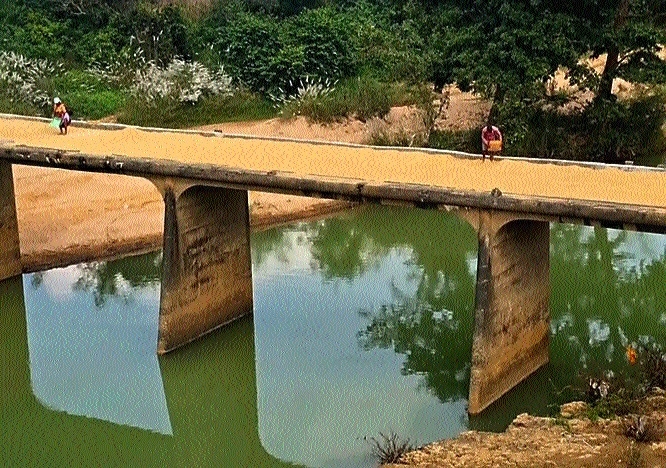
Villagers drying their crops on a bridge
By Ashish Das
PHARASGAON
BETWEEN Kondagaon and Pharasgaon, in Juganikalar village stands a century-old British-era bridge along National Highway 30. Beneath it flows a gentle stream whose sound remains as calm today as it was decades ago. The bridge is not just a structure of stone and mortar, it is a living museum of collective memory for the people of Pharasgaon block and a testament to the remarkable craftsmanship of British engineering.
Today, when a thick layer of golden paddy and maize grains covers the bridge and farmers stand confidently drying their crops, their eyes reflect deep respect for this enduring monument.
Former village sarpanch and current sarpanch representative Visham Netam says, “We have seen this bridge since our childhood, and so did our fathers in theirs.
Netam said that, according to his father, the culvert was built during the British era and it existed even before they were born. It has endured water, floods, and even trucks carrying timber logs but still stands tall.
Netam’s words echo a common sentiment among the village elders wonder at how a bridge built without modern machinery could remain so flat, firm, and intact even after a hundred years.
Ever since traffic was stopped on it, the bridge has given farmers a spacious open-air threshing floor, something they need the most.
“Since vehicles stopped crossing it, this bridge has become our greatest companion in joy and hardship,” say 85-year-old farmer Mangru Ram Netam, 75-year-old Kamlu Pandey, and 80-year-old Shyamlal Markam.
“Sunlight falls directly here, and moisture doesn’t rise from the ground. There’s no better place in the whole area to dry our paddy and maize. In a way, history itself has come to sustain our farming.”
Though the bridge is no longer a center of transport, it has become an informal hub of the rural economy. It stands as a reminder of an era when construction meant longevity, and every structure was a legacy.
Quietly standing tall, bearing every handful of grain that dries upon it, the bridge poses a silent challenge to modern construction that true quality never dies
with time.