From curiosity to recognition: Dr Ashish Badiye among Stanford’s top 2% scientists
| Date :17-Nov-2025 |
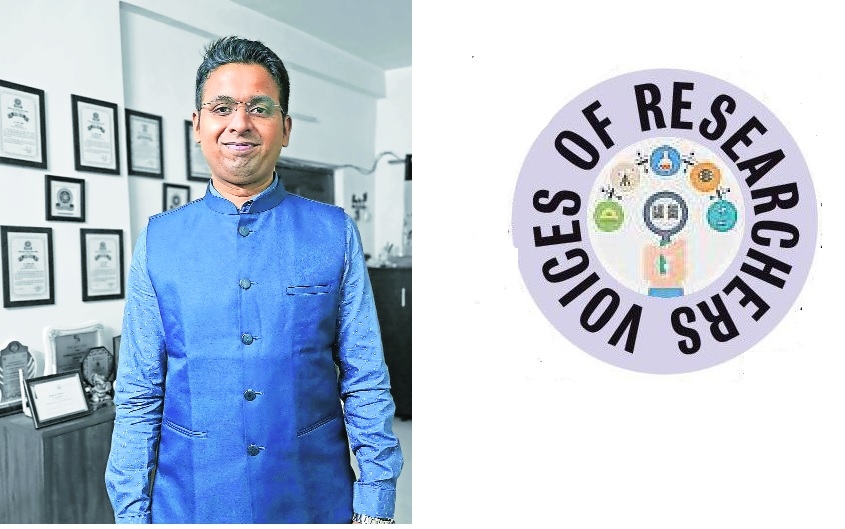
Dr Ashish Badiye
By Kunal Badge :
Vidarbha was filled with sense of pride when 23 researchers form the region were selected as top 2 per cent scientists in the world by Stanford University from USA. The Nagpur, however, was more proud as Dr Ashish Badiye was placed in the list for the fourth consecutive year.
Dr Badiye, Head and Senior grade Professor at the Government Institute of Forensic Science (GIFS), and Chairperson of Board of Studies of Forensic Science of the RTMNU, stands in the list after a journey in the field shaped by curiosity, humility, and an unwavering commitment to strengthening scientific justice.
“Forensic science is a field where science directly serves the society,” said Dr Badiye while speaking to ‘The Hitavada’. To his credit, he has a more than 44,400 citations in Scopus for his more than 109 documents with amother 52000 citations as per Google Scholar along with his 14 years of teaching, research and administrative experience in Forensic Science.
While working, Impact is central to his approach. Working as an MPSC-selected Class-I Gazetted Officer and closely with police units, Dr Badhiye has translated research into training modules and operational protocols. He has led workshops for police, prosecutors and firefighters, improving evidence handling and strengthening courtroom readiness. His role as a WADA-certified Doping Control Officer during the 2010 Commonwealth Games underscores his commitment to applying forensic rigour in diverse, high-stakes settings.
Looking ahead, Dr Badiye advocates three pillars for India’s forensic future: stronger practical training, sustained academia–agency collaboration, and modernised infrastructure.
He calls for regional training centres, routine certification for investigators and judicial personnel, and electronic chain-of-custody systems to protect evidence integrity.
Nagpur, he argues, already has the ingredients to become a national forensic hub. The city’s cluster of institutions — GIFS, police training schools, judicial training bodies and universities — creates a fertile ecosystem for interdisciplinary work. With targeted investment in specialised labs for cyber-forensics, DNA, digital documentation and AI-assisted analysis, Nagpur can scale from regional strength to national leadership. While addressing the students he asks them to be curious. “Be curious. Be ethical. Be relentless. Stay humble. Hustle hard. Never give up,” he says. For Dr Badiye, the Stanford listing is not an endpoint but a reminder — research must remain useful, accessible and aligned to the needs of justice.