When empathy becomes empowerment
| Date :17-Nov-2025 |
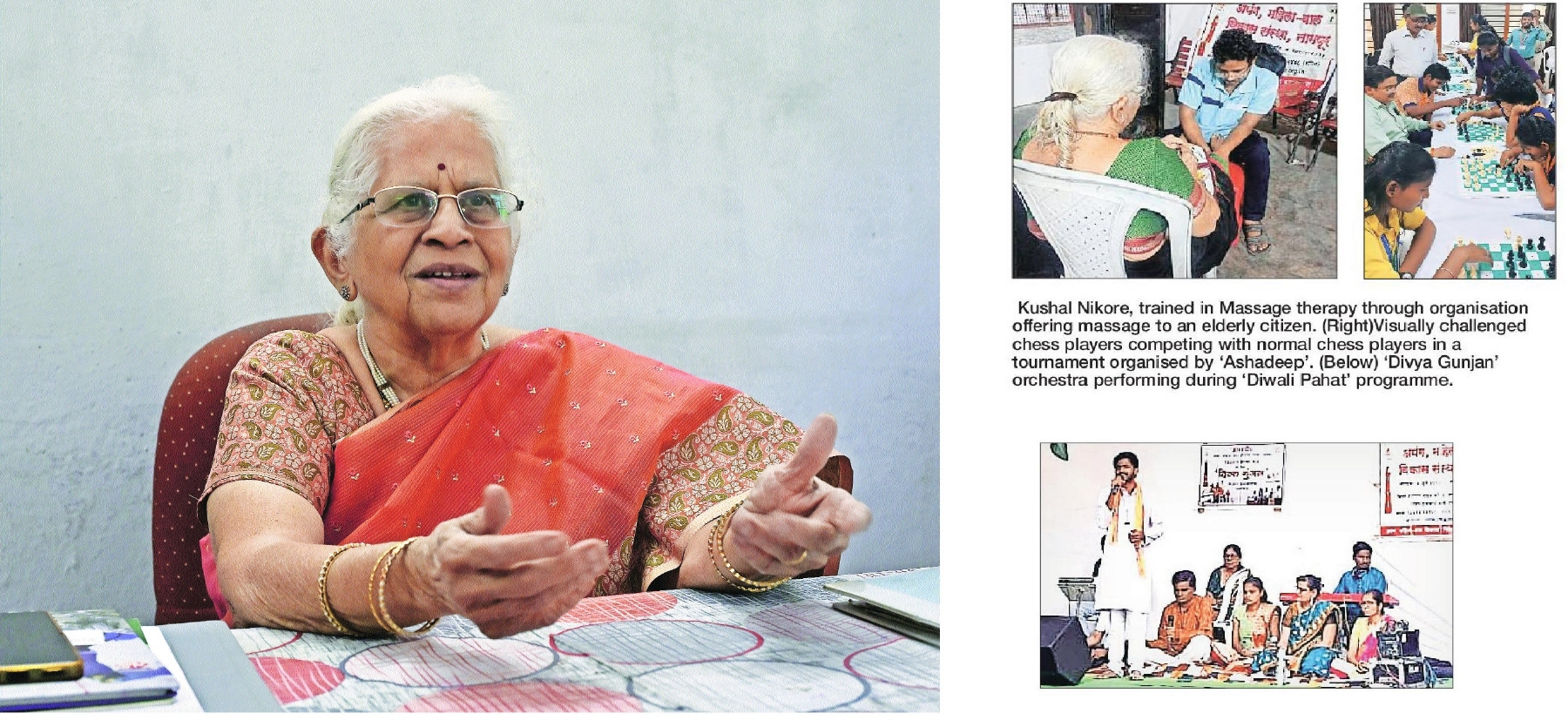
Dr Pratima Shastri leading ‘Ashadeep’ Apanga Mahila-Bal Vikas Sanstha for welfare of Divyangs
By Kunal Badge :
The true progress of a nation is often measured not by the height of its skyscrapers or the speed of its digital
transformation, but by how gently it holds the hands of those who need support the most. Among many sections of society that continue to battle exclusion, the Divyang community, the visually impaired, the hearing-
challenged and those with locomotor disabilities, often find themselves standing at the margins of opportunity. Yet, in Nagpur, a quiet
revolution of dignity,
independence and inclusion has been unfolding for over three decades through ‘Ashadeep’ Apanga Mahila-Bal Vikas Sanstha.
Founded in 1993 by Late Usha Sant and Dr Prabha Ballal, ‘Ashadeep’ emerged from a simple belief that
disability should never decide a person’s destiny.
Today, under the dynamic leadership of Dr Pratima Shastri,
daughter of co-founder Usha Sant, it continues to widen the circle of opportunity for Divyang children and youth.
A distinguished academic
herself—formerly Head of the Department of Food Technology at Laxminarayan Innovation Technological University—Dr Shastri brings to ‘Ashadeep’ not only
administrative vision, but also a deeply personal
commitment to service.
“The Divyang children are exceptionally sharp and intelligent,” she says. “All they need is empathy, not sympathy.
Once society recognises their abilities, they soar.”
And soar they do. For years, Ashadeep has been quietly shaping futures—recording audio lessons for visually impaired students, organising workshops on assistive technologies such as the Speaking Computer, Kobi device for reading, and the Smart Cane, an advanced navigation tool superior to the traditional white cane. Recognising that accessibility must be economic as well as technological, the organisation also provides financial support to help students procure these devices.
But Ashadeep’s mission extends beyond education. “Material help is only one part of rehabilitation,” explains Dr Shastri. “The Divyang community needs social acceptance—a society that sees their worth and uses their skills.”
This philosophy drives Ashadeep’s most innovative programmes. Their Chess Training Centre for the Blind, where visually impaired students compete with sighted players, won the Best Innovative Project Award from the Rotary Club of Delhi. Another initiative, ‘Sathi Hath Badhana’, brings Divyang and non-Divyang college students together through shared activities, breaking invisible barriers and building friendships that normalise inclusion.
Talent, too, finds a platform. Saurabh Borkar, a gifted visually impaired singer, performs as part of Ashadeep’s ‘Divyangjan Orchestra’, which now receives invitation to prestigious events such as Diwali Pahat celebrations.
The applause he receives is no charity—it is a recognition of his talent, confidence and relentless perseverance.
Ashadeep also helps youths build livelihoods, conducting massage therapy training and supporting Divyang entrepreneurs in running small production units for phenyl and agarbatti. Kushal Nikore, a trained massage therapist in this programme is today conducting a successful business. Many who once relied on support now earn with dignity, transforming their lives and often their families.
What makes Ashadeep remarkable is not its scale, but its spirit. It is a volunteer-driven organisation, sustained by ordinary citizens who choose to extend extraordinary compassion—from recording audio chapters to contributing funds to simply being present.
In a society that often looks past the differently-abled, Ashadeep stands as a reminder that inclusion is not an act of charity, but an act of justice. As Dr Shastri and her team continue their mission, they illuminate a timeless truth: when empathy guides action, it does not just change lives—it transforms communities, rewrites narratives and expands the nation’s idea of progress itself.