all set to start indigenous prodn of 125-mm anti-tank ammunition
| Date :20-Nov-2025 |
By Ashish Rajput :
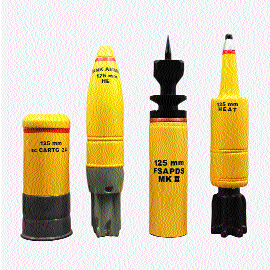
Ordnance Factory Khamaria (OFK) has achieved a major milestone by successfully completing the indigenised production of 125-mm anti-tank ammunition under the ambitious Mango Project. The factory is now gearing up to send its first pilot batch of the ammunition to Balasore firing range in Odisha, where field trials are expected to take place next month.
According to sources, the pilot lot will be dispatched by the end of this month. If the ammunition clears the trials, OFK is prepared to begin full-scale production of the indigenous version within just one month. This is expected to significantly boost the Indian Army’s self-reliance in critical defence equipment.
Mango Project will open up an additional annual production opportunity worth nearly Rs 500 crore for OFK.
This is also expected to drastically reduce India’s import dependence, as the country has been procuring 20,000 to 30,000 rounds of this ammunition from Russia every year.
OFK has already received an indent to produce 24,000 rounds annually amounting to Rs 500 crore.
The Mango Project began on August 29, 2016, when OFK launched production of 125-mm anti-tank ammunition based on Fin Stabilized Armour Piercing Discarding Sabot (FSAPDS) technology, in collaboration with Russia.
The first two phases involved Semi Knock Down (SKD) and Complete Knock Down (CKD) production, where components were assembled with the assistance of Russian experts.
In the third phase, OFK took a major leap by starting fully indigenous production without foreign technical support.
The project has been divided among three facilities Ordnance Factory Khamaria, HEPF Trichy and Ordnance Factory Bhandara. While OFK has successfully completed indigenisation process, work is still underway at Trichy and Bhandara.
With this achievement, OFK is set to play a key role in strengthening India’s defence manufacturing capabilities and reducing reliance on imports, marking a significant step towards true self-reliance in ammunition production.