Financial literacy is important for every child: Saboo
| Date :23-Nov-2025 |
By Reema Mewar :
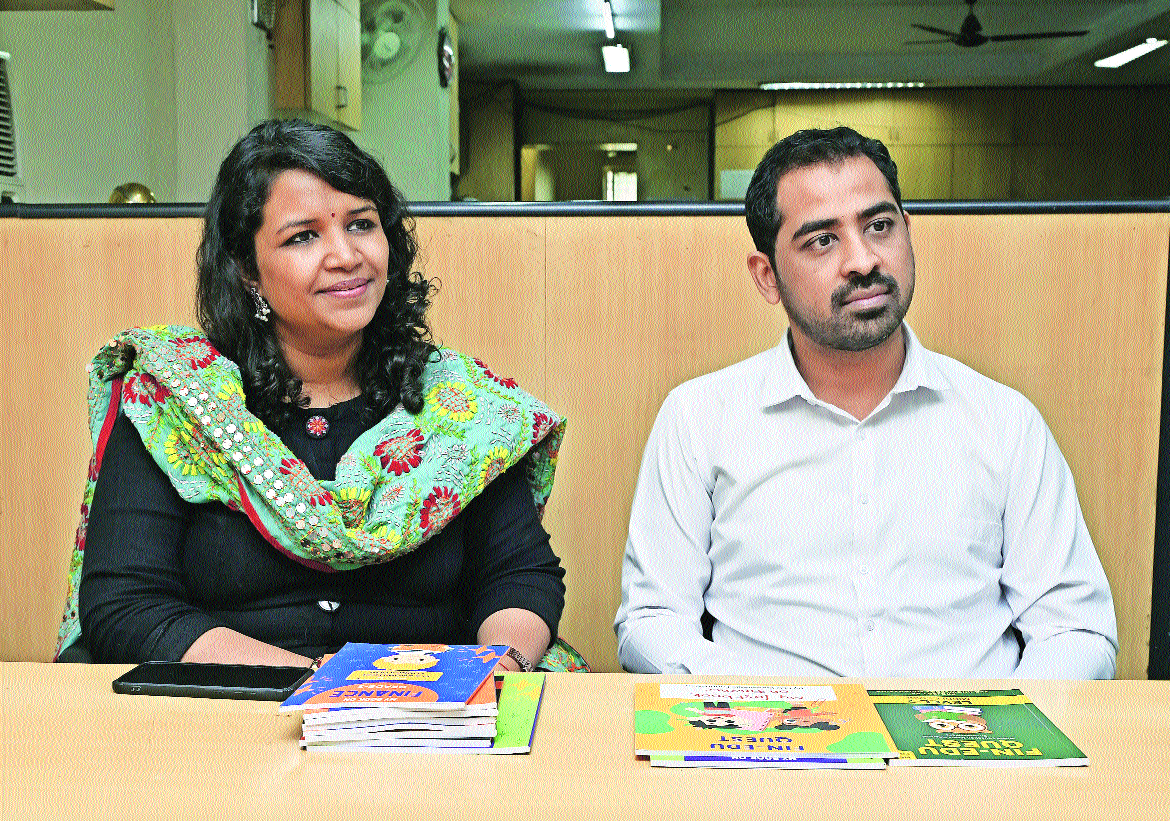
IN AN effort to make financial literacy accessible and age-appropriate for school-going children, Chartered Accountants Premlata Saboo, Aman Jain, and Nayan Gupta, co-founders of FLQ Knowledge NGO, have developed a structured set of finance books for students from Class 1 to 10. As practising CAs, educators and young parents, they identified the critical gap in financial awareness among children and families.
In a conversation with ‘The Hitavada’, they discussed why early finncial education is essential, how their books are designed, and the growing response they have received from schools and parents.
Q: What led you to introduce books with financial concepts to children in Class 1? Why not Class 5 or 6?
A: Financial literacy really should start as soon as a child begins to understand what money is. Today, with so much exposure to social media, kids develop a lot of demands very early. They need to learn about things like delayed gratification from a young age. Before Class 1, they’re still too small to be overly demanding but by the time
they reach Class 5 or 6, they’re already used to spending, or asking their parents to spend, without thinking much about it. So if we want to build mindful habits, it has to begin early.
Q: How are the books structured?
A: Our priority was to avoid digital formats; we wanted children to get back into reading. So we explain every topic through simple stories, followed by a few MCQs at the end.
The idea is to teach without making it feel like a burden. There are no definitions to memorise, and once children are older, they
can go through the books on their own. We began with three books, but the pilot project got such a good response that we expanded to ten, one for each class, so the learning builds gradually every year. The entire curriculum is aligned with the NEP 2020.
Q: What made you realise that financial literacy should begin with a child?
A: Some of the statistics themselves show how serious the situation is, there’s a financial fraud every nine seconds in India, someone dies by suicide due to financial stress every 22 minutes, and about 44% of personal loans are in default. Clearly, there’s a huge gap in financial awareness. Money is still a taboo topic at home. People show it off, but very few talk about how to earn, grow, or invest it. Parents usually avoid discussing things like loans or debts, and many hesitate to tell their children, “We can’t afford it,” even when needed.
That’s why we added a parental guidance section in our books, so parents can learn healthier, more open ways to talk about money with their kids.
Q: Given the diverse economic background of the students, how do you ensure that the course content remains relevant to everyone?
A: Financial literacy is important for every child, no matter what their economic background is. It really doesn’t matter whether someone can invest Rs 500, Rs 5,000, or Rs 50,000 a month; the idea is simply that the child understands the value of saving and investing. Our books don’t talk about where to invest or how much to invest.
We just want children to be informed, aware, and confident enough to make those decisions for themselves when they grow up.
Q: With increased access to social media, children are exposed to ‘finance gurus’ who encourage day trading, digital currencies etc. Have you taken this up in your books?
A: Yes, we’ve covered the stock market, mutual funds, and digital currencies in our books for Grades 9 to 12, and we’ve touched on cryptocurrency as well. We do caution students about the risks and rewards involved in all kinds of investments, but we haven’t advised anything specific because we don’t want to create any stigma or bias.
Our aim is financial empowerment.
As financial challenges grow more complex, Fin Edu Quest’s work highlights how early awareness can shape confident, responsible future adults.