391 die of AIDS in Ngp Circle in 30 months
| Date :06-Nov-2025 |

By Simran Shrivastava :
Confirmed cases of Acquired Immunodeficiency Syndrome (AIDS) in the Nagpur Circle have reached 613 during the six-month period from April to September 2025. This is revealed in the data shared under the Right to Information (RTI) Act by Deputy Director, Health, Nagpur Division, to applicant Abhay Kolarkar. The number reflects nearly half of last year’s total of 1,344 cases recorded in 2024-25 and is slightly below previous year’s figure (1,310 in 2023-24).
While the overall number of reported cases appears stable, the data on fatalities has raised concern among public health observers.
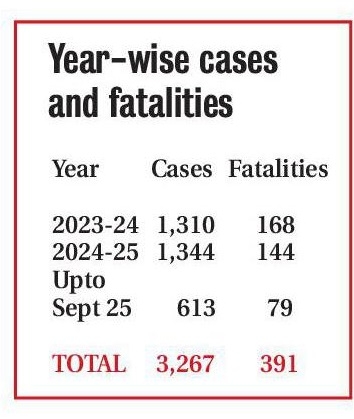
Deaths due to AIDS have already reached 79 during April to September 2025. The mid-year fatality figure suggests that mortality rates may remain high through the remainder of the current year.
AIDS is caused by the human immunodeficiency virus (HIV), which attacks and weakens the body’s immune system, making individuals more susceptible to infections and certain cancers. HIV is primarily transmitted through unprotected sexual contact, contaminated blood transfusions, sharing of needles, and from mother to child during childbirth or breast feeding. Early detection through testing is crucial, as the infection can remain asymptomatic for years.
Doctors share that common symptoms of AIDS can include persistent fever, rapid weight loss, chronic fatigue, swollen lymph nodes, recurring infections, and prolonged diarrhoea.
As the disease progresses, patients may develop opportunistic infections such as tuberculosis, pneumonia, and certain cancers, which are often the direct causes of fatalities.
Health experts point out that while access to antiretroviral therapy has expanded in recent years, challenges such as late diagnosis, irregular treatment adherence, and co-infections continue to contribute to avoidable deaths. The persistence of new infections alongside steady fatality numbers indicates that prevention and awareness campaigns require renewed attention.
Public health authorities stress the importance of continued surveillance and counselling services to ensure early testing and consistent treatment. Expanding outreach in rural areas, where stigma and limited health care access often hinder timely intervention, is also being prioritised.
Although the annual caseload remains relatively consistent, the ongoing fatality count highlights that the fight against AIDS is far from over.