Why Guru Ghasidas’s ‘satnam’is blueprint for a just republic?
18 Dec 2025 13:32:04
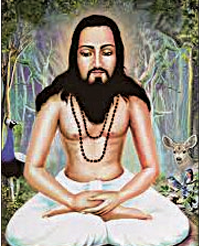
By Aashutosh Kumar:
Aahire
AS THE winter sun rises over
the Mahanadi plains this
December 18, millions will
gather at Giroudpuri Dham,
gazing at the towering
Jaitkhamb (pillar of victory).
They are not merely celebrat
ing a saint’s birth; they are reaf
firming a social contract writ
ten centuries before modern
constitutions. Guru Ghasidas,
born in 1756 in Chhattisgarh,
was a radical sociologist whose
philosophy of Satnam(Truth)
andMankheMankhe Ek
Samaan (All humans are equal)
provides a practical framework
for social cohesion.
In the late 18th century,
Central India was fractured by
rigid caste hierarchies.
Ghasidas fundamentally shift
ed the conceptual framework
of inequality by rejecting inter
mediaries between the divine
and the human.
His proclamation of equality was a
profound anthropological
assertion: that the singular
‘Truth’ of humanity renders
caste, gender, and creed as mere
social constructs.
In modern Chhattisgarh, this
spiritual heritage informs sec
ular governance. TheGuru
Ghasidas-Tamor Pingla Tiger
Reserve span
ning 2,800
square kilome
tres aligns the Guru’s teachings
on Ahimsa (non-violence)
with modern conservation.
Similarly, Guru Ghasidas
Vishwavidyalaya in Bilaspur
integrates his philosophy into
higher education, fostering
research on social inclusion and
inclusive policy-making.
The Jaitkhamb at
Giroudpuri is a white,
unadorned pillar symbolising
singular truth.
During the
annual Mela, the Bhandara
(community kitchen) serves as
a laboratory of social engineering. Here, people of all
castes sit inpangat (lines) to
eat together, effectively sus
pending the taboos of purity
and pollu
tion. This is
‘lived equality’ in its most potent form.
In a landscape often fractured
by identity politics, theSatnam
Panthoffers a "Third Way", a
rationalist spirituality. His moral
weight acts as a localised "eth
ical constitution." Furthermore,
his strict prohibition of intoxi
cants (nashabandi) remains a
vital public health stance, offer
ing a community-led model for
economic resilience in rural
areas. Authentic tribute requires
moving beyond ritual.
To truly
internalize Satnam, we must
commit toAntyodaya (serv
ing the last man) through:
1. Educational Reform:
Integrating his rationalist cri
tique of caste into national cur
ricula.
2. Ecological Justice: Treating
conservation as a manifesta
tion of his principles of coexis
tence.
3. Social Audits:Measuring
policy success by its ability to
reduce social discrimination.
Guru Ghasidas was a light
house in a feudal ocean. Today,
he reminds us that a republic
is built on the beautiful, uncom
promising truth that every
human is equal. To honor him,
we must turn remembrance
into reform, practicing
MankheMankhe Ek Samaan in
our homes, institutions, and
hearts.
(The writer is Assistant
Professor of Political Sciencey
Hidayatullah National Law
University, Raipur).