Madhya Pradesh first state todevelop a TIGER CORRIDOR
19 Dec 2025 13:47:35
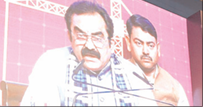
By Bhavana ‘Aparajita’
Shukla :
MADHYAPradesh is known as
the ‘Tiger State’ of India in view
of highest tiger population in the
country. Wildlife conservation
has also being taken in to account
before launching new project of
road construction. Department
will develop a ‘tiger corridor’.
Madhya Pradesh is the first state
to develop such corridor. This
corridor will connect five major
National Parks of the State. For
this, underpasses and cautions
traffic zones will be built sur
rounding to forest areas since
connectivity to wildlife is also
important without adversely
affecting tiger movement. This
will also boost eco-tourism and
local economy, informed, Public
Works Department Minister
Rakesh Singh on Thursday. The
corridor will be developed in col
laboration with the National
Highway Authority of India
(NHAI).
Elaborating more on road net
work Minister Singh said that the
way to road development in the
country has changed, and this is
the era of high-speed corridors.
In this context, a high-speed
corridor of approximately 700
kilometres is proposed from
Varanasi to Nagpur, which will
connect central and southern
India. The alignment between
Bhopal and Indore has also been
finalised. The project is estimat
ed to cost around Rs 1.05 lakh
crore, and efforts are being made
to ensure that Madhya Pradesh
receives the maximum benefit
from it.
The Public Works Department
of Madhya Pradesh has achieved
a remarkable progress in the past
two years under the leadership
of Chief Minister Dr Mohan
Yadav, fulfilling the vision of
“Developed India @2047.”
Public
Works Minister Rakesh Singh
highlighted the department’s
achievements, ongoing mega
projects, and innovative initiatives during a press conference
at the Kushabhau Thakre
Convention Centre on December
18.
Over the period 2024-25,
approximately 10,000 kilometres
of roads were constructed at a
total cost of Rs 17,284 crore,
alongside the construction of 739
government buildings worth Rs
6,627 crore, strengthening basic
infrastructure in both urban and
rural areas. Flagship projects
completed include the Dr
Bhimrao Ambedkar Flyover in
Bhopal (Rs 153 crore) and the
Shyama Prasad Mukherjee six
lane Kolar Road (Rs 305 crore),
easing traffic and improving connectivity in the rapidly developing capital.
In Jabalpur, a 7-kilo
metre elevated corridor from
Damoh Naka–Ranitall–Madan
Mahal Chowk to Medical Road
was completed at Rs 1,019 crore,
significantly enhancing city traf
fic flow. Modern court buildings
were constructed in Gwalior and
Rewa at Rs 194 crore, while new
medical colleges in Neemuch,Mandsaur, and Seoni were completed at Rs 889 crore, expanding healthcare and medical edu
cation. Additionally, 136 new
school buildings (Rs 2,240 crore)
and 177 healthcare centres (Rs
726 crore) were completed,
improving access to essential
public services.
Currently, several large-scale
projects are under progress,
including a 13-kilometre elevat
ed corridor in Gwalior (Rs 1,064
crore), a 2.6-kilometre elevated
corridor in Bhopal (Rs 215 crore),
a high-level bridge over the Tawa
River in Narmadapuram (Rs 89
crore), and a 7.45-kilometre elevated corridor in Indore (Rs 350
crore). The Ujjain–Javra express
way (Rs 5,017 crore),
Indore–Ujjain 6-lane highway
upgrade (Rs 1,692 crore), and the
new Indore–Ujjain greenfield
expressway (Rs 2,935 crore) are
expected to enhance regional
connectivity and boost economic
activity.
Additionally, 111 railway over
bridges are under construction across the state at a cost
of Rs 3,903 crore.
The department is implementing projects in co-ordi
nation with national and inter
national agencies. With sup
port from the Asian
Development Bank (ADB) and
the New Development Bank
(NDB), 1,141 kilometres of
roads are under construction
at Rs 6,746 crore. On the
national level, 55 national
highways totalling 989 kilo
metres are being developed at
Rs 14,918 crore, and an additional Rs 28,000 crore worth
of projects have been approved
under an MoU with the
National Highways Authority
of India (NHAI), strengthening Madhya Pradesh’s nation
al connectivity.
Under the
Hybrid Annuity Model (HAM),
the government has partnered
with the private sector to develop 345 kilometres of five major
road projects costing Rs 12,676
crore. Key HAM projects
include the Indore–Ujjain 6
lane highway, the Ujjain–Javra
4-lane greenfield highway, and
the Sagar–Damoh 4-lane road,
ensuring timely, high-quality
infrastructure delivery.
Innovation and technology
have been central to the
department’s success. The
“Lokpath Mobile App” connects citizens directly with the
department, enabling repair
of roads within four days; over
11,000 complaints have been
successfully resolved. The “Lok
Project Management System,”
implemented on September
15, 2025, allows online budgeting,
administrative
approvals, tendering, measurement books, and project
management,
improving
transparency, efficiency, and
monitoring.
With the support
of Bhaskaracharya Institute
(BISAG-N), aerial distance
comparisons, road network
master planning, and scientific
DPRs for Tiger Corridors have
been prepared to strengthen
long-term road infrastructure.
The department has digi
tally mapped 68,315 kilometres of 10,778 roads, 2,633
buildings, 1,320 bridges, 503
public welfare ponds, and 314
plantation sites through the
Lok Survey Mobile App,
enabling precise and trans
parent asset management.
Environmental sustainability
is emphasised through rain
water harvesting, water
recharge borewells along every
kilometre, the construction of
506 public welfare ponds, tree
shifting, and the plantation of
over 2.5 lakh saplings as of July
1, 2025. Quality control has
been reinforced through the
Road Asset Management
System (RAMS), QR code
based confidential sampling,
procurement of make-in-India
bitumen exclusively from government refineries (IOCL,
HPCL, BPCL), modernisation
of 14 zonal laboratories with
a budget of Rs 7.2 crore, and
operation of 14 mobile laboratories.
Advanced technologies such as FDR, white top
ping, micro-surfacing, automatic patch repair machines,
UHPFRC, and GFRP have been
integrated into the schedule of
rates (SoR) to increase road
longevity, durability, and cost
efficiency. Tendering process
es have been strengthened by
enforcing performance guarantees for low-bidding, pre
qualification for works above
Rs 2 crore, and mandatory
machinery and minimum
manpower requirements.
Engineers are being trained
through CRRI, IAHE, IRC, and
BISAG-N, with 1,632 engineers
assessed for training needs. A
National Engineering Research
and Training Institute is pro
posed in Bhopal.