‘Core qualities of forensic scientist are integrity, patience, scientific curiosity, objectivity’
| Date :02-Dec-2025 |
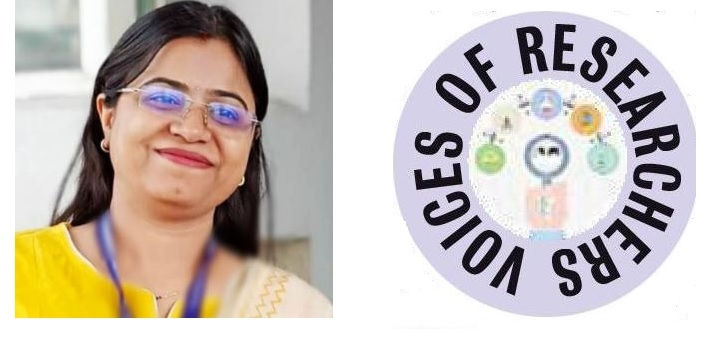
By Kabir Mahajan :
“The field offers immense opportunities. Believe firmly in your subject and in yourself. Work hard, stay focuse, and do not stop until you achieve your goals. Your journey may be challenging, but it is always worth it.” said in an exclusive conversation with ‘The Hitavada’. Dr Neeti Kapoor, a Class-I Gazetted Officer and Assistant Professor (Senior Scale) at the Government Institute of Forensic Science in Nagpur, encapsulate the passion that has driven her remarkable 13-year career.
Dr Kapoor's journey, rooted in early fascination with crime documentaries and nurtured through her studies at Dr Hari Singh Gaur University, stands as a testament to the power of scientific discipline in the pursuit of justice. For four consecutive years (2022-2025), she has been listed among the Top 2% Scientists Worldwide by Stanford University, a rare achievement for a young female Class-I Gazetted Officer from the Government of Maharashtra.
This recognition highlights the impact of her prolific research, which includes over 51 high-impact articles in prestigious journals like Nature and The Lancet, along with two patents.
Her research approach is uniquely practical. "My research always begins with a practical problem faced in the field," she said. This focus on improving investigative efficiency led to her most cherished contribution which is fingerprint research, demonstrated how a single latent fingerprint can determine its hand of origin an invaluable tool for real-world investigations.
Dr Kapoor is a dedicated mentor, nurturing young researchers by involving them as co-authors and encouraging scientific rigor. She believes the core qualities of a forensic scientist are integrity, patience, scientific curiosity and objectivity. Her commitment extends directly to law enforcement. Dr Kapoor provides extensive training, including realistic mock crime scene investigations, to Maharashtra Police officers.
These exercises are crucial, as she explains, because they “provide a safe environment to make mistakes, learn and refine techniques,” Ultimately preventing mistakes that could hamper real investigations. Her guidance has led police teams to win numerous medals in both State and All India Police Duty Meets.
Dr Kapoor has witnessed the dramatic evolution of forensic science in India. The growth has been remarkable, she observes, noting the shift from limited academic programs to structured degrees and career opportunities extending beyond government labs into multinational firms and private consulting.
Looking ahead, she believes the future of investigations lies in scientific reconstruction, simulation and AI-based interpretation. She advocates for India to strengthen its forensic infrastructure through increased research funding, modern facilities and recognising forensic science as a distinct, independent discipline.
Dr Kapoor champions women in STEM, noting that the field is becoming more inclusive and offering immense opportunities for those with analytical skills and a desire for meaningful societal impact. Her success, recognised with awards like the Global Nagpur Women Achiever
Award, proves that dedication and honesty can produce world-class science even from a city like Nagpur, illuminating the path for future generations of women in science.