EC in SC defends SIR in WB, TN; terms claims ‘exaggerated’
02 Dec 2025 10:52:45
NEW DELHI :
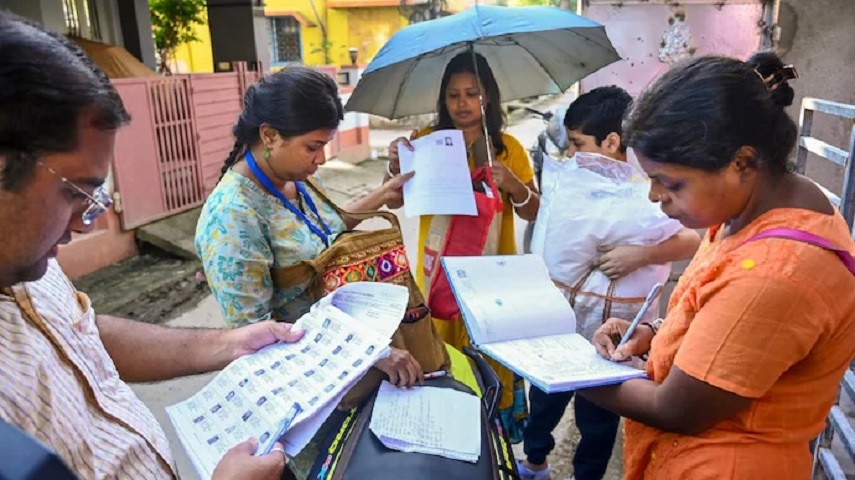
THE Election Commission has strongly defended in the Supreme Court its ongoing Special Intensive Revision (SIR) of electoral rolls in West Bengal and Tamil Nadu, saying that allegations of mass deletion of genuine voters are “highly exaggerated”, “speculative” and politically motivated.
A bench comprising Chief Justice Surya Kant and Justice Joymalya Bagchi on November 11 had sought separate responses from the poll panel on the pleas filed by the DMK, CPI(M), the West Bengal unit of the Congress and Trinamool Congress (TMC) leaders, challenging the SIR exercise in Tamil Nadu and West Bengal respectively. Filing separate affidavits in the top court, Pawan
Diwan, the Secretary of the Election Commission, sought dismissal of the petitions filed against the poll panel’s decisions to conduct SIR.
In an 81-page counter-affidavit filed on November 26 in a petition by TMC MP Dola Sen and others, the poll panel said the narrative alleging widespread disenfranchisement in West Bengal was being “amplified to serve vested political interests.”
“That it is submitted, that a harmonious reading of Articles 324 and 326 read with Sections 16, 19, and 22 of RP Act 1950, read with Rule 21 A, makes it clear that the ECI is vested with powers to assess the eligibility of the electors including citizenship for enabling the constitutional right to vote. The guidelines issued with respect to the SIR exercise are constitutional and in the interest of maintaining the purity of electoral rolls which is a pre-requisite for free and fair elections that form a basic feature of the Constitution,” it said.
The poll panel said its powers to undertake such revisions are firmly grounded in Articles 324 and 326 of the Constitution, and in various provisions of the Representation of the People Act, 1950 and the Registration of Electors Rules.
In its affidavits, the poll panel said, “Under Article 324 of the Constitution, the superintendence, direction and control of the preparation of electoral rolls for, and the conduct of, all elections to Parliament and to the Legislature of every State are vested in the Election Commission of India.” The constitutional provision forms the bedrock of the Election Commission’s
plenary authority in all matters relating to the preparation of electoral rolls and conduct of elections, it said.
These provisions, it said, not only authorise but require the Commission to assess voter eligibility, including citizenship, to maintain the “purity of electoral rolls,” which the top court has recognised as essential to free and fair elections.