IIT Bhilai Team turns waste sulphur intomaterials to combat water pollution
03 Dec 2025 12:21:11
Staff Reporter
:
IN A breakthrough that connects sustainable chemistry
with the national need for clean
drinking water, scientists at IIT
Bhilai have developed a polymer technology that uses industrial sulphur waste to combat
water pollution.
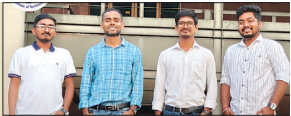
Researchers Bhanendra Sahu,
Sudipta Paul, Priyank Sinha, and
Dr Sanjib Banerjee have created a metal-free, eco-friendly
polymerization process that
converts low-value sulphur
waste into sulphur -dots (Sdots), which act as green photocatalysts for producing
advanced smart polymers.
The
work has been published in
Angewandte Chemie
International Edition.
This innovation addresses
two major societal challenges:
managing toxic industrial sulphur waste and removing hazardous hydrophobic pollutants
from contaminated water.
Sulphur waste from petroleum
refining, coal processing, and
chemical industries often creates disposal and environmental problems. By transforming
this waste into high-value Sdots, the IIT Bhilai team enables
the synthesis of multi-arm star
polymers with remarkable
water-cleaning properties.
These star polymers selfassemble into nanoscale spherical structures that behave like
microscopic sponges. In laboratory studies, they removed
over 80% of hydrophobic pollutant which resembles dyes,
pesticides, and oil residues indicating strong potential for river and lake cleanup. With water
pollution rising across India,
especially in industrial and agricultural regions, such materials could greatly strengthen
wastewater treatment and
remediation efforts.
Highlighting the dual benefit, Dr. Banerjee said, “We are
turning industrial waste into a
clean catalyst and then using it
to create smart polymers that
purify polluted water. It’s a complete circular solution.” The
technology aligns strongly with
national priorities such as Jal
Jeevan Mission, environmental
restoration programs, and sustainable industrial practices.
Waste-derived polymer
platform could become a powerful tool in India’s mission to
ensure safe, clean, and accessible water for all.