Elderly try to stay afloat in urban ‘jungle’
| Date :04-Dec-2025 |
By Simran Shrivastava :
Despite limited support, many rely on daily structure, social engagement, personal discipline to sustain physical, emotional health.
Even as the urban landscape in second capital of the State is changing rapidly, the population of senior citizens too is rising, driven by advances in medical science that has increased the life expectancy. But a question to ponder, does the city infrastructure measure up to the demand of elderly population? As their demands outpace age-friendly planning, senior citizens are themselves developing their own physical, mental, and social strategies to cope with the pressures of ageing in urban ‘jungle’.
For many, personal discipline and deliberate engagement have become essential tools in sustaining well-being. As age catches up, loneliness becomes the biggest challenge that one has to surmount. Prakash Khandekar, President, Janakrosh, expanded on the importance of this mindset.
“Many elderly people, after retiring, do not stay engaged in activities, which sometimes leads to loneliness and lethargy,” he observed. He stressed that, active involvement is not optional but crucial. “Seniors must remain part of organisations and regular engagements to stay mentally and physically fit. Physical mobility, however, remains one of the foremost challenges in urban landscape, as here, speed is the essence of life. Senior citizen Yogesh Bhaskar, a retired school teacher, described the city’s environment as fundamentally unsuited to ageing bodies. “Uneven footpaths, erratic traffic, and a near-total absence of age-friendly public transport make even a visit to the market an expedition of risk,” he said.
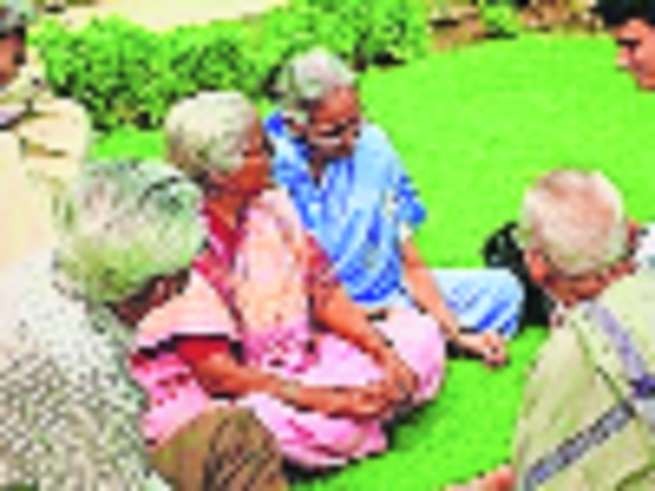
The erosion of daily social contact has become another defining dimension of ageing. Suresh Rewatkar, Secretary, Senior Citizen Council, Nagpur, spoke about how shrinking inter-personal interaction that directly affects emotional health. He explained that phone calls are inadequate substitutes for human presence. “There is liveliness and relief when you meet and interact with people. In old age, exchanging dialogue in person is of prime importance to keep oneself healthy and fit,” he said.
His suggestions focus on structured social spaces designed specifically for older adults. As a solution, there should be day-care centres set up by the Government, especially for the senior citizens, he recommended.
For those living alone, vulnerabilities deepen further. Many face emergencies without companions and sudden health flare-ups without caregivers. With adult children relocating for careers and nuclear families dispersing across the city and beyond, elderly parents experience what many describe as emotional dislocation. Several seniors refer to this stage of life as ‘empty’, a word that reflects the burden of isolation. Rewatkar noted that financial instability adds another layer of stress.
Rising inflation, escalating medication costs, unpredictable utility bills, and, for many, the complete absence of pension systems, create a fragile economic foundation. The city’s informal workforce bears the heaviest burden. Rickshaw pullers, small shopkeepers, tailors, and vendors enter old age without any retirement structure, forcing them to continue working through deteriorating health simply to survive.
Yet, even within these constraints, senior citizens continue seeking and inventing solutions. Many structure their days around exercise, community gatherings, reading groups, temple visits, volunteer work, and local organisations that restore purpose to their routines.