Mount Everest’s snow cover receded by150 mtr this winter, satellite images reveal
| Date :21-Feb-2025 |
NEW DELHI :
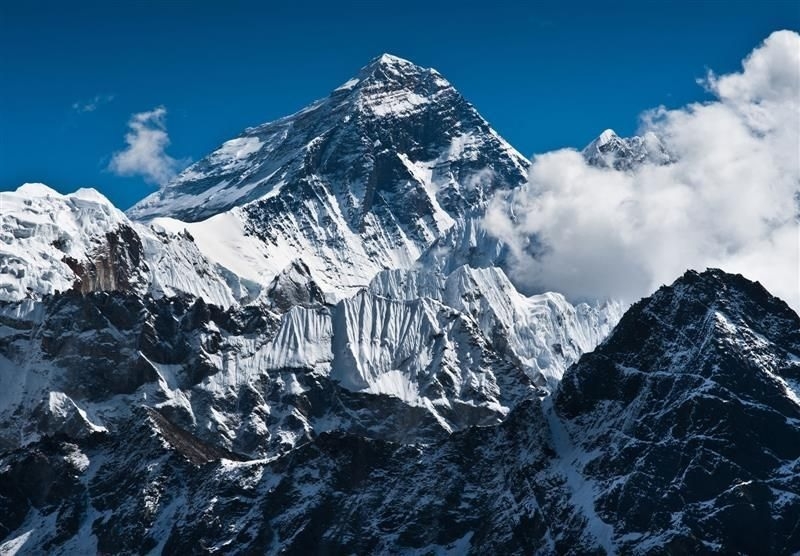
SNOW cover atop Mount Everest
retreated by 150 metres, indicating a lack of snow accumulation during the winter season
of 2024-2025, researchers have
noted. Analysing NASA satellite
images from October 2023 till
early January 2025, trends illustrated “a rise in snow line
through January in both 2024
and 2025”, glaciologist Mauri
Pelto, a professor of environmental science at Nichols
College, US, wrote in a blog post
on February 2.
At 8,849 metres above sea level, Mount Everest is the tallest
point on Earth.
The Himalayan
peak is located between Nepal
and Tibet.
‘Snow line’ refers to the
boundary or elevation at which
snow permanently stays on a
mountain. A ‘rising snow line’ -
- in which snow melts at lower
heights, forcing the snow line
boundary up a mountainside -
- is suggestive of a warming climate.
Pelto said that warmer and drier conditions have been prevailing in recent winters, including those of 2021, 2023, 2024
and 2025, which are driving a
reduced snow cover, higher
snow lines and increased forest
fires.
While the region saw a few
small snow events early in each
winter, the snow cover does not
persist, suggesting that glaciers
have continued to retreat even
above 6000 metres on Mount
Everest, he said.
Snow cover loss during winter at these altitudes is primarily the result of sublimation --
where ice directly evaporates -
- with losses observed up to 2.5
millimetres daily, Pelto added.
Sublimation is said to significantly contribute to the loss in
overall mass of a glacier, causing it to retreat.
In December 2024, Nepal saw
20-25 per cent of normal with drier conditions in the east,
accompanied by above average temperatures.
This resulted in extreme drought in severalprovinces,includingKoshi
Province, theglaciologist said.
He observed that January
2025 has continued to be dry,
with consistently warm conditions, thereby enablinghigh
snow lines to persist and rise
fromearly Decemberintoearly February, 2025.
“The average snow line (on
MountEverestRegionglaciers
on January 28, 2025) is 6,100
metres -- 150 metres higher
than on December 11, 2024,”
Peltowrote. Theblogpostwas
an update to that written in
May 2024,whichnoteda“limited snow cover” persisting
since November 2023.
The glaciologist explained
thatthe2023-2024winter season was “different”, because
the highsnow lines of 2020-21
were a result of an “extraordinary January heat wave” --
there was no heat wave this
time.
Instead, abovenormaltemperature anda“lackofanysignificant precipitation” were
critical to the outcome of rising snow line, with less than
25millimetresofprecipitation
at Everest Base Camp during
January1-March 31, 2024,
Pelto said.