Aditya-L1 images reveal solar flare ‘kernel’
| Date :01-Mar-2025 |
NEW DELHI :
IMAGES from ISRO’s Aditya-L1 -- India’s first mission to the Sun -- reveal a solar flare ‘kernel’ in the lower layers of the atmosphere, providing new insights into the star’s explosive activities, according to an analysis.
Seen as bright areas on the Sun, solar flares are giant explosions sending energy, light and high-speed particles into space, thereby impacting space weather and potentially disrupting radio communications and satellite operations.
Researchers from the Inter-University Centre for Astronomy and Astrophysics (IUCAA) in Pune said that on February 22, 2024, the Solar Ultraviolet Imaging Telescope (SUIT) instrument on-board Aditya-L1 captured an image of the X6.3-class solar flare, one of the most intense kind of solar eruptions.
ISRO to resume SpaDeX experiments from 15th
NEW DELHI,
Feb 28 (PTI)
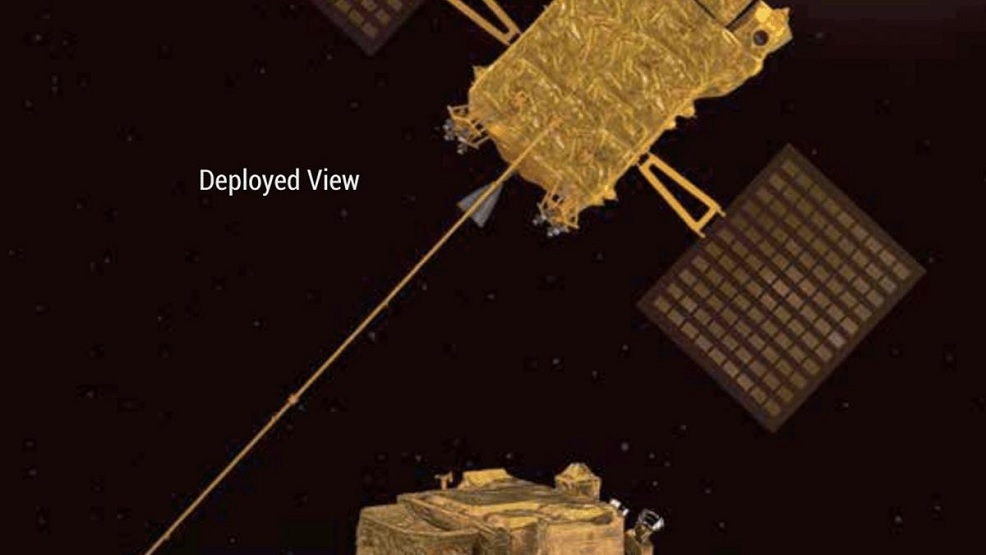
THE ISRO will resume experiments on the SpaDeX mission in mid-March by trying to separate the two satellites – Chaser and Target – and re-dock them again as it attempts to master the technologies for future projects.
The SpaDeX mission was launched on December 30 last year when it placed in orbit two satellites – SDX01 and SDX02 – to demonstrate the docking experiment in space. After several attempts, the Indian Space Research Organisation (ISRO) was successful in docking the two satellites on January 16.
“Currently, the unified satellite is in an elliptical orbit. So, we get a 10-15 days window once in two months to conduct various experiments,” ISRO Chairman V Narayanan said on the sidelines of the National Science Day celebrations. He said the window for carrying out experiments on the SpaDeX satellites will be available from March 15. “Right now, we are doing simulation experiments for separation of satellites and re-docking them. We have charted out a plan and will start the actual experiments from March 15,” he said.