Angel in the Sky Washim’s Anandi Wajire saves a life mid-air
| Date :01-Mar-2025 |
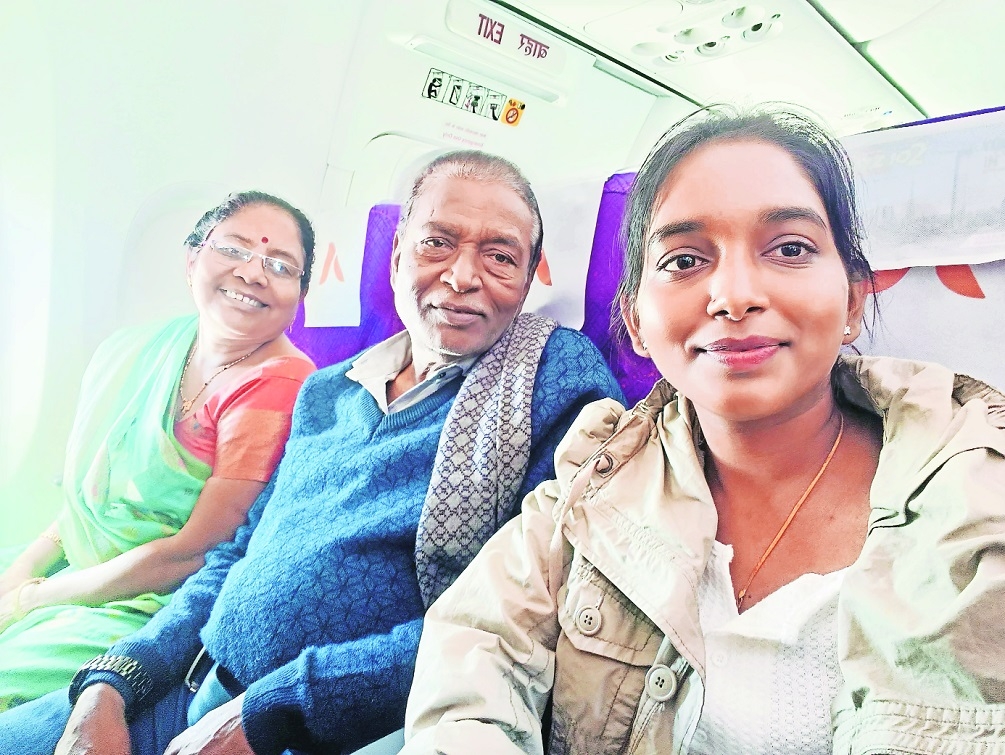
Anandi Wajire (MBBS 2nd year) along with her parents in the flight.
By Ram Dhangar
WASHIM,
The flight from Port Blair to Chennai was routine. Passengers were settled in their seats, enjoying the smooth journey through the sky. Everything seemed normal until a sudden commotion broke the calm. A woman seated towards the middle of the cabin appeared restless. Her breath grew irregular, her face turned pale, and she clutched her left arm with visible discomfort.
The situation grew tense. The cabin crew quickly assessed the emergency and the pilot’s urgent voice echoed through the speakers, asking if there was a doctor on board. Passengers looked around, but no one responded. Just when panic seemed to take hold, a young woman stood up and offered to help.
Anandi Wajire, a second-year MBBS student from Washim, stepped forward.
“I’m not a doctor yet, but I am studying medicine. I can assist,” she said with confidence. The crew guided her to the woman, who was conscious but struggling to move the left side of her body. Anandi calmly assessed her, speaking reassuringly while checking her pulse and response.
Anandi quickly determined that the woman’s brain was responsive, but she showed signs of temporary paralysis on her left side. Suspecting a possible mild stroke or nerve-related weakness, Anandi advised her to stay calm and avoid sudden movements. She guided her in controlled breathing techniques and reassured her that she would be fine. Passengers around watched anxiously as the woman slowly regained control of her speech and showed slight improvement in her movement.
A collective sigh of relief swept through the cabin as the woman, though weak, signaled that she was feeling better. Crew members and passengers alike looked at Anandi with admiration.
After the situation calmed down, several passengers expressed their gratitude, while Anandi’s parents, who were travelling with her, watched with immense pride. Yet, amid all the appreciation, Anandi found herself reflecting on a crucial thought. Flights are equipped with first-aid kits, but should there not be at least one doctor on board for emergencies like this? As word of her act of courage spread, social media was flooded with praise for the young medical student. Many called her an inspiration, highlighting how her presence of mind and swift action helped a fellow passenger in distress.
For Anandi, this experience was not just about helping someone. It reinforced her passion for medicine and her understanding of the responsibility that comes with it. Sometimes, destiny presents an opportunity to make a difference, and she embraced it without a second thought.
This was just the beginning of her journey, but she had already proven that a true doctor is defined not just by degrees, but by the willingness to act when it matters the most.