Lost city of Maheshpur: Ancient temples, artifacts unearth South Kosala’s glorious past
| Date :01-Mar-2025 |
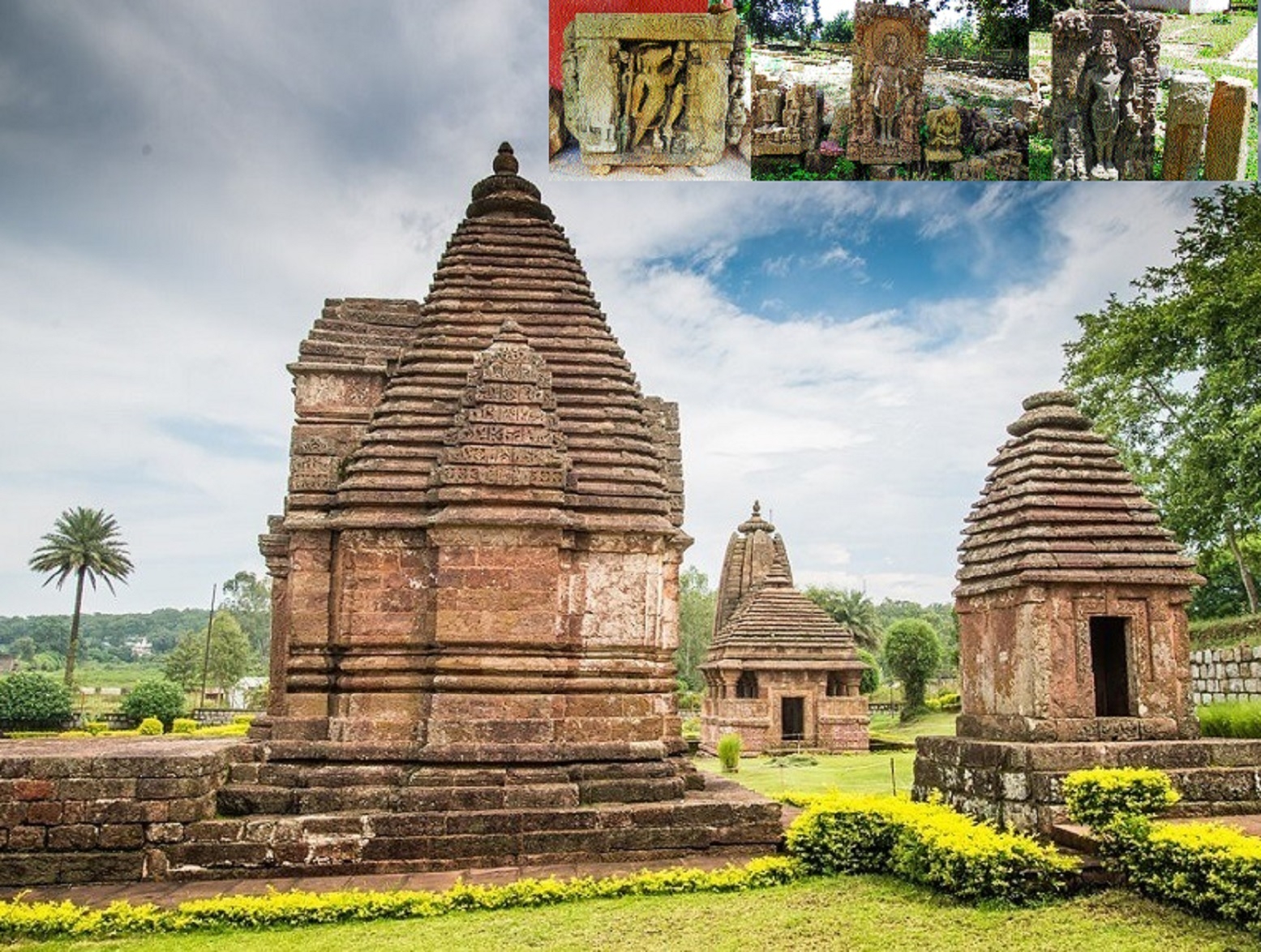
Vishnu Temple built by Kalchuri Dynasty of Tripuri
By Roshan Chachane :
RAIPUR
A remarkable discovery in Maheshpur, Surguja district, has unveiled a treasure trove of ancient artifacts and temple ruins, rewriting the historical narrative of South Kosala. Recent excavations have revealed a rich cultural and architectural legacy, dating from the 8th to 13th centuries CE, a period of significant artistic and religious development.
Situated along the banks of the sacred Rihand (Ren) River, Maheshpur’s historical significance is undeniable.
Its proximity to Ramgarh, renowned for its Mauryan Theater and inscriptions, and its association with legends of Lord Rama’sexile, underlines its importance. Local lore even connects the Rihand River to Renuka, wife of sage Jamadagni. Explorers Jitendra Nakka, Dinesh Kumar Soni, Navin Tiwari, and Vishnu Banjare, whose diligent efforts brought this site to wider attention, note that despite its mention in princely-era publications as a significant Shaivite site, Maheshpur was largely overlooked by British and early researchers. Driven by a passion to uncover its hidden treasures, they initiated extensive surveys and excavations, beginning with a mound along the Rihand River in 2008 and the "Badka Deur" mound in 2009. These excavations, conducted under the auspices of the state's culture department, have yielded extraordinary results, showcasing the architectural brilliance of South Kosala during its historical zenith. A substantial mound on the Rihand Riverbank revealed the remains of a star-shaped temple dedicated to Shiva. This west-facing temple, dating to the 8th century CE, features a unique star-shaped foundation and a superstructure built with baked bricks.
The discovery of fragmented Shaivite door guardians and a Garuda-adorned lintel provides crucial chronological data.
Despite significant damage from vegetation, the excavation of the Adinath mound revealed a later-era platform and a fragmented inscription from the 10th century CE. Evidence suggests the Adinath idol and its platform were relocated from another site.
Excavations at the Badka Deur area uncovered ruins of temples built during the Kalachuri dynasty of Tripuri, primarily Vishnu temples. These structures, built on elevated platforms, feature mandapas, vestibules, and sanctums. Artifacts recovered include idols of Vishnu, Varaha, Vamana, Surya, Narasimha, Uma-Maheshwara, and various female figures, along with Krishna Leela panels, door jambs, and architectural fragments. The site also boasts ancient water bodies, such as Ran Sagar, Bhoj Sagar, and Kurmin Tarai, reflecting the region's cultural landscape.
The quarry at Tankinara, where stones were extracted for temple construction, further highlights the area's historical importance. Much of Maheshpur's cultural heritage remains hidden within the surrounding forests, with numerous mounds, residential areas, and ponds scattered across a two-kilometer radius. The site's natural beauty, archaeological treasures, and vibrant tribal culture offer immense potential for tourism. The recovered artifacts, rich in religious and cultural significance, provide invaluable insights into the social, religious, and artistic practices of the time. The Maheshpur excavations offer a compelling glimpse into the glorious architectural traditions of South Kosala, adding a significant chapter to the study of Indian art history. With its blend of ancient splendor and natural beauty, Maheshpur is poised to become a significant tourist destination.