SSH Nagpur performs first robotic heart surgery
| Date :11-Mar-2025 |
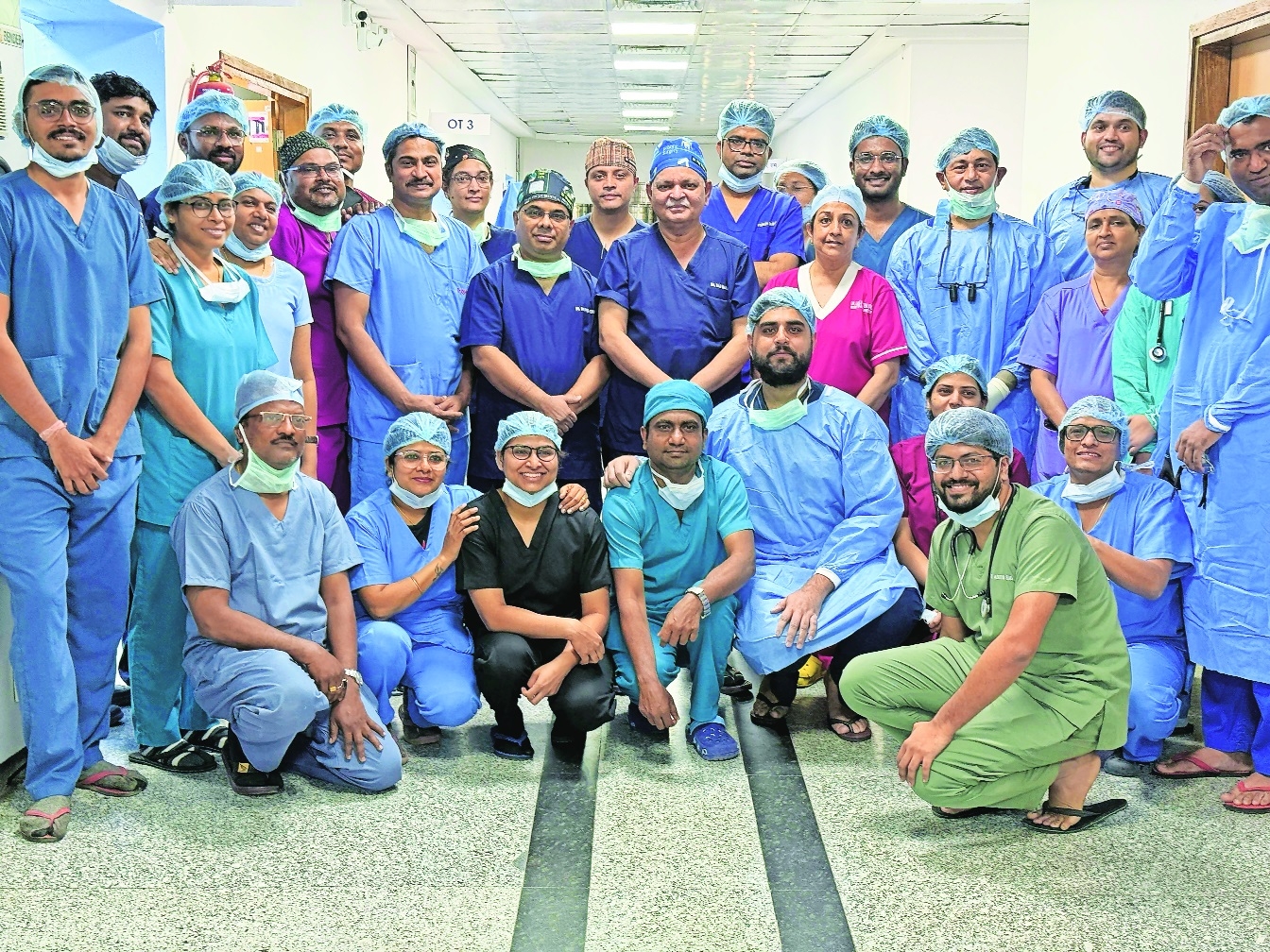
Dr Raj Gajbhiye, Dr Satish Das, Dr Lulu Fatema Vali and others.
Staff Reporter :
This is likely to be the first such surgery conducted in any Government institute in India
In a major achievement, Government Medical College and Hospital (GMCH) and Super Speciality Hospital successfully performed its first robot-assisted coronary artery bypass grafting (CABG), marking a significant advancement in cardiac care for the region. This is likely the first such surgery conducted in any Government-run medical institute in India, bringing world-class technology to patients who otherwise cannot afford high-end treatment.
The complex procedure was carried out under the visionary leadership of Dr Raj Gajbhiye, Dean of GMCH, with an expert team from the Cardiovascular and Thoracic Surgery (CVTS) department and of Cardiac Anaesthesiologists.
Dr Raj Gajbhiye, said, "This success opens new doors for advanced cardiac treatment for economically weak patients in Central India, whereas it would cost around 15 lakhs.
We are committed to bringing the best technology to those who need it the most."
With unparalleled precision, these systems provide surgeons with enhanced dexterity and visualisation, allowing for minimally invasive techniques that significantly reduce patient recovery times due to less pain and postoperative complications, as stated by Dr Satish Das, Head, Department of CVTS. The patient was mobilised on the 2nd day of surgery.
One-lung ventilation (OLV) is a critical component of robotic CABG, as it provides the necessary surgical exposure while minimising interference with the robotic instruments. OLV involves ventilating only one lung while the other lung is collapsed, creating a clear surgical field.
This technique requires meticulous planning, which was executed by the Cardiac Anaesthesia team lead by Dr Lulu Fatema Vali, HOD, to ensure patient safety and optimal surgical conditions.
Robotic CABG typically requires the patient to be placed in a specific position to allow the robotic system optimal access to the chest. Maintaining this position over extended periods can present challenges in ensuring that the airway remains secure, the patient's circulation is stable, and the temperature remains normal.
Frequent communication between the anaesthesiologist and the surgical team helps mitigate sudden changes in the patient’s condition.
The CVTS surgical team was led by Dr Satish Das, HOD, along with Dr Ashish Badkal, Dr Kunal Ravekar, Dr Ritesh Mate and Dr Aneesh.
The Anaesthesia team, headed by Dr Lulu Fatema Vali HOD, Dr Yogesh Zawar, Dr Ketaki Ramteke, Dr Priyanka Khondalay and Dr Aditya Rao.
Experts in robotic assistance, Dr Bhupesh Tirpude, Dr Gayatri Deshpande, played a pivotal
role in this revolutionary technique.
Trained nursing staff and attendants of CVTS Department played a crucial role for the success of this unconventional case. In the press conference addressed by Dr Raj Gajbhiye, prominent among those present were Dr Avinash Gawande, Medical Superintendent, GMCH; Dr Devendra Mahore, Vice Dean and others.