Pohra river A sad tale of slow, sure death
12 Mar 2025 11:44:33
By Kaushik Bhattacharya :
Pohra river is a fine example to narrate the story of the city’s unplanned expansion at the cost of natural water streams. Pohra river is the second tributary of the Naag river after Pili river, which is also struggling for its existence. Though the river’s origin remains untraceable, it flows from Yashoda Nagar in South West Nagpur and joins the Naag river after passing through Jaitala Road, Trimurti Nagar, Sahakar Nagar, Somalwada, Manish Nagar, Besa, Narsala and then proceeds towards Kanhan.
In the absence of water flow, sewage is the only source of water in the river that covers the South-West Nagpur, flowing parallel to Naag river.
To rejuvenate the water body, Nagpur Municipal Corporation (NMC) initiated
the ambitious Rs 900 crore Pohra River Pollution Abatement Project, in which the civic body will stop entry of sewage in the river and construct a sewage treatment plant (STP) to clean sewage water and use it in
gardens.
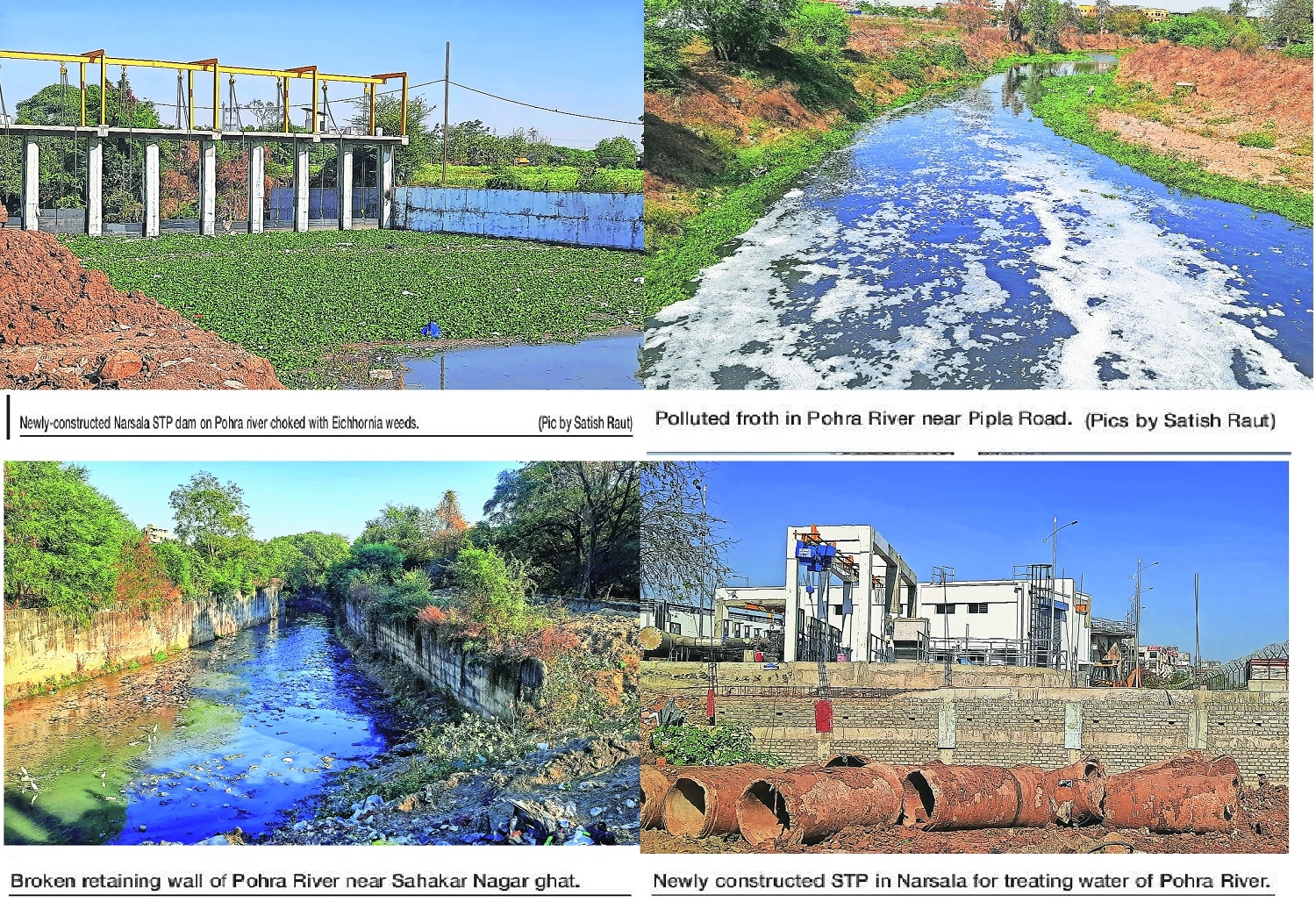
NMC, every year, initiates cleanliness campaign for this river before monsoon. ‘The Hitavada’ recently did a fact check and found that sewage water was stagnant at many stretches, with plastic and other solid waste floating in the river, making the water body not only an eyesore but also a health hazard.
The worst scene was noticed near the Pipla village where toxic froth in Pohra river gave an alarming signal. Like Ambazari lake and Naag river, the Pohra river has also become a victim of Eichhornia weeds. The newly constructed STP near Narsala village is yet to start functioning, but the spread of Eichhornia weeds in the catchment area of the river will definitely
hamper the working of the
STP when it starts operation.
The dam, which was constructed beside the STP, is completely choked with Eichhornia weeds which is also restricting the river flow beyond Narsala village.
“The work of abatement project has started in some stretches of Pohra river and the sewage line laying work has also been initiated. The Narsala STP is almost completed and soon it will start functioning,” Dr Shweta Banerjee, Superintending Engineer, Environment
Department, NMC told The Hitavada.
The frothing in Pohra river near Pipla village is happening due to release of industrial effluent in the water body. The Effluent Treatment Plant (ETP) is mandatory for every industry situated near the river. NMC claimed that they had already restricted all industrial activities near the Naag river. But the frothing in Pili and Pohra rivers is a clear indication that the civic body was just doing superficial work in the name of river cleaning.
“Though detergents can be treated biologically but its presence in higher concentration in any water body will have toxic effect on aquatic and terrestrial ecosystem and may also lead to bio-accumulation and eventually end up in humans,” said Surbhi Jaiswal, Team Lead, Green Vigil Foundation. Talking about its effect, Jaiswal said, “All detergents destroy the external mucus layer that protect the fish from bacteria and parasites. Additionally, they can cause damage to gills. Fishes will die when detergent concentration reaches 15 ppm Phosphates.”