‘Cognitive errors, personality traitscompromise ability to DRIVE SAFELY’
09 Mar 2025 08:44:22
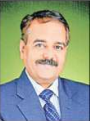
Dr Shailesh Pangaonkar
By Vaishnavi Pillay
HAVE you ever honked furiously at a slow-moving vehicle
or sped past a red light just
because you were in a hurry?
Do you find yourself gripping
your vehicle’s handle tighter
when someone zooms past
you? Road rage, reckless driving, and general carelessness on
the road are often dismissed as
mere impatience or lack of discipline. But is there something
deeper at play?
‘The Hitavada’ spoke to Dr
Shailesh Pangaonkar, a
Consultant Psychiatrist, to
know why people exhibit certain driving patterns and how
unresolved emotions spill onto the streets.
“Driving is a skill, much like art, mathematics, or public
speaking. A good driver must have good eye-hand coordination, visual-spatial abilities, and emotional stability,”
stated Dr Pangaonkar.
He continued that the external environment’s effect also mattered as well as distractions and
a lack of situational awareness,
even among pedestrians.
He drew an analogy betweendriving and an examination,
“Driving is both a singular anda collective act. It is like an exam.
Every time a driver gets behindthe wheel, he/she must treat itas a test of skills, alertness,
and ability to coexist with others. This is where individual
responsibility meets societal
expectations.”
Categorising risky drivingbehaviour into driving skills,
cognitive abilities, emotional
regulation, and personalitytraits, he said, “Certain cognitive errors and personalities make a person prone to mishaps.
Those with undiagnosed or underdiagnosed Attentiondeficit/hyperactivity disorder (ADHD), are at a higher risk.”When analysing behaviour across different age groups,
Dr Pangaonkar observed that youngsters have conduct disorders, antisocial habits, and a tendency to break rules.
‘Cognitive errors, personality traits...
“T
hese individuals often had
signs of hyperactivity or learning disabilities during childhood, difficulty following
directions, distinguishing left
from right,” he explained.
He believed that roads are a
mirror which reflects individuals with low frustration tolerance, or psychological conditioning, tracing back to their
upbringing. “Even if they possess good driving skills, these
traits can compromise their
ability to drive safely,” he noted. Dr Pangaonkar highlighted another dangerous yet often
overlooked factor in road accidents - driver fatigue and the
hypnotic trance effect. In this
state, the driver may be physically present behind the wheel
but mentally disconnected
from the road, leading to
slowed reflexes and delayed
reaction times.
He further pointed out that
the inability to delay gratification is linked to overtaking and
breaking traffic rules. “For
some drivers, overtaking
another vehicle is not just
about reaching their destination faster, it becomes a matter of ego. Speed gives them a
sense of superiority,” he
revealed.
While reckless and aggressive drivers are often discussed,
‘anxious drivers’ also play a
role in road dynamics.“Anxious
drivers tend to be overly cautious, which can sometimes
disrupt traffic flow. They hesitate, drive below expected
speeds, and second-guess
themselves, which can frustrate other drivers behind
them. This creates emotional
instability in others, sometimes provoking rash overtaking or aggressive honking,” he
said. Currently, driving eligibility is largely determined by
physical health, with rules
ensuring that individuals with
sensory deficits, such as blindness, deafness, or mobility
impairments are not granted
a license. Dr Pangaonkar
asserted that granting a driving license should integrate
cognitive and behavioural
assessments into the licensing process alongside standard
sensory tests, to handle realworld driving challenges.
While road safety awareness
campaigns are conducted by
various organisations, including the police department,
their impact on long-term
behavioural change remains
questionable. “
In India, as a
society, we tend to listen and
forget. It is almost like a pep
talk given by a school principal before exams. People may
acknowledge the importance
of safe driving, but when they
are back on road, urgency,
impatience, and ingrained
habits take over,” he remarked.
Dr Pangaonkar suggested
that road safety education
should start in Class VI, where
children learn that driving is
not just a personal act but a
social responsibility. “Most
accidents occur due to a loss
of sense that one belongs to a
society. Many see laws as mere
restrictions, not as protective
measures,” he concluded.