TO BOLSTER ECONOMY: RBI cuts repo rate by 25 bps as US tariffs kick in
10 Apr 2025 11:04:48
MUMBAI :
HOME, auto and other loans are likely to cost less as the Reserve Bank of India (RBI) cut interest rates on Wednesday for a second consecutive time and signalled more easing to come as it sought to bolster the economy that is facing further pressure from damaging US tariffs.
The Monetary Policy Committee (MPC), consisting of three central bank members and an equal number of external members, voted unanimously to cut the repurchase or repo rate by 25 basis points to 6 per cent. It had reduced rates by an equal measure in February -- the first cut since May 2020.
The repo rate is the rate at which the RBI lends money to banks to meet their short-term funding needs. With a 25 bps cut in the repo rate, all external benchmark lending rates (EBLR) linked to it will come down. And if the banks fully pass on this to the borrowers, equated monthly instalments (EMIs) on home, auto and personal loans will decline by 25 bps.
The move lowers borrowing costs to the lowest level since November 2022, amid easing inflation and a fall in oil prices. RBI changed its policy stance to “accommodative” from “neutral”, indicating the possibility of more rate cuts in future, Governor Sanjay Malhotra said while announcing the MPC decisions.
The rate cut came on a day when the full 26 per cent additional tariffs on Indian goods exported to the US came into effect. The US tariffs exacerbate uncertainties, with some economists predicting a 20-40 basis point drag on Indian GDP growth in the current fiscal year that started on April 1.
RBI also lowered its estimate for economic growth to 6.5 per cent for 2025-26 fiscal year from 6.7 per cent earlier. The inflation projection was also lowered to 4 per cent from 4.2 per cent, keeping it within the target range of 2-6 per cent.
The Indian economy grew by 6.5 per cent in the fiscal year ended March 31 (2024-25), its weakest pace since the pandemic. “The recent trade tariff-related measures have exacerbated uncertainties clouding the economic outlook across regions, posing new headwinds for global growth and inflation,” Governor Sanjay Malhotra said. “Amidst this turbulence, the US dollar has weakened appreciably; bond yields have softened significantly; equity markets are correcting; and crude oil prices have fallen to their lowest in over three years.”
Under these circumstances, central banks are navigating cautiously, with signs of policy divergence across jurisdictions, reflecting their own domestic priorities.
The Indian economy, the RBI Governor said, has made steady progress towards the goals of price stability and sustained growth. Growth is improving after a weak performance in the first half of the financial year 2024-25, although it remains lower than expected.
On the inflation front, while the sharper-than-expected decline in food inflation has given comfort, “we remain vigilant to the possible risks from global uncertainties and weather disturbances”, Malhotra said.
Explaining the meaning of change in policy stance, he said, “The change in stance means MPC intends only the status quo or rate cut.”
Since taking office in December, Malhotra has pivoted to a more growth-friendly approach than his predecessor Shaktikanta Das, who was more focused on containing price rise (inflation).
The new Governor cut rates in his debut policy meeting in February, and has injected more than USD 80 billion into the banking system in the last two months.
Lower interest rates provide relief to businesses and consumers alike, potentially spurring credit demand, investments, and job creation.
On the impact of global trade and policy uncertainties on growth and inflation, the RBI Governor said uncertainty in itself dampens growth by affecting investment and spending decisions of businesses and households.
The dent on global growth due to trade frictions will impede domestic growth, Malhotra said, adding higher tariffs shall have a negative impact on net exports.
“There are, however, several known unknowns - the impact of relative tariffs, the elasticities of our export and import demand; and the policy measures adopted by the government including the proposed Foreign Trade Agreement with the USA, to name a few. These make the quantification of the adverse impact difficult,” he said.
The risks to inflation are two sided. On the upside, uncertainties may lead to possible currency pressures and imported inflation. On the downside, slowdown in global growth could entail further softening in commodity and crude oil prices, putting downward pressure on inflation.
“Overall, while global trade and policy uncertainties shall impede growth, its impact on domestic inflation, while requiring us to be vigilant, is not expected to be of high concern,” he said.
Malhotra said the global economy is going through a period of exceptional uncertainties. “The difficulty to extract signal from a noisy and uncertain environment poses challenges for policy making. Nevertheless, monetary policy can play a vital anchoring role in ensuring that the economy remains on an even keel.”
The domestic growth-inflation trajectory demands monetary policy to be growth supportive, while being watchful on the inflation front, he said.
“We are aiming for a non-inflationary growth that is built on the foundations of an improved demand and supply response and sustained macroeconomic balance.”
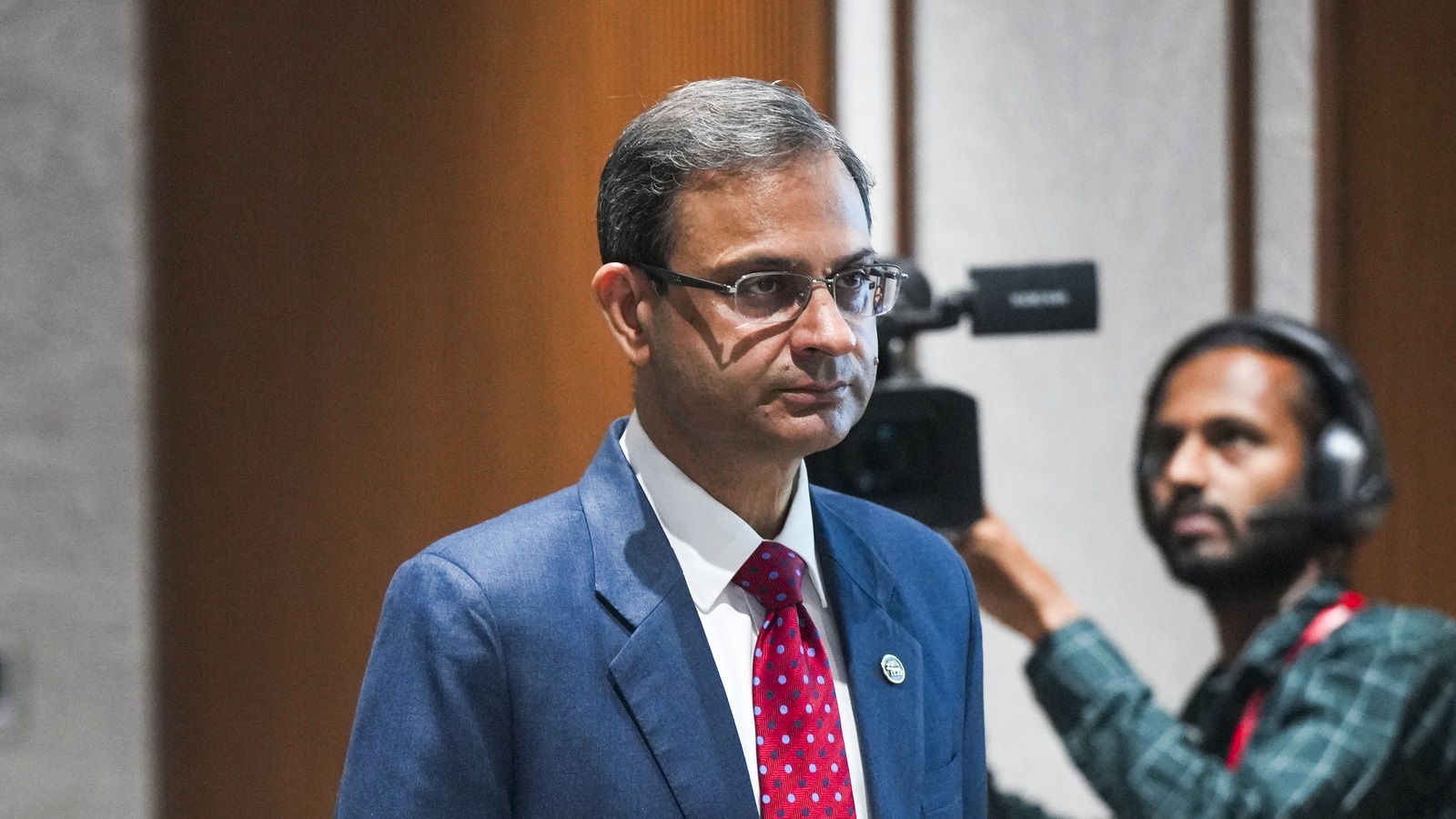
I am not Sanjay of Mahabharat who can predict rate cuts: RBI Governor
MUMBAI,
Apr 9 (PTI)
I AM Sanjay but not Sanjay of Mahabharat who can predict future rate actions and at what level rate moderation will stop amid the ongoing global uncertainties, RBI Governor Sanjay Malhotra said on Wednesday.
Malhotra’s remarks came at a media briefing on being asked if more interest rate cuts are in the offing, after he delivered the second straight interest rate cut since taking over as the RBI Governor.
According to the Mahabharat, Sanjay was blessed with divine vision and used his power to relay actions at the Kurushetra battlefield to blind King Dhritarashtra at his palace. He further said monetary policy and fiscal policy are acting in tandem to meet the growth-inflation targets. “It is a joint effort.
The Government has done its bit in the Budget recently by taking a large number of measures in terms of the increased capex, tax rebates and we have reduced repo rate and changed the stance going forward, which means that the direction of the policy repo rate is downwards.
“Where it will reach we really don’t know. I am Sanjay, but I am not Sanjay of Mahabharat to be able to foresee that far. I do not have the divine vision that he had,” he said.
further said “we will jointly (with the Government) try to manage the growth and the inflation dynamics in our country”.