State to rollout NDVI for real time monitoring of crop losses
28 Apr 2025 11:26:20
Staff Reporter ;
Agriculture Department releases Rs One crore to Vasantrao Naik Marathwada Krushi Vidyapeeth, Parbhani, for setting-up section for analysis of satellite data relating to crop damage in aftermath of natural calamities
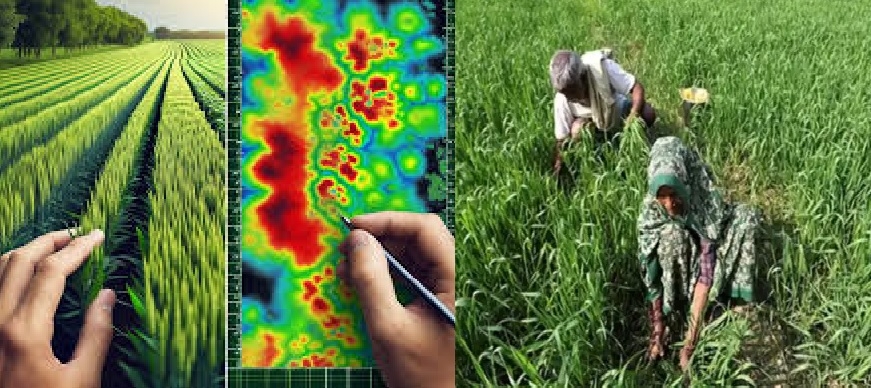
Agriculture Department is readying the rollout of Normalised Difference Vegetative Index (NDVI), scheme to ensure mapping of crop loss well in time in aftermath of natural calamities using the advances in technology to the fullest. The project was to be initiated on pilot basis in one district each of Vidarbha, Marathwada, Western Maharashtra and Khandesh regions of Maharashtra. The project is being implemented through Vasantrao Naik Marathwada Krushi Vidyapeeth, Parbhani, which had put-up a proposal about setting-up All India Co-ordinated Agriculture Meteorological Science Research Project. The scheme implementation is being started from Kharif season of the year 2025-26 onwards and a sum of Rs One crore is sanctioned for the same.
The project is based on model already running in neighbouring Madhya Pradesh, with focus on having information relating to crop damage so that the policy-makers must have upto date information in case compensation is to be awarded. A committee of experts studied the scheme in MP and formulated the same with some changes for Maharashtra. Under the same, the maps prepared by India Meteorological Department (IMD) would be analysed to study the damage to the standing crops vis-a-vis corresponding pictures pre-calamity.
While the scheme excludes drought condition, the number of such instances always rise in the aftermath of storms. The question always arises is how to ensure compensation to farmers. The traditional method is to go for anewari count of the respective region which is a time consuming process. Now post analysis of ground maps, using the AI and other programmes, one can easily analyse the crop condition at ease.
Using NDVI index, the data regarding district and tehsil level will be compiled along with final report as to losses suffered in aftermath of any natural calamity in real time. Further, real time monitoring by preparing a dashboard with interactive NDVI analytic should be developed. And, most importantly the satellite maps, must be updated every week, and post its analysis of the weather data, the varsity should release advisory for the farmers in the respective region. This way the farmers can decide on timing of their crop, a necessary care in case of warning of storms as this way they can minimise their losses. The varsity should share the raw data and products and other material with other Government Department in case needed by them.
Since the satellites monitoring weather condition are continuously mapping the landscape, the maps would come handy to have real time information of different positions pre and post-calamity, helping determine and release the compensation in time. The decision by Agriculture Department has fixed sum for each of the sub-head like Rs 2 lakh for Satellite Data (Premium-Planet Scope), Rs 4 lakh for Cloud Processing & Infrastructure, Rs 15 lakh for AI/ML Model Development, Rs 25 lakh for Dashboard Development, Rs 3 lakh for Ground Truth Data Collection, Rs 25 lakh for hiring of experts (Analysts, Developers), Rs 3 lakh for Maintenance & Support and Rs 23 lakh for Contingency and purchase of computers and printers.