Villagers spearhead eco-tourism in Bastar with little official support
Date :20-May-2025
By Hemant Kashyap
JAGDALPUR
Unemployed tribal youth take collective initiative
n Only symbolic assistance from government missions so far
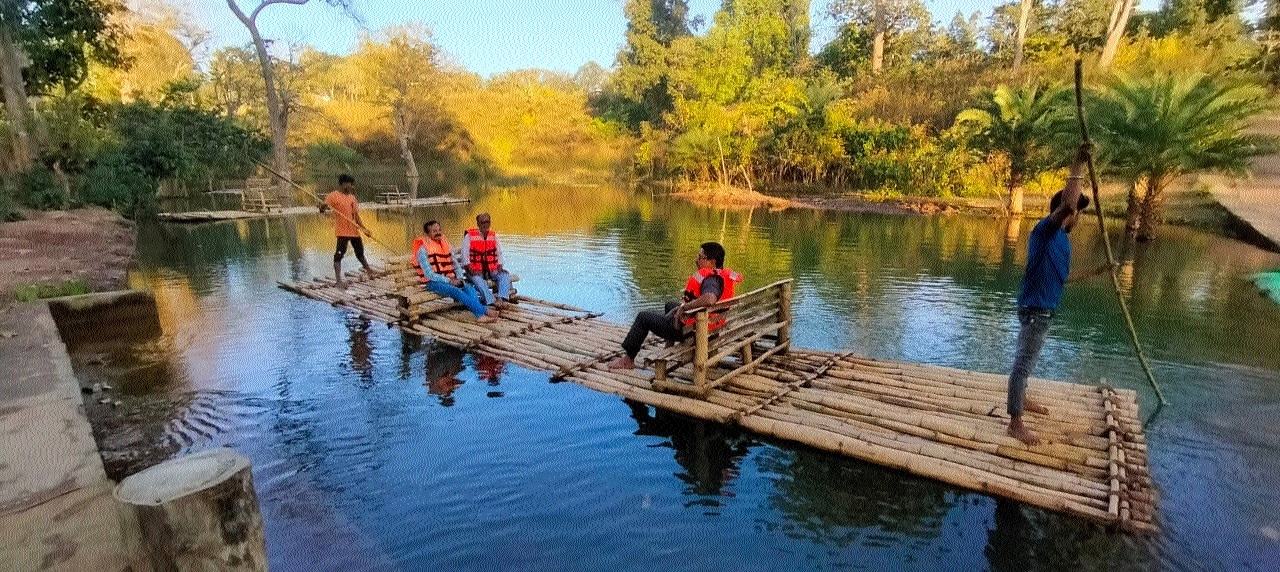
AS the allure of Bastar’s iconic tourist spots such as Chitrakote waterfalls, Tirathgarh cascade, Kotumsar caves and ancient heritage sites in Barsur and Dantewada endures, a parallel narrative is emerging — one led by unemployed rural youth striving to place lesser-known eco-tourism spots on the map.
Without adequate government support, they have turned to collective community action to develop these natural sites.
The irony, however, is that while official missions are eager to claim credit for the growing attention these locations receive, their actual contribution remains marginal.
Bastar is not just a haven of natural beauty; it also holds significant archaeological and cultural value. Tourists from across India and abroad have long been drawn to this tribal belt not only for its landscape but also for its deeply rooted traditions.
But lately, a shift has been noticed — visitors are seeking out new, unexplored destinations in the region, away from the overvisited and often overcrowded traditional spots.
Popular sites such as Chitrakote, Tirathgarh, and the caves of Kotumsar continue to draw crowds. Similarly, the revered Danteshwari Shaktipeeth in Dantewada and the mythological town of Barsur — known for its ancient temples and the third-largest Ganesha idol in the world — remain major attractions.
In recent years, the Ganesh idol situated atop Dholkal in the Bailadila range has also gained prominence, blending spiritual appeal with adventure tourism.
However, as many tourists now express fatigue with the usual circuit, a new demand has emerged for fresh and serene natural settings. Responding to this call, local communities — particularly unemployed youth from forested villages — have taken it upon themselves to identify and nurture eco-tourism sites that remain untouched by mainstream tourism.
Villagers from Bijlipara-Netanar, Dhoodmaras, and Tiriya are among those leading this eco-tourism movement. Phulsingh Nag of Bijlipara-Netanar, Man Singh Nag of Dhoodmaras, and Kurtoram Nag of Tiriya said that had the forest and district administration initiated steps earlier to develop these sites, many tribal youth might not have been forced to take up arms out of desperation.
“From our own limited resources, we’ve pooled funds, mobilised community efforts, and started developing places of natural beauty in our surroundings,” they said. “But till date, we haven’t received any real support from the administration. Even the panchayats have remained passive.”
The eco-tourism site at Dhurvadhera in Dhoodmaras, which has started gaining international attention, is one such example. Likewise, the confluence point of the Sabari and Ganeshbahar rivers near Tiriya, the ancestral village of tribal freedom fighter Gundadhur in Bijlipara, and Manjhipal — all located in forested pockets — are drawing interest from nature enthusiasts and cultural researchers alike.
Chapka too is now being talked about as a promising eco-tourism location. Tourists visiting these areas often express their desire to spend more time in nature’s lap, far from urban chaos. But the absence of essential infrastructure such as roads, lighting, accommodation, and safety arrangements remains a bottleneck to their growth.
For these emerging spots to evolve into fully-functional eco-tourism hubs, villagers assert that several basic amenities are essential. These include access roads (preferably concrete or CC roads), solar-powered lighting systems, guest houses or homestays, restrooms, signage, and security infrastructure.
Unfortunately, none of these have been provided so far — not by the district administration, not by the forest department, and not even by local panchayats.
Despite official claims of promoting eco-tourism, villagers say there has been no structured initiative to bridge the gap between potential and reality.
In their view, the government is missing a critical opportunity to create sustainable livelihood avenues for unemployed youth in conflict-affected regions.
Responding to the concerns, Chief Conservator of Forests (CCF), Jagdalpur Circle, RC Duga told The Hitavada that the department is committed to encouraging eco-tourism while protecting forests.
“Eco-tourism is an important component of our conservation strategy. Members of the Forest Protection and Forest Management Committees are already engaged in promoting it at the grassroots. We will extend necessary support to committees as per the demand and requirement of tourists,” he said.
The villagers, however, feel that mere assurances will not suffice. What they need is consistent, on-ground engagement — not photo-op moments or symbolic visits by officials. Until then, Bastar’s eco-tourism movement will remain a story of self-help in the face of institutional indifference.