Maoist warlord Basav Raju neutralised in SFs strike
22 May 2025 11:19:08
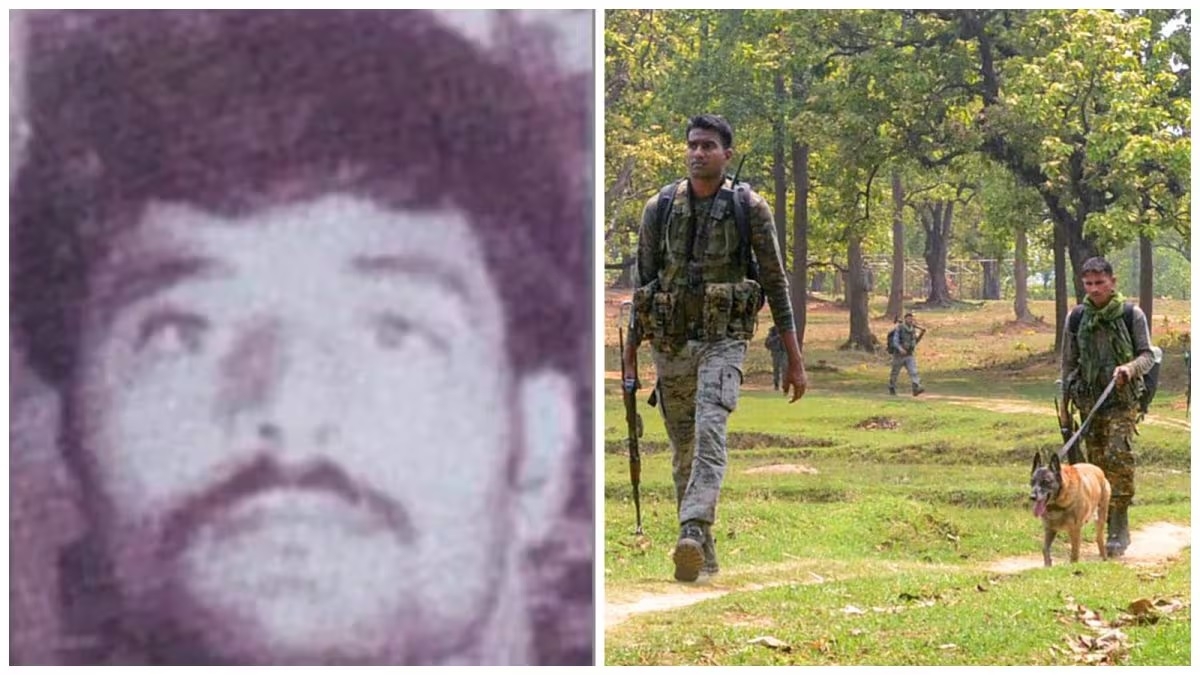
By Mukesh S Singh :
Raipur/Bastar,
TERROR ANALYSIS
- Engineering graduate turned into IED expert after LTTE terror training
- The phantom command behind visible massacres of security forces in devastating IED ambushes
- Rs 1 cr bounty Maoist chief ran CPI (Maoist)’s battlefield doctrine
Once a qualified engineering graduate, Basav Raju chose blood over nation — abandoning his degree to become one of the most lethal anti-India Maoists to ever operate under the CPI (Maoist) banner. Trained in explosives and ambush warfare by the LTTE, he used his technical acumen not for development but for designing deadly ambushes that butchered Security Forces (SFs).
On Wednesday, his decades-long trail of carnage ended in the forests of Abujhmad, as joint SFs neutralised him in a coordinated strike - bringing down the Politburo’s most brutal operational brain.
Top security officials confirmed he carried a Rs 1 crore bounty, making him one of India’s most wanted left-wing extremists. According to updated intelligence dossiers and National Investigation Agency (NIA) records, his recorded aliases included Namballa Keshav Rao, Krishna, Vinay, Ganganna, Basavara Raju, Basavaraj, Prakash, Gaganna, Vijay, Keshav, BR, Umesh, and Darapu Narasimha Reddy.
Born as Narasimha in Jiyannapet village, Srikakulam district (Andhra Pradesh), he left home in 1970 after graduating from the Regional Engineering College, Warangal. That year marked the beginning of his ideological descent. Consumed by radicalism, he crossed into Sri Lanka for training with the LTTE, where he learned to fabricate bombs, conduct ambushes, and manipulate terrain - skills he later deployed with lethal precision against SFs. “He was a rare mix of ideology, engineering, and insurgency,” said a senior intelligence official.
“His knowledge made him an IED genius. His strategy killed many of our men.” Described by internal security agencies as “the phantom command behind the visible massacres of security forces in devastating IED ambushes,” Basav Raju orchestrated some of the most devastating attacks in Dantewada, Sukma, Bijapur, and Bastar. His operational footprint included landmine layering, tactical encirclement, and use of coerced tribal militias under PLGA battalions. He wasn’t merely a field commander - he was the Maoist war council’s battlefield architect.
Intelligence agencies had long flagged him as the most educated and tactically skilled figure in the CPI (Maoist). It was his ability to design long-range, multi-node ambushes that made him irreplaceable within the Politburo. He was believed to be in direct command of deadly operations that killed dozens of CRPF, DRG, and STF personnel, as well as civilians caught in Naxal fire zones.
According to security forces, his capture was never realistic. “He had gone too deep into ideology. He only believed in
death as dialogue,” said one Anti Naxal Operations (ANO) official, who oversaw the Abujhmad operations.
Acting on precise intelligence about a Politburo-level presence, DRG units from Narayanpur, Dantewada, Bijapur, and Kondagaon launched a deep-penetration jungle offensive in Abujhmad.
By Wednesday afternoon, 27 Naxals lay dead, including Basav Raju. His identity was confirmed through physical features, electronic intercepts, and internal source corroboration.
Recovered alongside his body were AK-series rifles, sophisticated wireless equipment, landmine schematics, and explosive devices - proof of his continued battlefield oversight. “This wasn’t just a tactical kill,” said a senior anti-Naxal analyst. “It was the strategic removal of a doctrine - a mindset - that guided years of terror.”
His death, officials say, weakens the Maoist leadership’s operational axis. But it came at a cost - one DRG trooper was martyred, and several others were injured during the high-risk strike. All injured personnel are recovering.