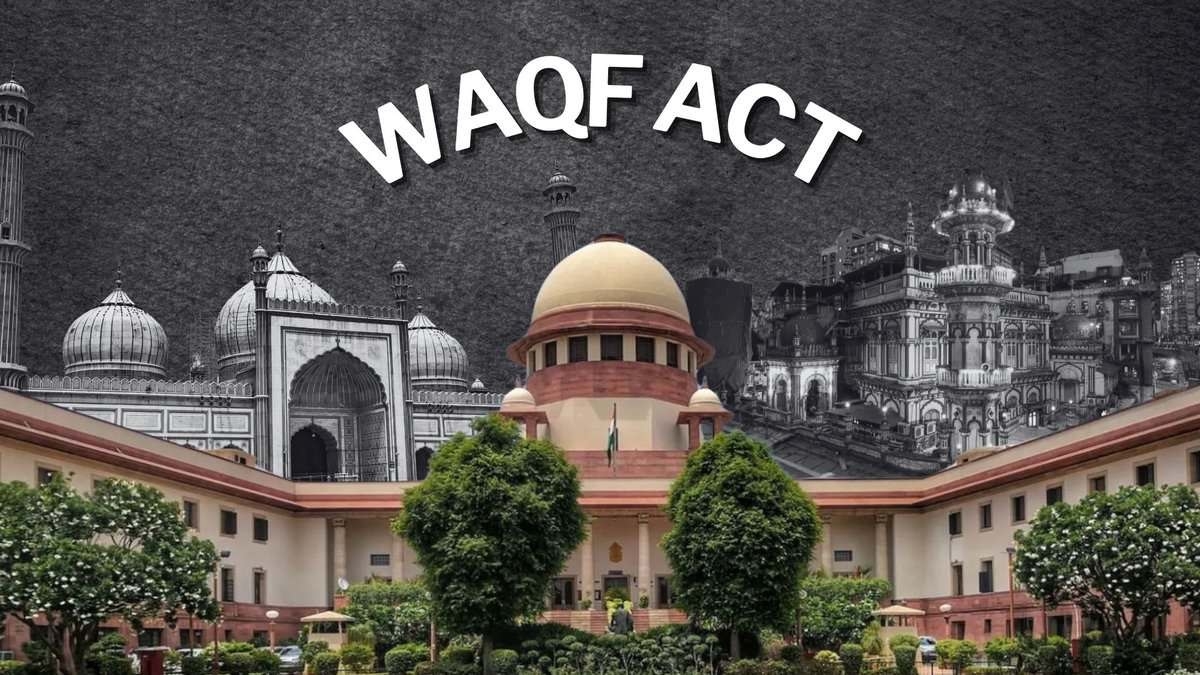
SC reserves interimorders in waqf case
| Date :23-May-2025 |
NEW DELHI :
THE Supreme Court on Thursday
reserved its interim orders on three issues,
including the power to denotify properties declared as “waqf by courts, waqfby-user or waqf by deed” after hearing
a clutch of pleas challenging the validity of the Waqf (Amendment) Act, 2025.
Before reserving the interim orders,
a bench comprising Chief Justice B R
Gavai and Justice Augustine George
Masih heard senior advocates Kapil Sibal,
Rajeev Dhavan and Abhishek Singhvi on
behalf of those opposed to the amended waqf law and Solicitor GeneralTushar
Mehta, representing the Centre, for about
three consecutive days.
The Centre strongly defended the Act,
saying waqf by its very nature is a “secular concept” and can’t be stayed given
the “presumption of constitutionality”
in its favour. Sibal, leading the petitioners, described the law as a “complete departure from historical legal and
constitutional principles” and a means
to “capture waqf through a non-judicial
process”.
“This is a case about the systematic captureofwaqfproperties.The
government cannot dictate
whatissuescanberaised,”Sibal
said.
The petitioners at the presentstagesoughtinterimorders
on three key issues.
One of the issues related to
the power to denotify propertiesdeclaredaswaqfby courts,
waqf-by-user or waqf by deed.
The second issue was over
the composition of state waqf
boards and the Central Waqf
Council, where they contend
only Muslims should operate
except ex-officio members
whereas the lastone isoverthe
provision stipulating a waqf
property won’t be treated as a
waqf when the collector conducts an inquiry to ascertain if
the property is government
land.
On April 25, the Union
MinistryofMinorityAffairsfiled
a preliminary 1,332-page affidavit defending the amended
Waqf Act of 2025 and opposed
any“blanket stay” by the court
on a “law having presumption
of constitutionality passed by
Parliament”.
TheCentre notifiedtheWaqf
(Amendment) Act, 2025 last
month after it got President
Droupadi Murmu’s assent on
April 5.
The bill was cleared by Lok
Sabha with the support of 288
members while 232 MPs were
against it.TheRajyaSabhasaw
128 members voting in its
favour and 95 against it.