From conflict zone to community development New rural bank opens in Naxal-hit Pamed
| Date :28-May-2025 |
Our Correspondent
BIJAPUR
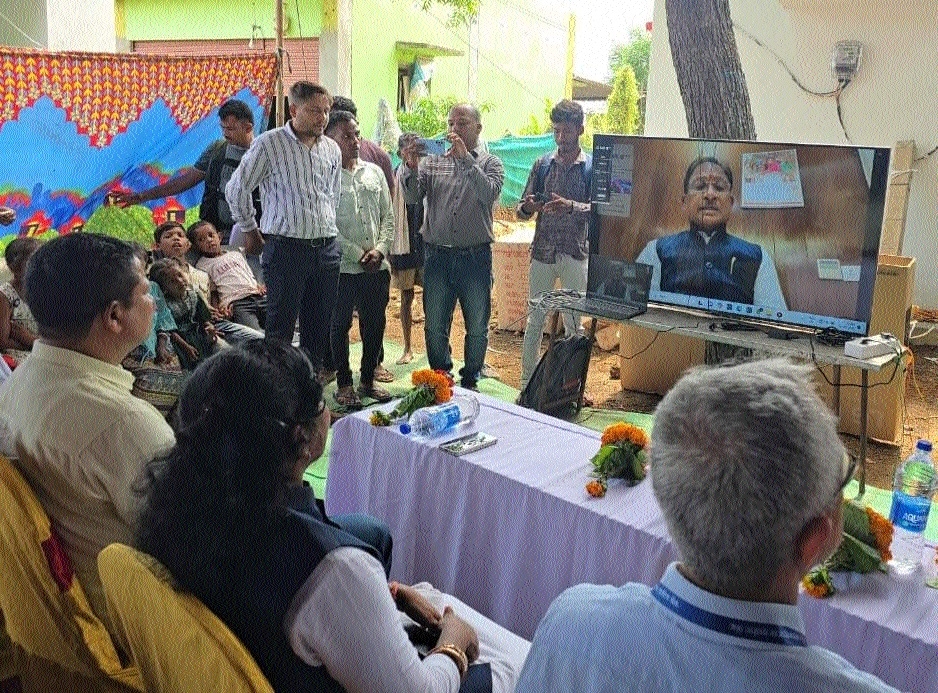
IN a major push towards inclusive development and last-mile financial access, Chief Minister Vishnu Deo Sai virtually inaugurated a branch of Chhattisgarh Gramin Bank at Pamed, a remote village in Bijapur district once synonymous with Naxal activity. The launch, which also included the inauguration of key welfare infrastructure, was described by the Chief Minister as a ‘turning point’ in the transformation of Bastar from a conflict zone to a corridor of change.
“Pamed was once feared as the base of Maoist Battalion No-1. Today, the same soil is witnessing the establishment of banks, hostels, and a new hope,” said the Chief Minister, addressing the gathering via video conference from Delhi. “This is the face of the new Bastar — a region that is confident, connected and committed to progress.”
The new branch of Chhattisgarh Gramin Bank is expected to benefit over 50 villages in the vicinity. Villagers earlier had to travel nearly 100 kilometres to Avapalli for basic banking services.
The new facility will offer account opening, cash withdrawal under Government schemes including the
Mahatari Vandan Yojana, and direct benefit transfers under various welfare programmes, significantly improving financial inclusion in the area.
The launch formed part of the State Government’s Sushasan Tihar initiative, a Governance outreach programme aimed at delivering administrative services in remote and sensitive areas of the state. CM Sai said the initiative was reflective of a broader vision to replace fear with trust and conflict with connectivity.
“This is not merely an inauguration of a bank branch — it is a statement of our intent to bring administration, stability, and dignity to the remotest corners of Chhattisgarh,” he said.
Adding to the day’s developments, the Chief Minister also dedicated a 50-seater girls’ hostel constructed at a cost of Rs 1.62 crore.
The hostel, designed to promote higher education among tribal girls, is expected to reduce school dropout rates in the region. In another welfare push, a Nutrition Rehabilitation Centre (NRC) was also inaugurated to combat the prevalence of malnutrition among children in tribal communities.
Highlighting infrastructure as a catalyst for integration, CM Sai referred to the ongoing construction of the Dharmavaram Bridge over the Talperu River. Once completed, the bridge will provide direct access to the district headquarters, cutting down the 200-kilometre detour via neighbouring Telangana. To further enhance mobility, a direct bus service between Pamed and Bijapur has also been introduced.
The day’s programme witnessed the enthusiastic participation of local residents and was attended by prominent officials including former minister Mahesh Gagda, Zila Panchayat President Janki Korsa, Collector Sambit Mishra, and Superintendent of Police Dr Jitendra Kumar Yadav. A ‘Samadhan Shivir’ (public grievance redressal camp) was also held at the venue where administrative officers interacted with citizens and resolved complaints on the spot. Concluding his address, the Chief Minister reiterated his government’s resolve to rid the region of extremism. “By March 2026, we are determined to free Bastar of all Maoist activity. What was once a hotbed of fear will now be known for its journey towards democracy, development, and dignity,” he said.