Elon Musk quits Trump administration
| Date :30-May-2025 |
WASHINGTON
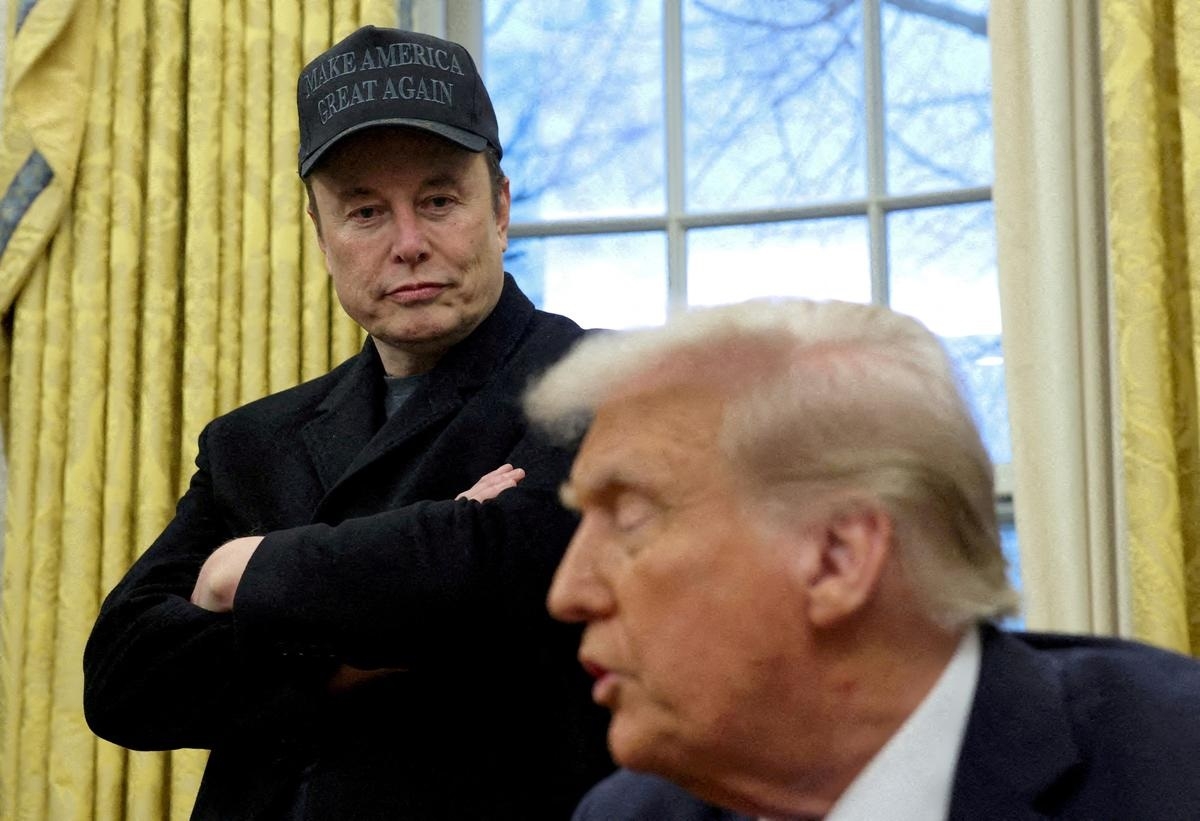
ELON Musk is leaving his government role as a top advisor
to US President Donald
Trump after spearheading
efforts to reduce and overhaul
the federal bureaucracy.
His departure, announced
on Wednesday evening, marks
the end of a turbulent chapter
that included thousands of
layoffs, the evisceration of
government agencies and
reams of litigation.
Despite the upheaval, the
billionaire entrepreneur
struggled in the unfamiliar
environment of Washington,
and he accomplished far less
than he hoped.
He dramatically reduced his
target for cutting spending —
from USD 2 trillion to USD 1
trillion to USD 150 billion —
and increasingly expressed
frustration about resistance to
his goals.
Sometimes he clashed with
other top members of Trump’s
administration, who chafed at
the newcomer’s efforts to
reshape their departments,
and he faced fierce political
blowback for his efforts.
Musk’s role working for
Trump was always intended
to be temporary, and he
recently signalled that he
would be shifting his attention back to running his businesses, such as the electric
automaker Tesla and the rocket company SpaceX.
But administration officials
were often vague about when
Musk would step back from
his position spearheading the
Department of Government
Efficiency, known as DOGE,
and he abruptly revealed that
he was leaving in a post on X,
his social media website.
“As my scheduled time as a
Special Government
Employee comes to an end, I
would like to thank President
@realDonaldTrump for the
opportunity to reduce wasteful spending,” Musk wrote.
“The @DOGE mission will
only strengthen over time as it
becomes a way of life
throughout the government.”
A White House official, who
requested anonymity to talk
about the change, confirmed
Musk’s departure.
Musk announced his decision one day after CBS
released part of an interview
in which he criticised the centrepiece of Trump’s legislative
agenda by saying he was “disappointed” by what the president calls his “big beautiful
bill". The legislation includes
a mix of tax cuts and
enhanced immigration
enforcement.
Musk described it as a
“massive spending bill” that
increases the federal deficit
and “undermines the work” of
his Department of
Government Efficiency.
“I think a bill can be big or
it could be beautiful. But I
don’t know if it could be
both," Musk said.
Speaking in the Oval Office
on Wednesday, Trump
defended his agenda by talking about the delicate politics
involved with negotiating the
legislation. “I’m not happy
about certain aspects of it, but I’m thrilled by other aspects
of it,” he said. Trump also suggested that more changes could
be made.
“We’re going to see what happens. It’s got a way to go,” he
said.
Republicans recently pushed
the measure through the House
and are debating it in the
Senate.
Musk’s concerns were shared
by some Republican lawmakers.
“I sympathise with Elon
being discouraged,” Wisconsin
Senator Ron Johnson said.
Speaking at a Milwaukee
Press Club event on Wednesday,
Johnson added that he was
“pretty confident” there was
enough opposition “to slow this
process down until the president, our leadership, gets serious” about reducing spending.
He said there was no amount
of pressure Trump could put on
him to change his position.
Speaker Mike Johnson asked
senators to make as few
changes to the legislation as
possible, saying that House
Republicans reached a “very
delicate balance” that could be
upended with major changes.
The narrowly-divided House
will have to vote again on final
passage once the Senate alters
the bill.
On Wednesday, Johnson
thanked Musk for his work and
promised to pursue more
spending cuts in the future,
saying “the House is eager and
ready to act on DOGE’s findings".
The White House is sending
some proposed rescissions, a
mechanism used to cancel previously authorised spending,
to Capitol Hill to solidify some
of DOGE’s cuts.