UNSC raps Pakistan, poses tough questions
| Date :07-May-2025 |
NEW YORK :
UN SECURITY Council member nations have posed tough questions to Pakistan while discussing the Pahalgam terror attack amid increasing global outrage over the dastardly strike that killed 26 civilians.
The Security Council refused to issue a statement following the meeting which was held in a consultative room rather than the main hall, effectively dismissing Pakistan’s attempt to get a favourable position from the Security Council.
There was broad condemnation of
the terrorist attack and the need to fix accountability for it, authoritative sources told PTI after an informal session of the top UN body.
“The United Nations Security Council members raised tough questions for Pakistan at its informal session. It was advised to sort out the issues bilaterally with India,” a source said.
At the deliberations, the UN Security Council discussed rising tensions between India and Pakistan and several envoys called for de-escalation.
Although the 15-member UNSC did not issue a statement, Pakistan claimed that its own objectives were “largely served”.
Pakistan is one of the non-permanent members of the UN Security Council.
Greece, President of the UNSC for the month of May, had scheduled the meeting on Monday following a request by Pakistan.
Assistant Secretary-General for the Middle East, Asia and the Pacific in the Departments of Political and Peacebuilding Affairs and Peace Operations Khaled Mohamed Khiari of Tunisia briefed the Council on behalf of both departments (DPPA and DPO).
Coming out of the meeting, Khiari said there was a call for “dialogue and peaceful resolution of the conflict.”
He noted that the “situation is volatile.”
Ambassador Evangelos Sekeris, a Permanent Representative of Greece to the United Nations and the current UNSC President, described it as a “productive meeting, helpful”.
A Russian diplomat said, “We hope for de-escalation.”
The sources added that there was broad condemnation of the terrorist attack and recognition of the need for accountability. Some members specifically brought up targeting of tourists on the basis of their religious faith, the sources said. UNSC members refused to accept the “false flag” narrative and asked whether Pakistan-based Lashkar-e-Taiba was likely to be involved.
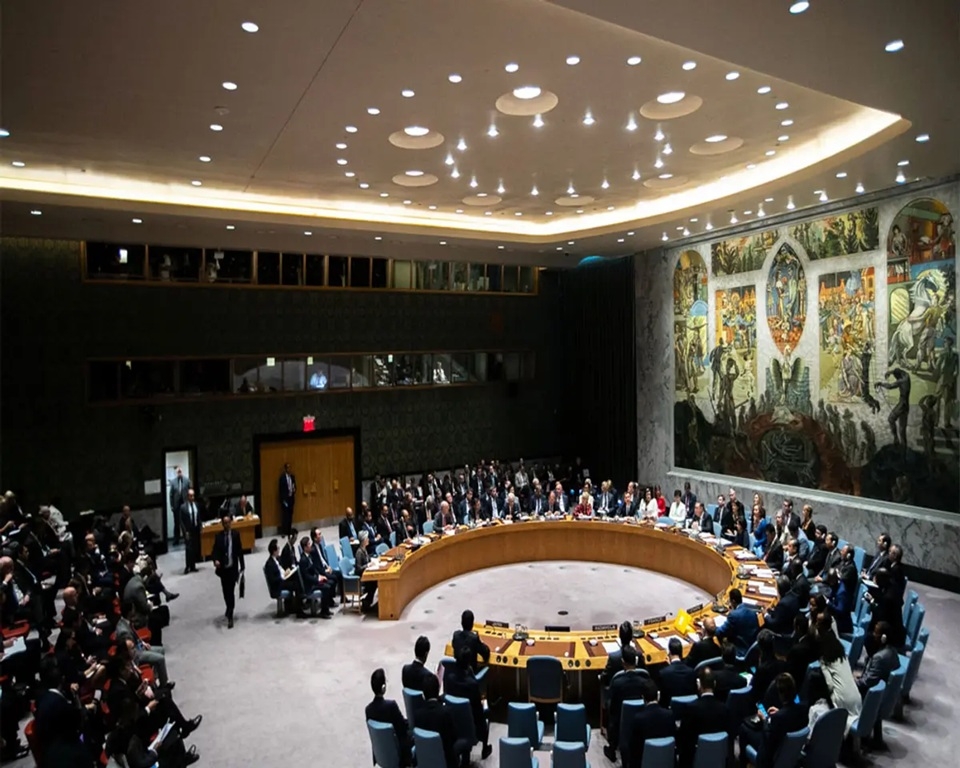
The closed-door meeting that lasted about an hour and a half did not take place in the UNSC Chamber where Council members sit at the horse-shoe table, but in a consultation room next to it.
Sources added Pakistan’s efforts to internationalise the situation also failed. Many members expressed concern that Pakistan’s missile tests and nuclear rhetoric were escalatory factors. Pakistan’s Permanent Representative to the United Nations Ambassador Asim Iftikhar Ahmad told reporters that the country’s objectives were “largely served and achieved” at the meeting. He said the objectives of the closed consultations included enabling the Council members to have a discussion on the deteriorating security environment and rising tensions between India and Pakistan and to have an exchange of views on how to address the situation, including avoiding confrontation that could have serious consequences and the need for de-escalation.
Ahmad thanked Council members for their engagement and their calls for restraint, de-escalation and dialogue. He said that while Pakistan does not seek confrontation, “we are fully prepared to defend our sovereignty and territorial integrity”.
Citing “cross-border linkages” to the April 22 Pahalgam attack, India has promised severe punishment to those involved in the strike.