A grandmom runs unique‘Book Hotel’ with 5000 books!
| Date :11-Jun-2025 |
By Tina Freese :
CLINKING utensils, the gentle
brewing of tea, and the lively
chatterofpeople eagerly awaiting their food create a vibrant ambience within the eatery. Normally, the
entire space is imbued with the tantalising aroma of delicious meals being
preparedin thekitchen.However, this
delightful scentoften goesun noticed
by customers whose noses are typically buried in the books they are
reading. With the most cheerful and
wrinkly smile, 74-year-old Bhimabai
Jondhale observes the entire commotion.
“I feel a sense of pride when
I watch all my customers reading
keenly, almost forgetting what they
were here for – food,” she shares.
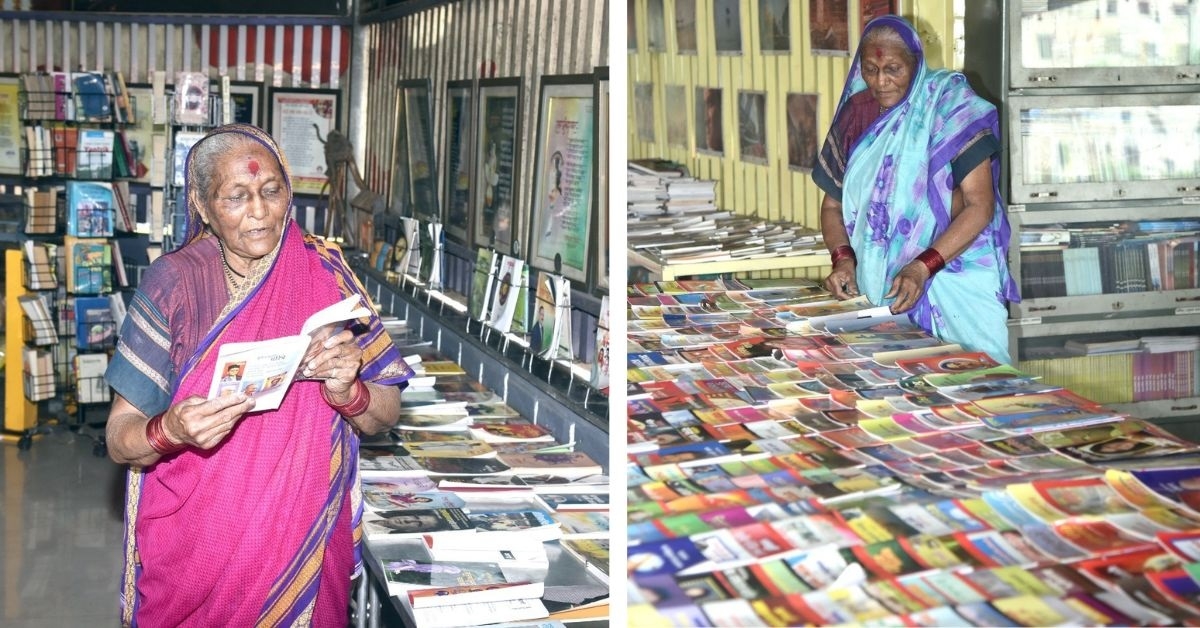
Fondly known as Aaji,Bhima bai has
been running her book restaurant,
‘Ajjichya Pustakancha Hotel‘
(Grandmother’s Hotel with Books),
since 2010, serving not only delicious
meals but also offering free books to
read. The place boasts a depository
of over 5,000 books in three different
languages - Marathi, Hindi, and
English. However, the origin story of
this book hotel will surely melt your
heart!
For the undying love for reading
Ifitis your birthday or anniversary,
you are sure not to leave without a
free book from Aaji Hotel. Located in
Ozar, Nashik district, Bhimabai’s son
helps her in the operations.
While the hotel might be flourishing with colours and ample seating
spaces today, it was only a makeshift
spot for tea more than a decade ago.
“It was the only way for my mother to fill our stomachs. While she is a
positive woman today, she has had
her fair share of struggles back in the
day,”saysPravinJondhale,Bhimabai’s
son.Recallingher earlylife,Bhimabai
shares that she was merely in class 6
when she was married off and sent
to a small village near Nashik.
“As achild,Iwasa very keenobserver. I used to love reading, and books
were my best friend.
However, when
I got married, everything changed,”
she says. Away from home and everything sheloved,Bhimabai found herself alone, tending to a family.
“Myhusbandwas an alcoholicwho
spent most of his time wandering
around. Not only did I have to take
care of the home, but also the farms,”
she says, adding, “When my daughter became a little older, she would
go to the farms with me.”
With her children growing up, she
wanted to send them to school. “We
were always financially weak, but my
husband’s addiction made things
worse. He, in a state of intoxication,
either sold off his land or gambled it
away,” she says.
Left without a means to feed her
family,Bhimabaiwouldwork forhours
indifferentpeople’s fields tobring food
to the table. “I was fed up with the life
we had. My son was going to school
and had picked up a newspaper distribution job to help me,” she shares.
Pravin elaborates on his mother’s
struggle from his perspective,“All the
relatives were always trying to have
their way with her. My father was a
father only in name. He never took
any responsibilities.
Like my mother,Ihad a zeal to get an education. I
got a job at a newspaper distributor
and fundedmy educationmyself,”he
says.There wasonlyone escape from
the challenging life –move to the city.
“It was like a beacon of hope for us.
I would probably find some work
there, andmymother would be away
from her relatives. So, we decided to
sell off whatever was left of our land
and moved to the city,” he says.
In2008, the familymoved
to the city. Pravin had
already started a publishing company and
days were looking
better.
“Due tosomepersonalreasons,Ihad
to shut down the
publishing company, andwehadastock
of Marathi language
bookswithus.Mymother and sister did not know
much beyond farming, so they
started a makeshift tea stall to meet
our expenses,” he says.
No phones, only books!
In 2010, Bhimabai, along with her
daughter,laid the foundation ofwhat
is today Ajjichya Pustakancha Hotel.
While the familymoved, the taunts
and harsh words never stopped following her. “They would talk about
how the women of the house should
not wander around selling tea; she
should take care of the house. But I
did not care about those taunts anymore,” she says.
“My children and I slowly started
to use savings to expand the tea stall
and make it an eatery.WhatI noticed
was that while a person would wait
for their food, they would always be
buried in their phone,” she says.
“Theywouldnotconversewitheach
other but would keep scrolling on
their phone.Ifound the habit very
absurd and wanted to do something
about it,” she says. As a woman who
was fond ofreading but never got the
chance to, shedecided toreintroduce
the habit of reading to people.
“Books are our best friends. They
are your companions in every situation.We started off with just 25 books
in a stand in the eatery and it kept
growing.Westarted encouragingpeo ple to pick up a book and
read while we cook their
meal,” she says.
“By the time the
food would arrive at
their table, they
would have already
reachedchapter two
of the book,” she
adds. People started
to appreciate her initiative and word
spread.The book collectionwhichstartedwithonly
25bookshasnowgrown to5,000
books. “In addition to books in the
eatery,wealso give free books on special occasions such as Women’s Day
and Republic Day to initiate a habit
of reading among people. We also
have started giving books as gifts to
hospitals,” he says.
“For people waiting at the hospital
for a loved one or for their own treatment, we hope our books will help.
My mother believes that medicines
treat your body but books heal your
soul,” he adds.
The eatery has also since kept on
growing and people have donated
books to Aaji’s collection.