‘A tired doctor can be dangerous’
| Date :12-Jun-2025 |
RAIPUR :
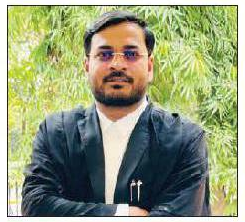
Satyam Singh Rajput, the Supreme Court lawyer behind NEET-PG legal battles, now leads India’s medical justice movement
ADVOCATE Satyam Singh Rajput
has emerged as a strong voice
for India’s doctors. From challenging NEET-PG issues to
defending doctors in crisis zones,
he combines sharp legal skills
with a commitment to justice.
In this exclusive interview with
‘The Hitavada’ News Editor
Mukesh S Singh, he shares his
journey and mission.
Q1: NEET-PG has remained
under fierce legal and public
scrutiny. What is, in your view,
the most dangerous flaw in its
structure today?
Ans – The core issue is the
unchecked opacity of the
National Board of Examinations.
As I’ve repeatedly argued in court,
“The NBE’s repeated failures have
turned medical examinations
into a lottery system.” Coaching
centres have hijacked the merit
narrative. Until thirdparty audits, transparency protocols, and accountability mechanisms become compulsory,
aspirants will remain victims of
a broken system masquerading
as a fair one.
Q2:The panic over the one-shift
NEET-PG format-what does it
tell us about these exam
bodies?
Ans – That transparency is not
their priority. That decision was
made with zero stakeholder
engagement and created chaos.
When I challenged it in court, I
made it clear—such unpredictability in high-stakes environments is unacceptable. These
are not just tests –they shape
careers and lives.
Q3: How do you respond to
critics who say judicial activism
oversteps academic autonomy?
Ans – That argument is misleading. Judicial intervention
arises when institutions entrusted with academic autonomy violate constitutional principles of
equality and fairness. The court
isn’t dismantling academia-it’s
preserving the rights of students
wronged by institutional lapses.
The judiciary becomes the conscience of governance when
silence is no longer an option.
Q4: The RG Kar case shocked
many.Why did it move you personally into action?
Ans – Because it wasn’t just
one incident-it was a mirror to
the vulnerability of every doctor
in India. I said it in court, and I
believe it deeply: “When doctors
are not safe in their own hospitals, how can they save lives?”
Filing that petition was a moral
duty, not just legal advocacy. The
system had failed its healers.
Q5: Doctors face burnout,
assaults, and apathy. What
reforms do you believe are legally enforceable right now?
Ans – Four key reforms are both
needed and possible. First, better safety measures like CCTV
cameras, panic buttons, and
trained security guards, especially during night shifts. Second,
strict limits on duty hours
because “a tired doctor can
be a dangerous doctor.” Third,
speedy legal action in cases of
assault on doctors. And fourth,
making hospital management
legally responsible for ensuring
staff safety.
Q6:You’ve stood for both individual doctors and large associations. How do you maintain
neutrality amid such emotionally charged cases?
Ans – By remembering that
every case is about constitutional
justice, not personalities.
Whether it’s FODA or a young
intern, the core issue remains
the same-dignity, fairness, and
safety. I don’t litigate for
applause-I litigate for principles.
Q7: You’ve called junior doctors’ working conditions ‘inhuman.’ What legal tools exist to
fight that norm?
Ans – Article 21 of the
Constitution is the strongest
weapon. Inhuman working conditions violate the right to life and
dignity. We’ve used PILs, writs,
and mandamus petitions to
hold institutions accountable
and enforce labour codes. The
laws exist-we must compel
compliance.
Q8: How has your legal journey during COVID-19 changed
your understanding of justice?
Ans - It stripped away illusions.
During the pandemic, I fought
cases involving black-marketing
of oxygen, exploitation of
healthcare staff, and academic
fee burdens. What I learnt is
this-real justice is systemic dignity, not courtroom victory. You
don’t need a gun to serve the
nation. Sometimes, you need a
petition that forces the powerful to listen.