March, April air quality in city was worst
12 Jun 2025 12:02:40
By Kaushik Bhattacharya :
- Nagpur’s was 2nd worst air quality after Malegaon in State: CREA
- For the last 3 months – February to April 2025 – Nagpur’s average PM 10 concentration was 119, 122, 113 µg/m³ respectively
- The standard PM 10 concentration under NAAQS is 100 µg/m³
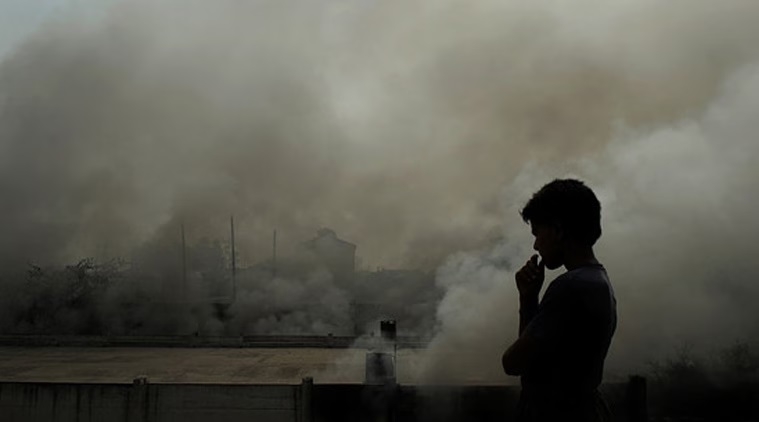
Nagpur city, which is witnessing rampant infrastructure development for the last many years, stands second in air pollution in the State.
A recent study conducted by Centre for Research on Energy and Clean Air (CREA), revealed that Nagpur city had had second worst air quality after Malegaon in March and April this year, which is causing breathing issues to its citizens.
CREA analysed the data of Central Pollution Control Board (CPCB), in which it revealed that the three months -- February, March, April -- months of monitoring (89 days), Nagpur’s daily PM 10 concentration exceeded safe limits on 69 days.
The safe daily limit for PM 10 concentration under the National Ambient Air Quality Standards (NAAQS) is 100 µg/m³.
Whereas, for the last 3 months – February to April 2025 – the city’s average PM 10 concentration has been 119, 122, 113 µg/m³ respectively.
As per the data, people of Nagpur have consistently breathed bad air with high levels of PM 10 concentration in all the three months. The levels of PM 10 in April 2025 in Nagpur have been higher than April 2024 and April 2023.
PM 10 is a coarse particulate matter and can severely impact human health. This underscores the severity and persistence of air pollution in the city, and the fact that its only getting worse by the year. The ongoing infrastructure development and heavy traffic on roads are the major contributors of dust, which is also measured as PM 10.
“As a National Clean Air Programme (NCAP) city, Nagpur is yet to identify its key pollution sources, which means current mitigation measures may not lead to meaningful reductions in air pollution levels. It is therefore essential to expedite the source identification process and base all action plans on this scientific evidence,” said Manoj Kumar, Analyst, CREA to
‘The Hitavada’.
“As a group of concerned citizens and civil society members who are actively working on the issues of solid waste management, waste burning, and clean air in Nagpur, we want to further strengthen the support we already offer our local administration,” said Leena Buddhe, Director, Centre For Sustainable Development (CFSD) and member of Nagpur City Hub.
“Improper waste management, including high levels of open burning of waste, need to be tackled systematically.
We all want clean air in the city, and we urge the officials to engage with us more actively so that we can plan and work more collaboratively,” added Buddhe.
As per the study, in April 2025, the PM 2.5 concentration of Nagpur city was 52, which was second highest in State after Malegaon. The PM 2.5 concentration of Jalna was also 52 in April.
This data, during the summer months, provide a window of opportunity for Nagpur to implement some of the regulations and take action before the critical season of Winter sets in, when air pollution usually increases even more.